
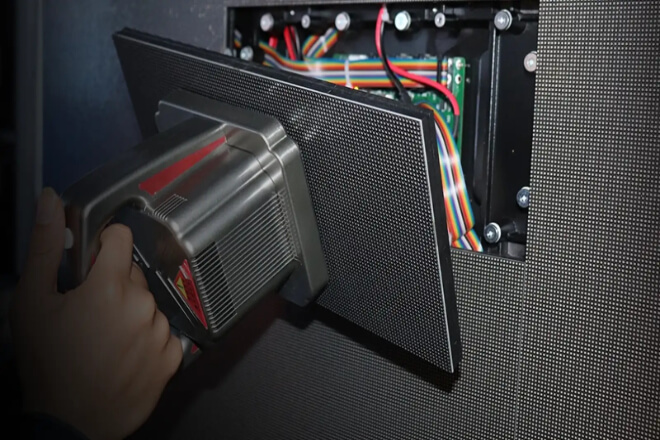
Have you ever encountered this situation: your LED显示屏, shortly after installation, develops uneven 亮度, flickering, or partial blackouts?
Each repair requires calling an engineer to the site, which is not only time-consuming but also expensive.
In fact, many problems can be significantly reduced with proper prevention and management.
Is there a way to ensure stable long-term operation of LED screens while reducing maintenance costs? The answer lies in proper selection, routine maintenance, and intelligent monitoring.
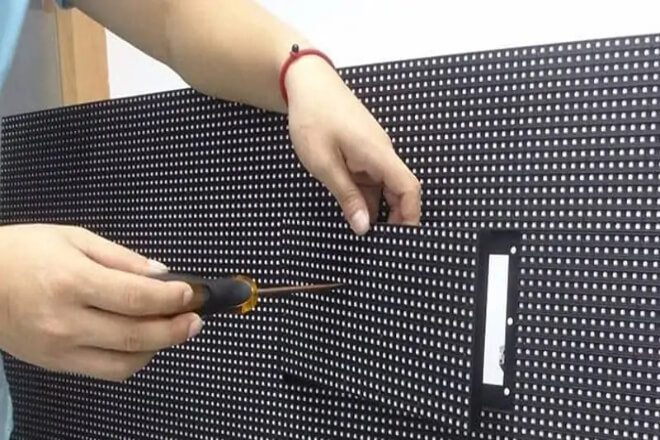
If you want your LED display screen to truly have “fewer problems,” the first step is crucial—don’t just look at the price; choose the right quality.
High-quality LED screens typically use more stable core components and mature technologies, resulting in smoother operation and reducing the likelihood of flickering, uneven color blocks, or partial blackouts.
For example, A 购物中心 initially selected a batch of lower-priced screens to save on budget.
The initial installation was good, but within a year, problems such as inconsistent 亮度 and individual LED damage began to appear.
The result was not only a negative impact on the overall image but also frequent maintenance, even necessitating shutdowns in some areas.
After switching to higher-quality products, the operation became significantly more stable, and maintenance frequency decreased dramatically.
While high-quality LED displays may require a slightly higher initial investment, in the long run, they offer a longer lifespan, lower failure rate, and consequently, lower maintenance costs and less hassle.
Stability is especially crucial in scenarios requiring long-term operation. Simply put, choosing high-quality products saves you years of worry and effort, ensuring the screen remains in optimal condition.
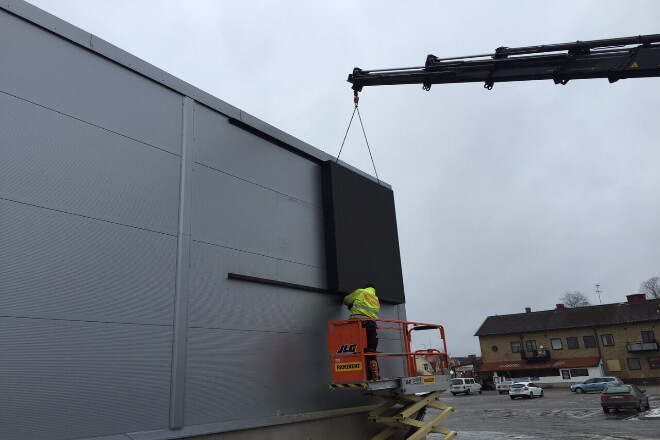
Many people believe that as long as the screen is lit, it doesn’t need attention. However, like cars, regular maintenance of LED displays can prevent major problems later.
Developing a simple, regular inspection plan, such as a basic inspection quarterly to check the power system stability, module loosening, and brightness uniformity, is not complicated but crucial.
For example, a hospital lobby screen runs for over ten hours daily. Initially, they almost exclusively used the system until problems arose, before repairing it.
One time, an aging power module went undetected, causing a sudden screen blackout during peak hours, resulting in chaos.
Later, they switched to a regular inspection system. Technicians proactively identified several modules with diminishing 亮度 and replaced them promptly.
Minor issues were addressed in their early stages, preventing widespread failures.
The benefit of preventative maintenance lies here—eliminating “small problems” early on, rather than waiting for them to become “major failures.” This not only reduces the impact of sudden downtime but also avoids high repair costs.
Simply put, regular maintenance is like giving the screen a “check-up”—a small investment of time and money yields more stable operation and a longer lifespan.
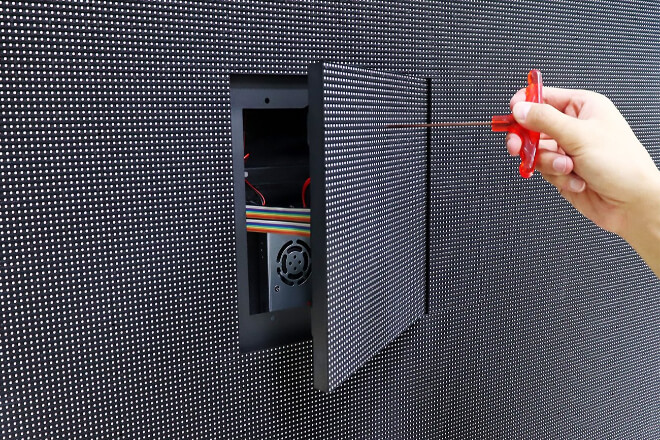
Imagine if an LED display screen malfunctions; technicians would have to travel to the site every time, which is not only inconvenient but could also disrupt the hospital’s daily operations.
Intelligent monitoring systems act like “remote doctors” for the screen, monitoring their operating status in real time, detecting anomalies promptly, and even performing remote diagnosis.
And adjustments in the background. Some minor problems can even be resolved online without going to the site.
Here’s a real-world example: A 医院 lobby LED screen was experiencing uneven brightness at night.
Previously, without a remote system, staff had to wait until daytime to contact engineers and arrange on-site repairs, which could take several hours or even half a day to restore normal operation.
With the intelligent monitoring system, the technical team could identify the problem from their office, remotely restart the control system.
And adjust brightness parameters, restoring the screen to normal in just a few minutes, with virtually no impact on the hospital’s daily operations.
The benefits of remote diagnostics are clear: it not only reduces the number of times technicians need to visit the site but also significantly shortens troubleshooting time and lowers labor costs.
More importantly, this monitoring ensures the screen remains stable under prolonged, high-intensity use. Even minor issues can be addressed immediately without affecting display quality.
Simply put, the intelligent monitoring system is like having a “personal butler” for the LED screen, constantly monitoring its operation and making hospital screen management worry-free, reliable, and efficient.
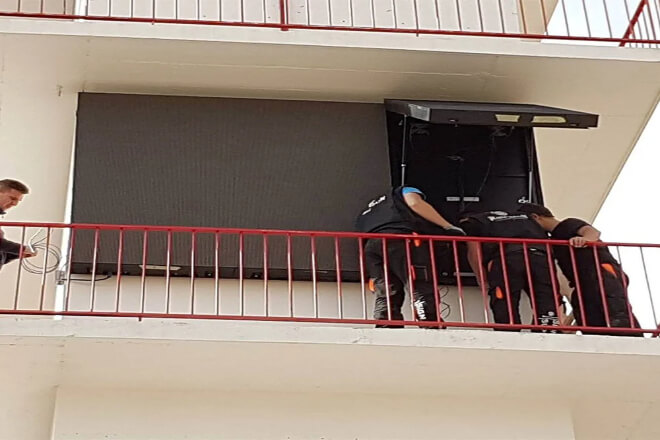
While LED displays are durable, they are not invincible. The environment greatly affects their lifespan and stability.
For example, prolonged exposure to high temperatures, excessive humidity, or dusty environments can easily lead to brightness degradation, color deviation, and even malfunctions.
To ensure a screen’s longevity and stable performance, it’s essential to protect it by addressing environmental factors.
The specific steps are simple:
First, ensure the screen is installed in a well-ventilated location with a suitable temperature, avoiding direct sunlight or proximity to heat sources.
Second, pay attention to dust and moisture prevention. 为了 户外屏幕, choose products with high waterproof and dustproof ratings and clean the screen surface regularly.
Indoor screens can also be cleaned regularly with a soft cloth to remove dust and maintain proper heat dissipation.
For example, a hospital corridor LED screen was initially installed near an air conditioning vent. In summer, the direct airflow caused uneven brightness and slight flickering in certain areas.
After adjustments, moving the screen slightly away from the vent and increasing daily cleaning and ventilation checks quickly resolved the problem. The screen operated more stably, and its lifespan was extended.
In short, optimizing the operating environment is like “creating a comfortable home” for the LED screen, reducing environmental damage and ensuring long-term stable operation.
Paying a little attention to installation and maintenance can make your equipment last longer and be more reliable, while reducing failure rates and maintenance costs.
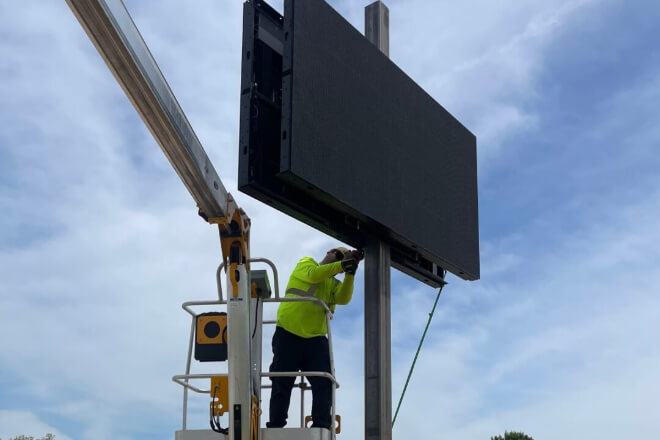
Even the best LED display will fail if it accumulates dust or dirt over time. Dust not only affects image clarity but can also block heat dissipation channels, leading to overheating and even damage to the circuitry.
Regular cleaning and maintenance are essential to keep your screen in optimal condition.
The process is quite simple: Wipe the screen surface with a soft, dry cloth or professional cleaning tools to remove dust and fingerprints.
Regularly check the ventilation openings to ensure proper heat dissipation; outdoor screens should also be cleaned of rainwater, mud, and airborne particles.
If the screen operates continuously for extended periods, the cleaning frequency can be increased to ensure a consistently bright and clear image.
For example, a hospital lobby screen initially experienced a gradual dimming of its display and localized overheating due to dust accumulation.
After regular cleaning by staff, the brightness returned to normal, the screen operated more stably, and its lifespan was significantly extended.
In short, regular cleaning and maintenance are like giving your screen “daily care.”
This not only makes the image clearer and improves the visual effect but also reduces the risk of malfunctions, allowing the LED display to operate efficiently and stably for a long time.
Spending a little time on maintenance allows your investment to yield greater value over time.
 English
  Español
  简体中文
简体中文  Français
  日本語
日本語  한국어
한국어  العربية