

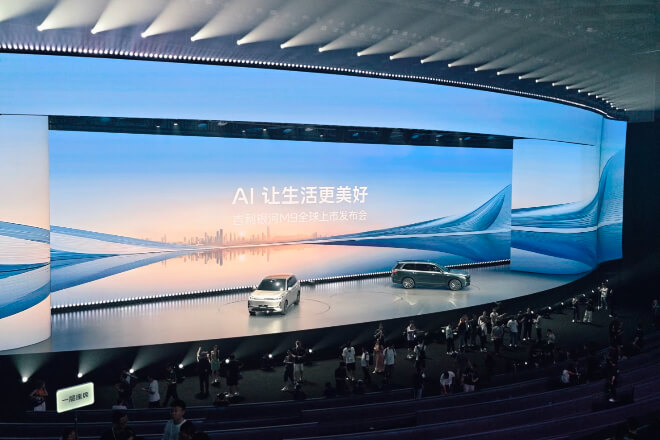
At car brand launch events, the LED display screen’s task is direct and crucial: to make the audience feel at first glance, “This car is different from ordinary ones.”
First, a massive LED screen creates the visual center of the launch event. The opening of the launch event typically involves deliberately dimming all the lights in the venue, making the LED屏幕 the sole “light source.”
The moment the screen illuminates, the entire space’s attention is instantly drawn to the center of the 阶段, as if the stage has been “activated,” establishing the brand’s aura from the outset.
Second, the vehicle’s appearance and the visual presentation should be synchronized. Many high-end product launches employ a “vehicle + LED content” approach.
Where a new car slowly pulls out while the screen simultaneously displays design inspiration, aerodynamic data, or urban road scenes.
This way, the car is no longer displayed alone, but rather “drives out of the screen,” resulting in a significantly stronger visual impact.
Simultaneously, the LED display also enhances the brand’s technological and premium feel through visual language such as particle flow, digital interfaces, and minimalist lighting.
The entire stage becomes more like a “futuristic cockpit” or “digital space,” allowing even viewers unfamiliar with the technical details to naturally perceive it as a technologically advanced automotive brand.
Finally, it establishes a “first impression.” Automotive launches are typically fast-paced, but what truly stays in the audience’s mind are often the opening seconds—the lights dim, the screen illuminates, and the vehicle appears.
If this moment is impactful enough, the LED has already accomplished its task: not just explaining the car, but making people remember that this car “looks very different.”
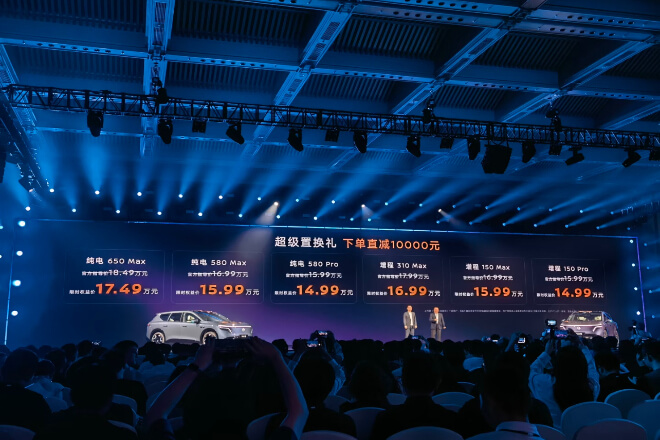
At car launches, LED显示屏 don’t just serve as a backdrop; they act as a storytelling magnifying glass—transforming a car from simply “seeing it” to “understanding it.”
First, dynamic visuals enhance the vehicle’s appearance and details. Under static lighting, a car’s lines might just look “good,” but when an LED screen synchronously plays dynamic light and shadow effects:
For example, the car’s streamlined shape being cut by the wind, the lights illuminating one by one, and close-ups of details magnified.
The design language becomes more intuitively perceived. Viewers don’t even need technical explanations to feel that “this car is exquisitely made.”
Second, there’s the integration of driving scenarios and performance visuals.
Many launches feature static displays of the actual vehicle while LED screens play dynamic footage of the vehicle driving on mountain roads, highways, or city nightscapes.
For example, the visuals and lights change synchronously during acceleration, or the visuals follow the car’s movements during turns.
Instantly transforming the “static car” into a “car on the road,” making the performance expression more visually compelling.
Simultaneously, multi-angle visuals compensate for the limitations of physical displays. Attendees can only see the actual car from a fixed angle.
However, LED screens can fill in the gaps by displaying chassis structure, interior details, driving perspectives.
And even 360° rotating displays, essentially providing each viewer with a “personal guide” to fill in the unseen parts.
Finally, it improves overall product comprehension efficiency. Automotive products are inherently complex, and relying solely on explanations makes them easy to forget.
But when design, performance, and scenarios are linked together through LED visuals, viewers more easily form a complete impression:
What kind of car it is, what scenarios it’s suitable for, and what its features are, significantly reducing the cost of understanding.
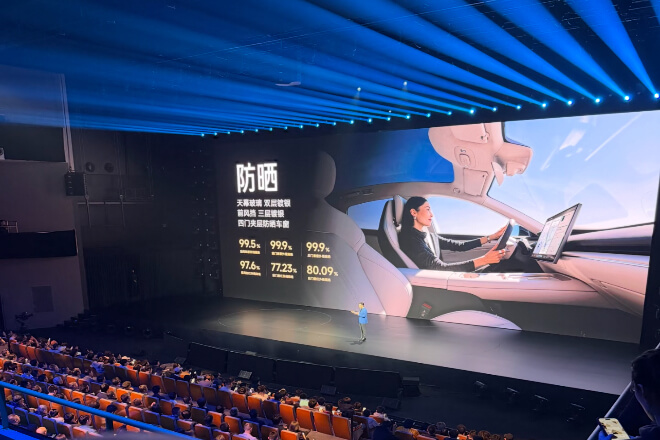
At a car launch event, LED displays are somewhat like a combination of “atmosphere director + rhythm DJ”—they don’t just display images.
But are responsible for evoking anticipation, surprise, and genuine excitement in the audience.
Firstly, the launch process and visual rhythm are synchronized. For example, before a new car is unveiled, the LED displays don’t show the car directly.
But instead create suspense: flowing light and shadow, gradually increasing sound, and a tightening visual, sometimes leaving only a single beam of light swaying in the center of the stage.
At the moment of unveiling, the screen suddenly bursts open, revealing the new car—the audience’s reaction is usually unanimous: “It’s here!”
Secondly, different visual themes switch between different segments. When telling a story, the LED屏幕 might resemble an art exhibition; when discussing performance, the screen transforms into a “speed wind tunnel + data stream.”
When discussing intelligence, it switches to a futuristic interface. It feels like the launch event has been transformed into three different worlds, but the main focus remains the same: the car.
Simultaneously, the LED screen can control the emotional fluctuations of the audience. When to be quiet, when to accelerate, when to explode—all can be guided by the rhythm of the visuals.
For example, during the countdown, the visuals become increasingly tense, the lights gradually dim, and the audience unconsciously holds their breath.
At the moment of unveiling, the screen bursts open, and the emotions explode.
Finally, there’s the establishment of a sense of ceremony. A good car launch isn’t just about “introducing the product,” but about “making a car’s debut feel like a major event.”
The LED screen lays out the rhythm layer by layer, gradually transforming the audience from “What kind of car is this?” to “This entrance is something special.”
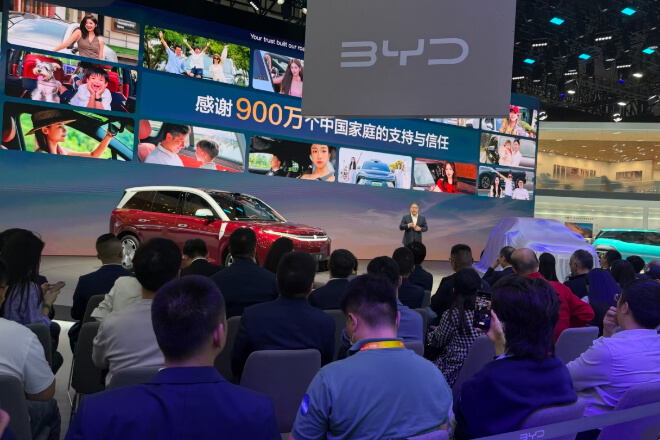
At car launches, LED displays are like “giant movie screens that tell stories,” except the protagonist isn’t a movie character, but the brand itself—and the story needs to be memorable.
First, there’s the visual presentation of the brand’s history and philosophy. Many brands don’t start by stating “how many years we’ve been around,” but instead let the LED屏幕 “show a story over a period of time.”
For example, from a beam of light that gradually converges into the first car model, then extends to city roads, family travel, and future vision.
Viewers may not remember the years, but they easily remember the visuals—”Oh, this is how this brand has come to be.”
Second, there’s the dynamic display of technological innovations. Content that might sound a bit like “engineering jargon,”
such as battery structure and intelligent driving systems, becomes a more intuitive visual expression on the LED screen: unfolding layer by layer like a disassembly animation, with data flowing like light.
The audience’s feeling is often: not listening to a technical explanation, but “watching technology in motion.”
Simultaneously, LED screens also amplify emotional resonance. Some scenes abruptly shift from “technical mode” to “lifestyle mode,” such as a family outing, city streets at night, or clips of a long journey.
At this point, the brand is no longer just a “car manufacturer,” but more like someone who “accompanies you in life.”
Many viewers remember not the specifications, but the emotion evoked in that instant: “This scene is so comforting.”
Finally, there’s the natural amplification of its communicative value. LED screens themselves output high-quality visual content, making on-site footage almost “ready-made short video material.”
As soon as the launch event ends, these images continue to circulate on social media, ensuring the brand story doesn’t just remain at the event.
But becomes a “visual memory point” that can be repeatedly viewed.
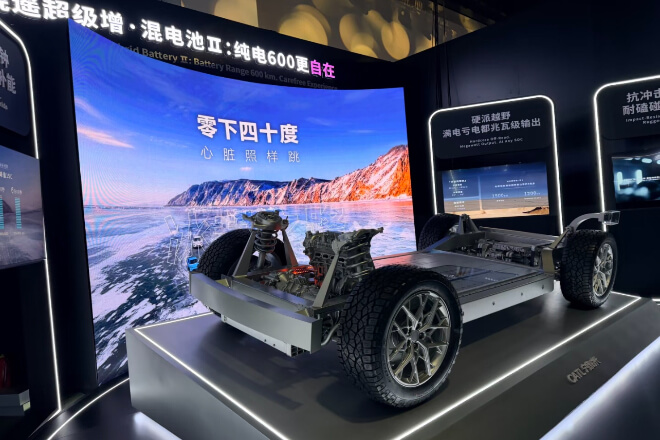
At car launch events, the role of LED显示屏 has long since moved beyond simply “displaying content.”
Becoming more like a “spatial magician who modifies emotions”—its movement changes the atmosphere of the entire venue.
First, the lighting and large screen work together to create a sense of space.
As the lights gradually dim and the LED screen illuminates simultaneously, the entire 阶段 instantly transforms from a “real space” into a “visual space.”
For example, when the scene shifts to a nighttime city street, the lighting combined with flowing light trails easily creates the illusion for the audience: they’re not watching a product launch, but rather “entering the world of this car.”
Secondly, it enhances audience emotional engagement. Good LED displays don’t just make people watch; they “follow the emotions.”
For instance, during the countdown before the unveiling, the numbers on the large screen jump second by second, and the lights tighten, causing the audience to unconsciously hold their breath.
Once the unveiling moment is activated, the entire audience’s emotions are instantly “charged.” This emotion isn’t conveyed through words, but through the visuals.
Simultaneously, LED displays also increase the desire to take photos and share. If the visuals are stunning enough, the audience will naturally pick up their phones to record.
For example, the light and shadow storm across the entire screen, the moment the vehicle merges with the visuals, is inherently “perfect for sharing on social media.”
Often, brands don’t need to push for sharing; the audience themselves are already helping to “generate secondary dissemination material.”
Finally, it creates a truly immersive launch experience. A good launch isn’t just “a speaker on stage and an audience watching,” but rather making the entire space feel like a carefully designed scene.
LED screens unify visuals, lighting, and rhythm, allowing the audience to enter a shared emotional space within a short period, creating a strong sense of immersion.


 English
  Español
  简体中文
简体中文  Français
  日本語
日本語  한국어
한국어  العربية