

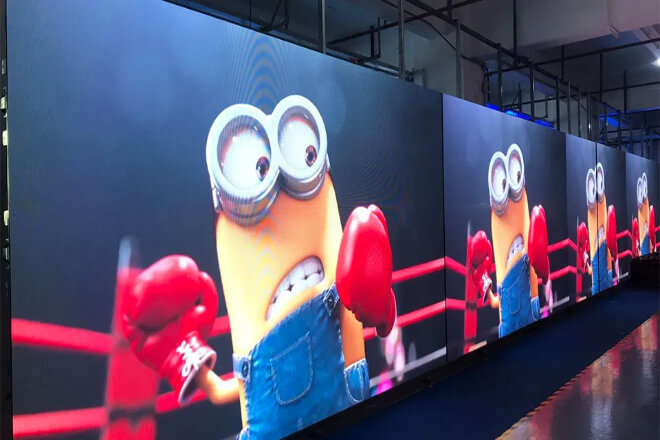
When choosing an LED display, pixel pitch is a crucial yet easily overlooked factor, directly determining the clarity and readability of the image at different distances.
Simply put, a smaller 像素间距 results in a more detailed image, suitable for close-up viewing; a larger pixel pitch is better suited for long-distance, large-area viewing.
Specifically, the choice depends on the 观看距离 and the type of content. In close-range environments like conference rooms or command centers.
Where viewers are close to the screen, a smaller pixel pitch is needed to ensure text, tables, and even complex charts remain clear and sharp.
However, if the primary content to be displayed is at a distance, such as in large-screen displays or spacious environments, the pixel pitch requirements can be relaxed to balance overall clarity with cost and display quality.
Additionally, the type of content is also important. If the screen is mainly used to display text, data, or detailed charts, higher clarity is required.
If it’s geared towards video or large-screen displays, the requirements for pixel detail are relatively more lenient.
Simply put, choosing the pixel pitch is like “fitting glasses” for the screen—for close-up details, you need high-definition lenses.
For long-distance viewing of the overall picture, you can choose a more balanced approach, making the image both clear and visually appealing.
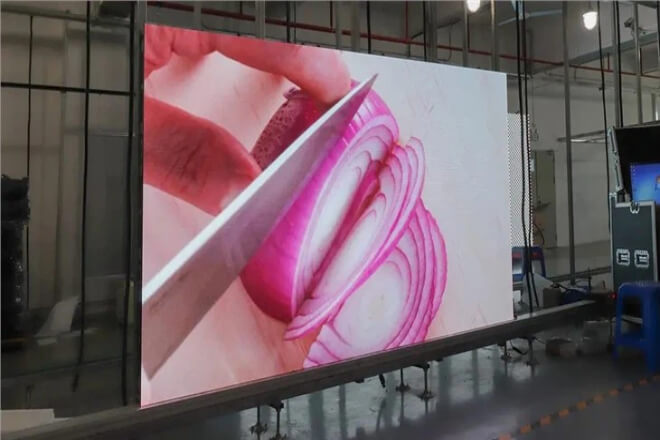
When choosing a 小间距LED显示屏, matching the screen size with the installation space is like “custom-making a high-definition large-screen garment” for the space—it needs to fit perfectly while also looking comfortable and high-quality.
First, consider the limitations of the wall or space size. The advantage of small pixel pitch LED displays is their fine image quality, but it’s not a case of “the bigger, the better.”
If you cram a screen into an unsuitable space, it’s like wearing an ill-fitting garment—not only uncomfortable but also affecting the overall effect.
Therefore, the first step must be “measuring the space before ordering.”
Secondly, screen size and splicing method directly impact model selection. Small-pitch LED displays are typically composed of many small modules.
If the splicing is not done properly, the image may have a slight “segmentation,” like misaligned puzzle pieces; even the best details will be diminished.
Therefore, planning the splicing layout in advance, like designing a “seamless large-screen puzzle,” is crucial.
Finally, ease of installation and maintenance cannot be ignored. After all, small pixel pitch LED displays have many modules and a delicate structure.
If installation is too complex and later maintenance is inconvenient, it easily becomes “beautiful to look at but difficult to use.”
When choosing, try to balance structural design and maintainability for easier daily use.
Simply put, a small pixel pitch LED display isn’t just something you can hang anywhere.
It needs to be “tailor-made” to fit the space, ensure a smooth, uninterrupted image, and make installation and maintenance easy.
Only then can it truly achieve beautiful, easy to use, and worry-free.
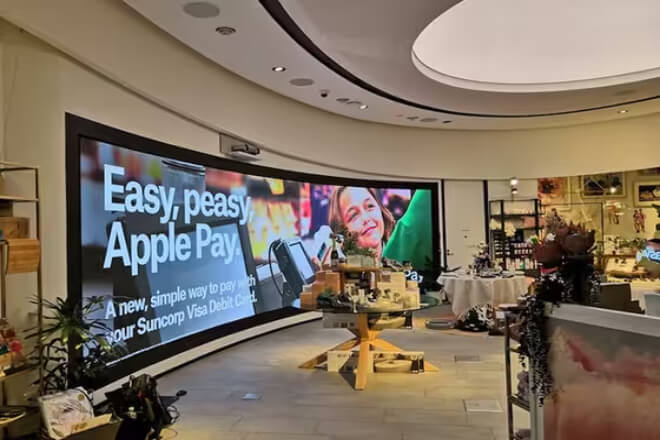
When choosing a small pixel pitch LED display, matching brightness with ambient light is like adjusting the screen’s lighting mode—too bright is glaring, too dim is hard to see.
The key is finding the perfect balance.
First, consider the environment: indoor, semi-outdoor, or fully outdoor.
Indoor ambient light is relatively stable, so excessive 亮度 is generally unnecessary; comfort and minimal eye strain during extended viewing are more important.
However, in semi-outdoor or near-bright environments, screen brightness needs to be significantly increased; otherwise, the content will easily be “overwhelmed by sunlight.”
In high ambient light conditions, high-brightness models are almost a must. For example, in areas near glass curtain walls, well-lit exhibition halls.
Or open spaces, insufficient brightness will make the image appear grayish and pale, greatly reducing the effectiveness of information transmission.
At the same time, it’s not advisable to simply pursue “the brighter the better.” In many applications of 小间距LED显示屏 (such as conference rooms and command centers), viewers are close to the screen.
Excessive brightness can easily cause eye strain during prolonged viewing.
Therefore, a balance needs to be struck between clarity and comfort.
Simply put, choosing the brightness of a small pixel pitch LED display is like adjusting a “smart desk lamp.”
It needs to be bright enough in strong daylight, yet soft and comfortable for indoor use, ensuring viewers and operators can see clearly, for extended periods, and comfortably under any lighting conditions.
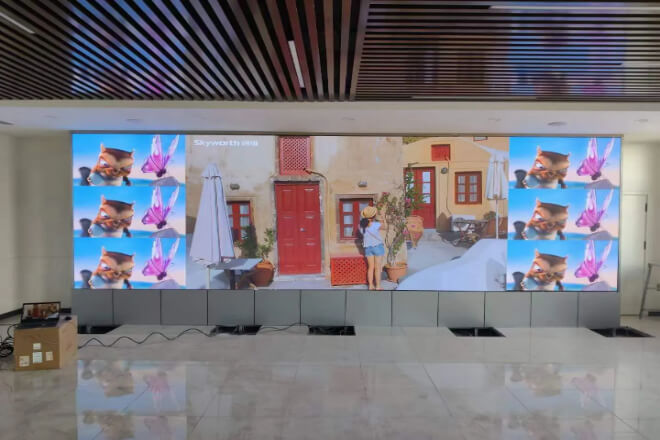
When choosing a small pixel pitch LED display, “compatibility” is often more crucial than the specifications themselves.
Simply put, it’s about whether the screen can “work well” with your existing system, rather than discovering incompatibility after installation.
It’s like getting a new, highly capable colleague, but with incompatible computer interfaces and workflows—that’s more troublesome.
First, check if it supports existing signal input and playback systems. For example, can your existing control platform, conferencing system, or content management software be directly connected and play smoothly?
Incompatibility is like a plug not fitting a socket; not only do you need adapters, but it can also affect stability and efficiency.
Secondly, consider the “three essential elements of image quality”: grayscale, 刷新率, 和 解决. Small pixel pitch LED display are designed for delicate detail, but if the refresh rate isn’t high enough, the image can easily “crack” with even slight movements.
Insufficient grayscale makes the image appear flat, instantly diminishing its premium feel.
Therefore, these parameters aren’t just numbers on paper; they are crucial details that directly impact the viewing experience.
Additionally, it’s essential to consider whether it supports interaction or dynamic content expansion.
Many scenarios now go beyond simply “playing content”; they involve data display, real-time updates, and even interactive operations.
If the system doesn’t support expansion, it’s like a phone that can’t install new apps—upgrading later will severely limit the experience.
Simply put: choosing a small pixel pitch LED display isn’t just about whether it “works,” but whether it can “seamlessly integrate, perform stably, and grow with the market.”
After all, good equipment isn’t just good now, but also won’t fall behind in the future.
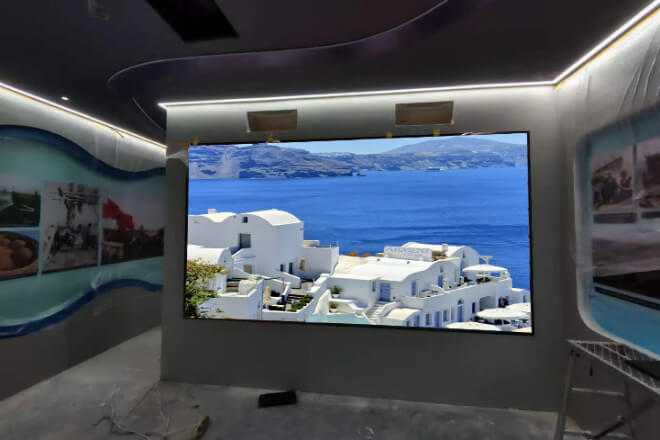
When choosing a 小间距LED显示屏, budget and maintenance costs are often unavoidable factors.
Often, it’s not about “which one is the best,” but rather “which one is most suitable for long-term use without financial strain.”
The first thing to consider is the price, energy consumption, and long-term maintenance costs of the model itself.
While small pixel pitch LED displays offer more delicate image quality, their higher pixel density places higher demands on power and heat dissipation.
If energy consumption isn’t well controlled, electricity bills and maintenance costs will gradually accumulate over time.
Secondly, consider the long-term cost-effectiveness, not just the initial investment. Some solutions may seem cheap, but frequent maintenance and high failure rates can continuously increase hidden costs.
More stable models, while requiring a higher initial investment, are less troublesome to use, making them more cost-effective overall.
Furthermore, the reliability of after-sales maintenance and technical support is crucial. After all, small pixel pitch LED displays are long-term operating devices.
Any problems without timely technical support can affect the entire system’s user experience and even disrupt normal business operations.
Simply put, choosing a small pixel pitch LED display isn’t just about the initial price; it’s also about how much trouble you’ll have to maintain it.
It’s more like a long-term investment—a stable initial choice ensures peace of mind, cost savings, and less hassle later on.


 English
  Español
  简体中文
简体中文  Français
  日本語
日本語  한국어
한국어  العربية