

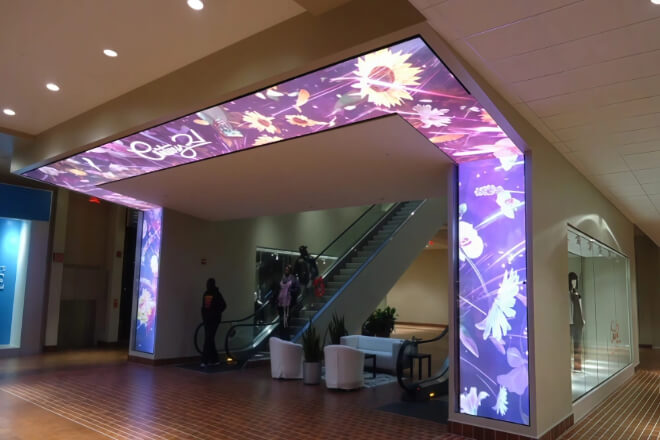
At the entrance, a location with “only one glance,” conventional rectangular screens are sometimes easily overlooked.
The value of irregularly shaped LED显示屏 lies in one sentence: get people to look first, then consider the content.
First, there’s the visual impact of the entrance and signage. Irregular structures inherently break the “neatness” of the environment, making them easier to spot when people’s eyes scan the space.
For example, curved, angled, or three-dimensional structures have a stronger presence than a plain flat screen, like someone suddenly changing their appearance in a crowd—they naturally attract attention.
Second, there’s the novelty brought by the irregular shape. Most people are accustomed to the look of standard screens.
While irregularly shaped screens create an instant sense of curiosity, prompting people to linger for a second longer. This one second is the core of attraction.
Another advantage is improved long-distance visibility. Irregularly shaped structures often have more three-dimensional contours or extended directions, making them easier to identify in complex environments.
Even before seeing the content clearly, people can see “something moving here,” guiding their gaze closer.
Finally, there’s the impact on pedestrian behavior. When an entrance has a distinctly different visual element, people are more likely to feel the urge to “come closer and take a look,” rather than simply walking past.
It’s not just about displaying information; it’s about changing path choices.
Simply put, the role of irregularly shaped LED displays at entrances is not just “more aesthetically pleasing,” but rather, through their form.
Making the screen stand out from the background, accomplishing a crucial task: making people want to look at it at first glance.
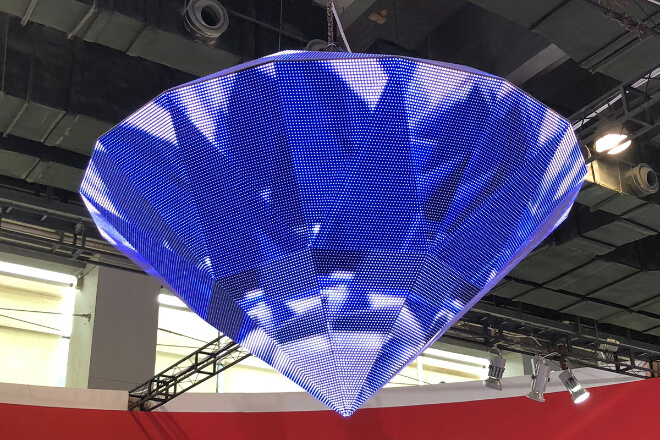
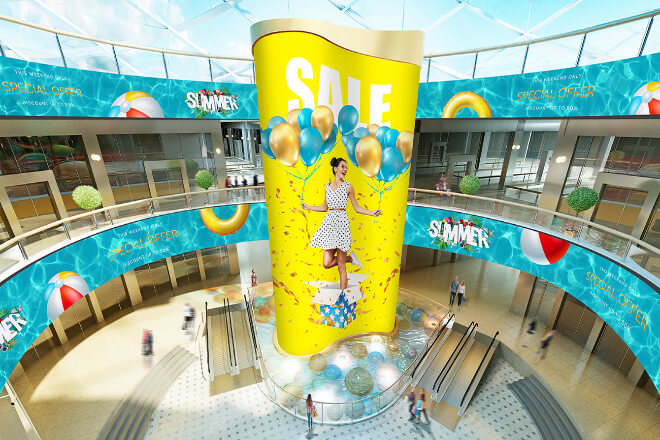
The atrium of a 购物中心 is inherently a place where “people naturally stop,” and the role of irregularly shaped LED显示屏 is to transform this lingering from “casual glance” to “dedicated stop.”
First, there’s the sense of centrality created by the structure itself. Whether it’s a suspended screen, a circular screen.
Or a three-dimensional combination structure, once it unfolds from the air or a central location, it easily forms a “visual anchor point.”
When people enter the atrium, their eyes are subconsciously drawn to it, much like stage lighting automatically shines on the main character.
Secondly, it stimulates stopping and taking photos. Irregular shapes combined with dynamic visuals easily become “worth taking a picture” points.
For example, a circular screen playing immersive images on a loop, or a three-dimensional screen creating a spatial extension effect.
Will often prompt customers to stop and take photos unconsciously. Once someone stops, those around are more likely to be attracted.
Another aspect is strengthening spatial memorability. Many shopping mall atriums look similar, but if there’s a distinctive, irregularly shaped screen.
It easily becomes “that place with the unique screen.” This memorability isn’t based on advertising, but on the spatial experience itself.
Finally, it drives foot traffic. A clear visual focal point naturally forms a “crowd gathering point.”
More people attract attention to surrounding shops, essentially transforming the atrium from a “passage space” into a “staying space.”
To give a more intuitive perspective: a typical atrium is like a transportation hub, but with the addition of irregularly shaped LED displays.
It becomes more like a “mini 阶段 with its own built-in entertainment,” where people aren’t just passing by, but willing to stop and see what’s happening.
Simply put, the value of irregularly shaped screens in an atrium isn’t just decoration, but rather, through form and content, transforming the space into a place that attracts people to linger, remember, and return.
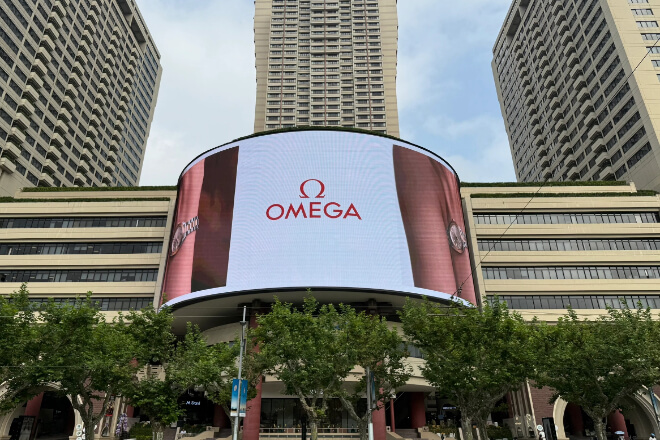
在 购物中心 circulation, some locations are naturally “choice points,” such as escalator entrances and passageway intersections.
When customers reach these points, they are essentially making a simple decision: which way to go.
The role of irregularly shaped LED displays is to “gently give them a push” at this moment.
First, location selection is crucial. Escalator entrances, corners, and intersections are areas where the eye will briefly linger.
Placing irregularly shaped screens at these points—such as curved, corner-fitting, or three-dimensional structures—makes them more likely to catch the eye immediately, rather than being ignored.
Second, it changes the path through visual attraction. People often walk by feel, drawn to brighter, more dynamic, or more unique visuals on one side.
For example, a uniquely shaped screen extending along a passageway visually guides people towards what they perceive as content, subtly adjusting pedestrian flow.
Another benefit is improved mobility across different areas.
If certain areas have low foot traffic, more attractive screen content at key points can guide customers towards those areas, providing “soft guidance” through visuals rather than hard signage.
Finally, it optimizes overall customer distribution. When multiple key points are strategically placed using uniquely shaped screens.
Pedestrian flow is more evenly distributed, rather than concentrated in a few popular areas, resulting in smoother overall movement.
To put it more intuitively, these screens act like “silent guides,” telling you through visuals, “This side seems more interesting.”
In short, their value lies not in forceful guidance but in using visual appeal to subtly encourage customers to change direction, linger longer, and explore more of the space.
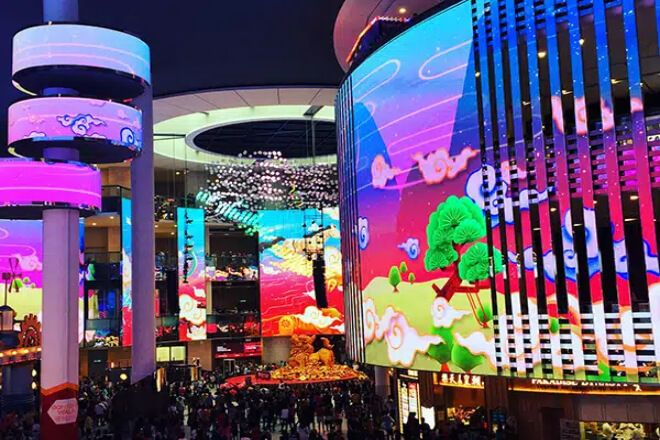
在 购物广场 or public spaces, most people’s reaction to shaped LED displays is simply “glance and walk away.”
What truly differentiates us is whether there’s a reason to move from “looking” to “stopping.”
First, there’s the inherent appeal of the interactive design itself. For example, sensory interactions, motion-sensing games, and simple trigger effects—when customers discover, “This screen responds to me,” they’re easily motivated to try it.
Even something as simple as waving, walking closer, or standing in a certain area to trigger a change—this feeling of “the screen responding to you” immediately transforms passive viewing into active participation.
Second, there’s the establishment of a sense of participation. Once customers are involved, such as through voting, mini-games.
Or real-time on-screen interactions, the experience is no longer “I’m watching content,” but “I’m becoming part of the content.”
This shift is crucial because content that has been engaged with is more memorable than content that has been viewed.
Furthermore, there’s the natural extension of dwell time. When content provides feedback, changes, or results, people unconsciously pause for a few more seconds or even longer.
For example, waiting for an interactive result or checking if their actions have been displayed. This lingering isn’t forced, but rather driven by the “process.”
Simultaneously, this increases the activity level of the space. Once someone starts interacting, those around are often drawn in, creating a chain reaction of onlookers and even participants.
Transforming what was originally just a “passing-by” area into a small hotspot of interaction and communication.
To put it simply: a regular screen is like a TV—you watch and leave; while an interactive screen is more like a small game area—you can’t help but try it out and then linger a bit longer.
In short, the core of interactive content isn’t about being more flashy, but about turning customers from “passing spectators” into “participants willing to stop and stay.”
In shopping malls or public spaces, most people’s reaction to shaped LED displays is simply “glance and walk away.” What truly differentiates us is whether there’s a reason to move from “looking” to “stopping.”
First, there’s the inherent appeal of the interactive design itself. For example, sensory interactions, motion-sensing games, and simple trigger effects.
When customers discover, “This screen responds to me,” they’re easily motivated to try it.
Even something as simple as waving, walking closer, or standing in a certain area to trigger a change—this feeling of “the screen responding to you” immediately transforms passive viewing into active participation.
Second, there’s the establishment of a sense of participation. Once customers are involved, such as through voting, mini-games.
Or real-time on-screen interactions, the experience is no longer “I’m watching content,” but “I’m becoming part of the content.”
This shift is crucial because content that has been engaged with is more memorable than content that has been viewed.
Furthermore, there’s the natural extension of dwell time. When content provides feedback, changes, or results, people unconsciously pause for a few more seconds or even longer.
For example, waiting for an interactive result or checking if their actions have been displayed. This lingering isn’t forced, but rather driven by the “process.”
Simultaneously, this increases the activity level of the space. Once someone starts interacting, those around are often drawn in, creating a chain reaction of onlookers and even participants.
Transforming what was originally just a “passing-by” area into a small hotspot of interaction and communication.
To put it simply: a regular screen is like a TV—you watch and leave; while an interactive screen is more like a small game area—you can’t help but try it out and then linger a bit longer.
In short, the core of interactive content isn’t about being more flashy, but about turning customers from “passing spectators” into “participants willing to stop and stay.”
In today’s commercial spaces, true value isn’t “being seen once,” but being photographed and shared.
If LED displays can achieve this, it’s equivalent to extending offline traffic to online dissemination.
First, there’s the “photo-taking impulse” generated by creative content. When the image is well-designed, interesting, or interactive, customers are more likely to have the idea of ”taking a picture.”
For example, immersive visuals, engaging animations, or content that interacts with people easily become “snap-up” material, rather than something to be forgotten after viewing.
Secondly, it’s about creating buzz by integrating with brand events. If screen content is combined with brand activities, holiday themes, or limited-time interactions.
Such as timed challenges, check-in tasks, or co-branded visuals, it’s easier to create a “something interesting” point of dissemination.
Customers aren’t just taking pictures; they’re participating in a “shareable event.”
Another key aspect is online-offline synergy. For instance, content displayed on offline screens can be simultaneously extended online with related topics or interactive entry points.
Allowing customers to move from “on-site experience” to “online participation,” forming a complete dissemination path, rather than just staying at the venue.
Another crucial point is “secondary traffic generation.” When content is shared on social media platforms.
It attracts more people who come to the venue specifically because they “saw others posting the content.”
In this case, the LED screen isn’t just serving on-site visitors; it’s continuously bringing in new customers for the venue.
To put it more intuitively: ordinary displays are “you see it and that’s it,” while content with viral potential is “you’ll want to take a picture after you see it.
Share it after you take it, and people will come back because of you after you share it.”
Simply put, the value of brand and scene content isn’t just about display; it’s about using creativity and interaction to transform LED displays into a traffic portal that can be taken away, shared, and brings people back.


 English
  Español
  简体中文
简体中文  Français
  日本語
日本語  한국어
한국어  العربية