

When buying LED显示屏, many customers ask: Is it really necessary to look at the refresh rate?
“Is a higher 刷新率 always better?” “Can the average person really tell the difference?” These questions frequently arise in purchasing communications.
Actually, refresh rate isn’t as easily judged as screen size, but in certain scenarios, it directly impacts the viewing experience.
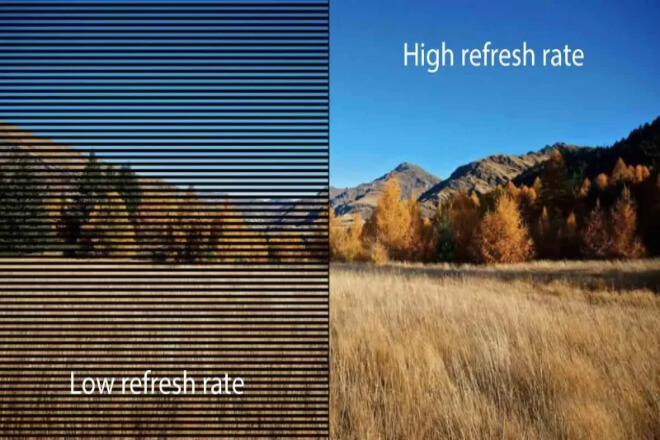
Many customers are initially attracted by a string of numbers when learning about LED显示屏 parameters: 亮度 in nits, pixel pitch, and refresh rate in Hz. But what is the actual use of refresh rate?
For everyday viewing, the difference might not be noticeable; however, in live broadcasts, filming, or high-speed motion scenarios, the difference becomes immediately apparent.
Simply put, the refresh rate determines how quickly the screen “updates the image.” The lower the refresh rate, the more prone the image is to instability when changing rapidly.
Such as subtle flickering, image ghosting, and even black lines appearing when shooting with a mobile phone.
A common example is when filming LED screens at concerts, many people find that what looks clear to the naked eye appears flickering or has scanning patterns in their phone videos.
This isn’t because the phone is broken, but rather because the screen refresh rate and the camera equipment aren’t well-matched.
高的-刷新率 LED displays can reduce these issues, resulting in more stable live footage and video quality.
In esports competitions, sporting events, and live streaming, the importance of refresh rate is even more pronounced.
For example, in fast-paced football passes or instantaneous actions in esports, if the screen’s response isn’t fast enough, the viewer may experience a lack of responsiveness.
Of course, a higher refresh rate isn’t always better. For ordinary advertising, choosing a suitable parameter is sufficient;
However, for projects involving live streaming, video recording, or fast-paced dynamic content, a high refresh rate becomes a crucial factor affecting the user experience.
Therefore, refresh rate isn’t just a number on a parameter list. It determines whether the LED display can deliver a smooth viewing experience.
Stable video recording, and a comfortable viewing experience when displaying dynamic images.
This is why professional 阶段, events, and live streaming projects are increasingly emphasizing this metric.
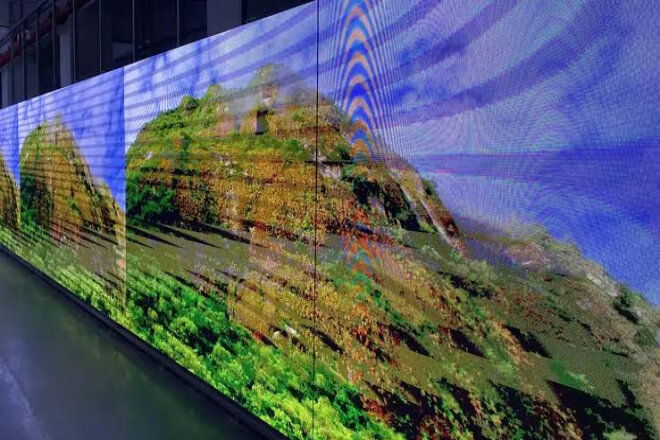
Many people consider refresh rate a “hidden option” when looking at LED display parameters: with so many people passing by in 购物广场 every day, can anyone really tell the difference?
Actually, the impact of refresh rate is not as simple as it seems. It is related to 观看距离, the content being displayed, and the usage scenario.
For an advertising screen displaying simple text or static images, the difference in refresh rate may not be noticeable.
However, many commercial scenarios now involve more than just displaying posters;
They play product videos, brand promotional videos, and dynamic animations. In these cases, the refresh rate begins to affect the viewing experience.
For example, LED screens in shopping mall atriums often play car advertisements, fashion films, or new product launch videos.
If the scene contains fast-moving shots, people walking, or rotating products, a higher refresh rate screen will make the entire image smoother and look closer to a realistic video effect.
The same applies to store windows. Many luxury and sports brands use LED screens to display details of new products.
If the image is not stable when models are walking, lighting changes, or product close-ups are transitioning, it will affect the overall sense of luxury.
A good refresh rate makes dynamic content appear more natural.
In corporate showrooms, the value of 刷新率 lies more in the presentation of details. For example, when showcasing car designs, industrial equipment, or AI technology solutions.
Smooth screen transitions help customers see product details more clearly, rather than being distracted by stuttering.
Of course, not all scenarios require the highest refresh rate. If the audience is far from the screen and only basic information is being displayed, a normal refresh rate may be sufficient.
However, for close-viewing scenarios such as shopping malls, stores, and showrooms, the refresh rate often determines whether the screen appears as a “normal display” or a “high-quality presentation.”
Simply put, refresh rate is like the smoothness of a video. You might not notice it normally, but the difference becomes immediately apparent when the image changes rapidly.
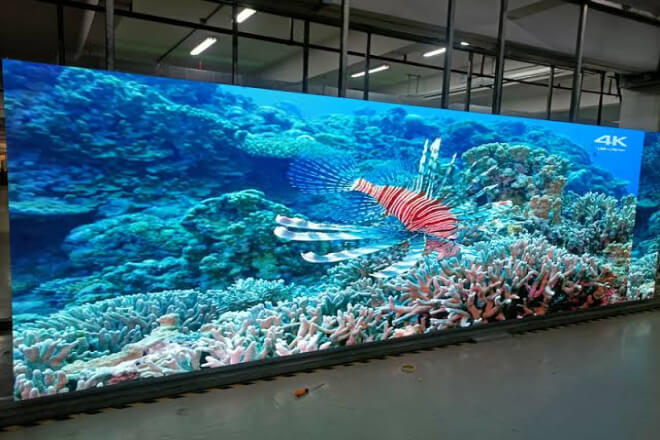
Not all LED displays need to pursue a high refresh rate, but in some scenarios where image speed and stability are critical, the refresh rate is like the screen’s “response speed,” directly affecting the final presentation effect.
Especially in 运动的, esports, live streaming, and 阶段 performances, the visuals change extremely rapidly, making it difficult for ordinary displays to meet the demands.
Sports events are a prime example. Fast passes in football, drives and shots in basketball, and high-speed movements in racing all require screens to accurately reproduce every moment.
Insufficient refresh rates can cause ghosting in fast-moving scenes, making exciting moments appear blurry to viewers.
Esports events have even higher 刷新率 requirements. Game visuals change very quickly, especially in competitive games like shooting and racing; even a slight delay can affect the viewer’s experience.
High-refresh-rate LED displays make game visuals smoother and allow live audiences to see the details of player actions more clearly.
In live streaming events, the importance of refresh rate lies in “camera performance.”
An LED screen that appears normal on-site may exhibit black lines, flickering, or unstable images when filmed by a camera if its parameters are not properly matched.
For television broadcasts, online press conferences, or large-scale events, this directly impacts the final dissemination effect.
Stage performances are also an important application scenario for high-refresh-rate LED screens.
The lighting changes, rapid dancer movements, and live special effects transitions during concerts all require a stable screen output.
For example, in large-scale tours, LED backdrops not only need to ensure clear visibility for the live audience but also guarantee professional-looking footage captured by cameras.
Of course, a high refresh rate isn’t a necessity for all projects. For simple advertising content, a standard refresh rate may suffice.
However, for projects requiring recording, live streaming, or displaying fast-moving images, a high-refresh-rate LED display often determines the difference in the final viewing experience.
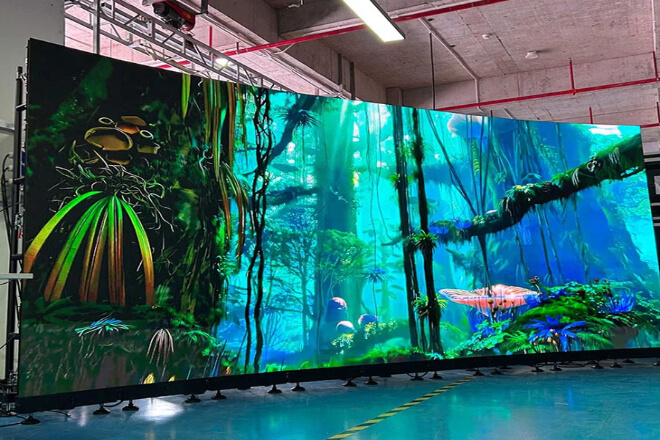
For ordinary advertising displays, refresh rate might not be the most easily noticed parameter.
However, in large-scale events, live sports broadcasts, and commercial performances, an LED screen must not only provide a comfortable viewing experience for the live audience.
But also withstand the scrutiny of cameras, live streaming equipment, and professional production teams.
Television broadcasts are a prime example. While the live audience may perceive the image as normal, after being filmed by cameras.
A low-刷新率 LED screen may exhibit flickering, scan lines, and other issues, ultimately affecting the quality of the live broadcast.
For sporting events, press conferences, or large-scale activities, these details directly impact the audience experience and brand image.
In brand events, LED screens are no longer just backdrops but an integral part of the overall visual design.
New product launches, car shows, and fashion events often require the display of fast-paced videos, dynamic effects, and detailed product images.
If the screen’s response is unstable, the overall sense of sophistication created at the event will be affected.
For example, at a large car launch, the 阶段 LED screen might simultaneously display vehicle rotation, lighting changes, and brand promotional videos.
If the image exhibits ghosting or choppy playback, not only will the audience experience suffer, but the dissemination of the on-site photographs will also be diminished.
Furthermore, large-scale projects typically last long and involve large audiences, placing higher demands on equipment stability.
High-refresh-rate LED displays can reduce image anomalies, allowing the screen to maintain stable performance during extended operation.
Therefore, professional projects prioritize refresh rates not just for the sake of higher specifications.
But because these scenarios demand both visual comfort and professional-looking footage. A good LED screen needs more than just 亮度; it needs stability.
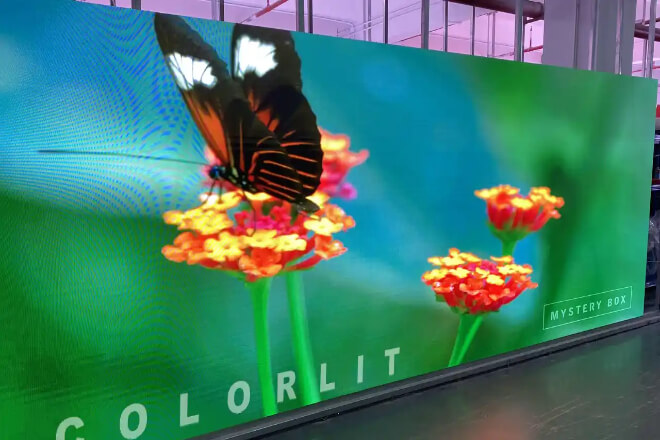
When choosing an LED display screen, many customers, upon seeing the words “high refresh rate,” might immediately think: does a higher number necessarily mean a better screen?
Actually, no. 刷新率 is like a car’s speed; it’s not about how fast you go, but where you’re going to take it.
For an LED screen used for 购物中心 advertising or building promotions, primarily displaying brand videos, promotional information, and dynamic visuals, choosing an appropriate refresh rate is sufficient.
After all, consumers typically view the screen while moving, so screen stability, good color, and engaging content are often more important than simply pursuing the highest refresh rate.
However, for events like concerts, e-sports competitions, and live broadcasts, the situation is completely different.
These events not only feature a large amount of fast-moving footage but also involve cameras recording and live streaming.
In these situations, a high refresh rate reduces flickering and scan lines, resulting in a smoother viewing experience for the audience and a more professional look on camera.
In practice, refresh rate shouldn’t be considered in isolation. For example, shopping mall projects might prioritize brightness and visual appeal; corporate showrooms value high-definition detail and color performance;
While stage performances require a combination of refresh rate, 亮度, and stability. Each scenario has different priorities.
Budget is also a factor to consider. Some projects spend more money to increase the refresh rate, but the actual improvement in the viewing experience is not significant;
However, for projects requiring filming, live streaming, or creating high-end visual effects, an insufficient refresh rate can become a regret later.
Therefore, when choosing an LED display, don’t just focus on the refresh rate number.
The truly suitable solution should find a balance between image quality, usage requirements, and project budget, ensuring that every investment generates value.


 English
  Español
  简体中文
简体中文  Français
  日本語
日本語  한국어
한국어  العربية