
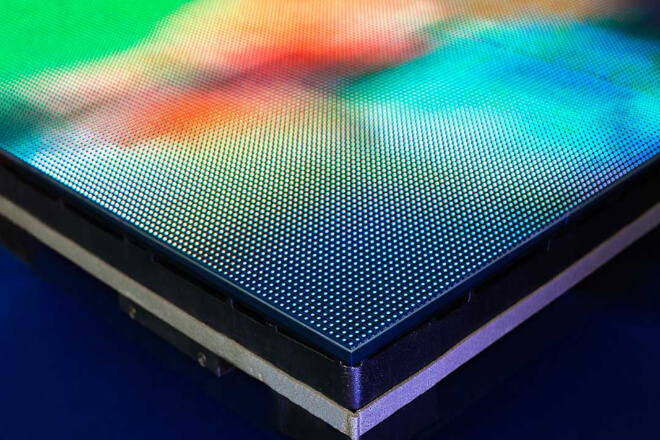
When an عرض الصمام first lights up, everyone usually thinks, “The effect is great.”
But the real test isn’t the moment it’s installed, but months or even years later.
When it faces high temperatures, long operating hours, and occasional minor malfunctions, can it still maintain stable illumination?
At this point, after-sales service is no longer “optional,” but plays a crucial role in determining the quality of the experience.
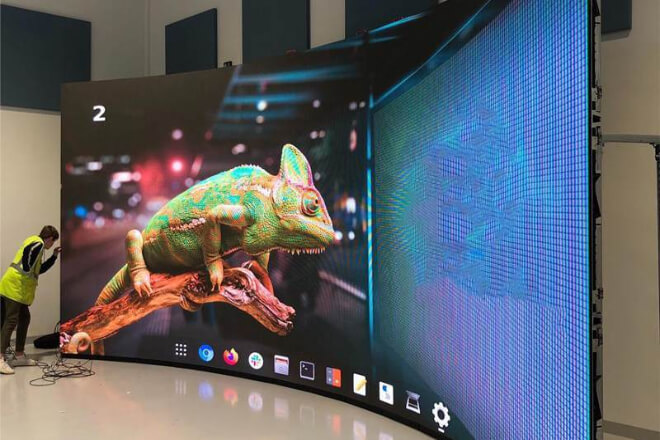
An LED display isn’t a “one-and-done” device; it’s more like a long-term operating system, and after-sales service is the key support to ensure its continued stable operation.
First, timely maintenance prevents problems like dead LED displays, black screens, and flickering from escalating.
على سبيل المثال، في مراكز التسوق or stadiums, if there are abnormalities in some LED displays or unstable signals, professional after-sales service can quickly diagnose the cause and replace or adjust modules.
Preventing small problems from developing into screen-wide failures and affecting overall image quality.
Second, ensuring long-term stable operation for both indoor and outdoor screens. شاشات LED خارجية need to withstand high temperatures, rain, and long operating hours, while indoor screens are often used for high-frequency playback or long-term displays.
The after-sales team ensures stable equipment operation under various environments through regular inspections, parameter optimization, and hardware maintenance, rather than only repairing after problems arise.
Simultaneously, it supports the normal operation of continuously used scenarios such as shopping malls and stadiums.
For example, a shopping mall’s large screen might run for more than ten hours a day, while sports stadiums use it continuously during events.
If a malfunction occurs, without a comprehensive after-sales support system, it can easily lead to prolonged screen downtime, affecting the on-site experience and operational rhythm.
Simply put, the stable operation of an LED display screen is not only due to the capabilities of the equipment itself.
But also to the continuous “bottom-line” support of after-sales service—ensuring the screen can be lit for a long time and stably.
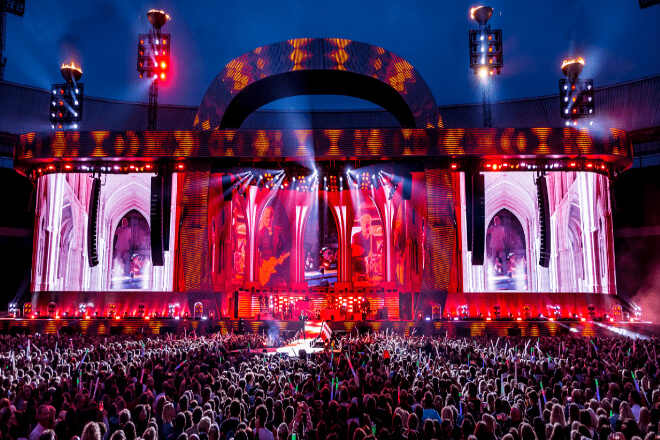
After-sales service for LED displays often determines not just whether it “breaks down,” but rather “how much impact it will have after it breaks down.”
Especially in high-exposure scenarios such as مراكز التسوق, sports stadiums, and event venues, the speed of after-sales response directly affects the magnitude of losses.
First, the impact of interrupted advertising playback on commercial revenue requires rapid after-sales support. For example, if a shopping mall’s large screen is playing a brand advertisement and then suddenly goes black or freezes…
Without timely after-sales support to troubleshoot, repair, or replace modules, the entire campaign may fail, advertisers will fail to achieve their exposure goals, and operators will suffer revenue losses.
Secondly, display interruptions at sporting events and activities rely heavily on rapid after-sales recovery. For example, at a basketball game or press conference.
If the scoreboard or main screen suddenly malfunctions, without a rapid response from an after-sales team, it can easily cause information gaps on-site, even affecting the audience experience and the event’s rhythm.
Furthermore, the rapid repair capability of after-sales service directly determines the length of downtime.
An excellent after-sales system typically possesses remote diagnostics, spare parts support, and rapid on-site response capabilities.
Minimizing troubleshooting time and restoring the screen to operation as quickly as possible, reducing “screen downtime.”
Simply put, LED display after-sales service is like an “emergency repair team”—it’s not about whether problems occur.
But about determining whether the loss is amplified or controlled the moment the problem occurs.
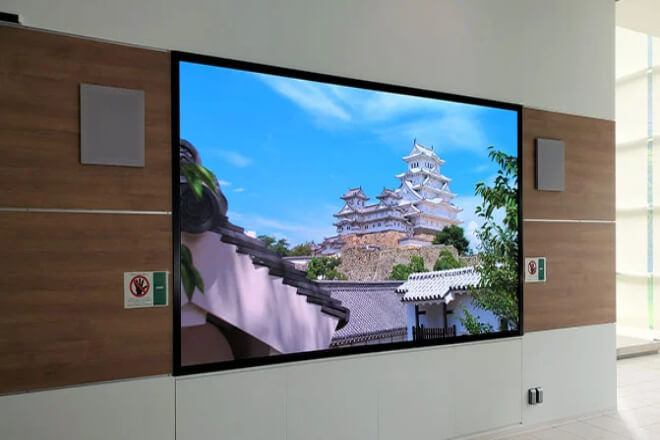
The lifespan of an LED display is never solely determined by the equipment itself; a large part of it depends on “whether it has been properly maintained.” Good after-sales service ensures longer and more stable equipment use.
Firstly, regular inspections of modules and power systems keep the equipment in good working order.
Core components such as وحدات LED, مصادر الطاقة, and signal connections are prone to thermal degradation or poor contact after prolonged operation.
Professional after-sales service, conducting regular inspections, is like proactive “health management,” preventing small problems from escalating into major malfunctions.
Secondly, early detection of aging and potential issues prevents the equipment’s lifespan from being “silently consumed.”
Often, equipment doesn’t suddenly break down; it first shows signs of decreased سطوع, color deviation, or localized anomalies.
If after-sales service can identify and address these issues promptly, problems can be prevented from escalating, keeping the equipment in optimal operating condition.
Simultaneously, continuous maintenance reduces overall replacement costs and extends the system’s lifespan.
Without after-sales maintenance, small faults can escalate into major problems, eventually requiring the entire screen to be replaced.
With continuous maintenance, most problems can be resolved through module replacement or partial repairs, making the equipment “repairable and durable.”
In short, the lifespan of an LED display screen isn’t determined by “natural wear and tear,” but rather by “continuous maintenance,” and after-sales service is the key guarantee to extend its “retirement” as much as possible.
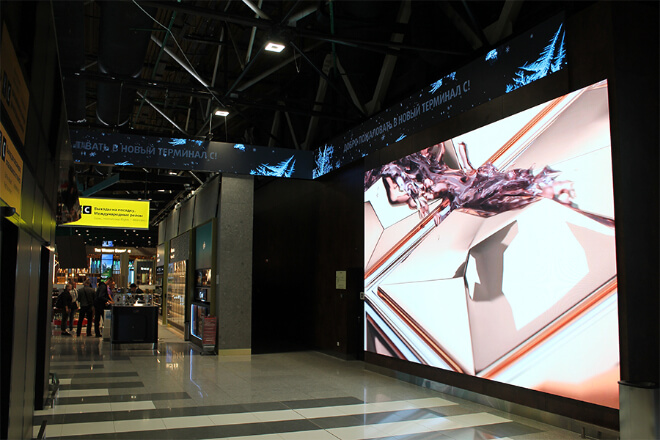
The most easily overlooked problem with LED displays over time isn’t whether they can still light up, but whether the سطوع is consistent.
A crucial value of after-sales service is controlling this gradual change in brightness.
First, by correcting brightness decay and color deviation, image uniformity is maintained. For example, on the same large screen, different areas of the وحدات LED may exhibit variations in brightness due to different usage times.
After-sales service can restore the overall image to a consistent state through calibration and parameter correction, avoiding noticeable layering.
Second, ensuring the overall uniformity of the splicing screen. In splicing structures like مركز تجاري atriums or large conference screens.
Color differences or inconsistent brightness in a single module will be very noticeable, like a jigsaw puzzle with mismatched colors.
After-sales service, through point-by-point calibration and module replacement, can restore the entire screen to a “single image” look.
Simultaneously, it improves long-term visual performance quality, preventing the screen from becoming increasingly cluttered over time. LED screens aren’t perfect from the start; brightness and color will gradually change with use.
Without continuous after-sales maintenance, the image may gradually become uneven and unclear; regular maintenance ensures a good display effect over the long term.
Simply put, after-sales service prevents the LED display from “looking less and less like a screen”—ensuring it always appears as a single, clean, and unified visual medium, rather than gradually becoming a “distinctly spliced collection of images.”
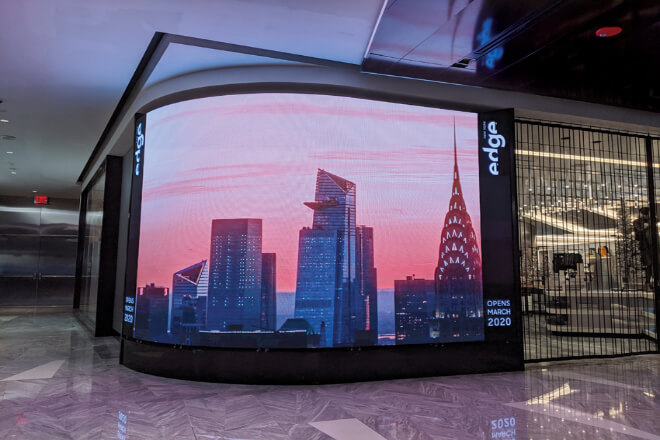
LED displays are not “fixed after installation” devices; they are more like systems that evolve with changing needs.
The importance of after-sales service lies in ensuring this system is “continuously updated and doesn’t fall behind.”
Firstly, by upgrading the control system software, the equipment’s functionality is continuously improved. For example, early playback systems might only support basic video playback.
With upgrades, features such as split-screen display, multi-signal access, and remote control become available.
Without after-sales support, these new features often cannot be successfully implemented.
Secondly, the content playback and management system is optimized, making operations more efficient. For example, previously, updating content via a USB drive might have required on-site operation.
Now, through system upgrades, remote unified management and simultaneous updates across multiple screens are possible.
Continuous optimization of the backend system by after-sales support is essentially about constantly improving the user experience and management efficiency.
Simultaneously, it allows the equipment to adapt to the changing needs of different application scenarios.
For example, the same screen might be used for مركز تجاري advertising today, event announcements tomorrow, and holiday-themed displays the day after.
Through after-sales upgrades and feature adjustments, LED displays can continuously adapt to new usage methods, rather than being fixed to their initial purpose.
Simply put, after-sales service is not just about “repairing equipment,” but about “making equipment smarter”—allowing LED displays to continuously upgrade as needs change, rather than remaining stuck at the moment of installation.


 English
  Español
  简体中文
简体中文  Français
  日本語
日本語  한국어
한국어  العربية