

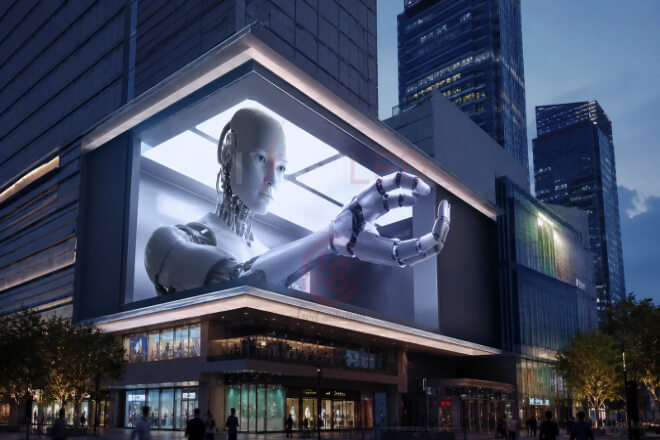
Traditional landmarks, such as light boxes, sculptures, and fixed signs, are essentially “written content.”
In today’s urban environment, this mode of expression is clearly insufficient—with a lot of information, it becomes somewhat “unclear and ineffective.”
Firstly, the biggest problem with traditional methods is their inability to be updated. Once the content is displayed, it’s essentially fixed.
Festivals, city promotions, and temporary announcements cannot be replaced in a timely manner; the same set of information can only be displayed “perpetually.”
يعرض الصمام are completely different. They can switch content at any time: during the day, they display navigation information;
At night, they showcase the city’s nighttime scenery; and on holidays, they can transform into themed visual displays.
For example, at the entrance of a city: a traditional lightbox might always display “Welcome to XX City,” while an LED screen can broadcast cherry blossom season one day, music festival the next, and city promotional videos the day after.
Secondly, traditional landmarks have limited information capacity. Too much text and static images easily become cluttered and not intuitive enough; many tourists passing by won’t actually read it all.
LED displays, on the other hand, can use dynamic images, videos, and animations to clearly convey information.
For example, routes, activities, and city features can be directly expressed in a few seconds of visual content, making them easier to understand than lengthy text.
For another example: a tourist city using LED screens to play “must-see route animations” allows tourists to understand how to visit at a glance, which is more intuitive than looking at a map.
Finally, traditional landmarks cannot meet the diverse communication needs of modern cities.
While LED displays can simultaneously serve multiple roles, including cultural display, commercial promotion, and public information dissemination, achieving “one screen, multiple uses.”
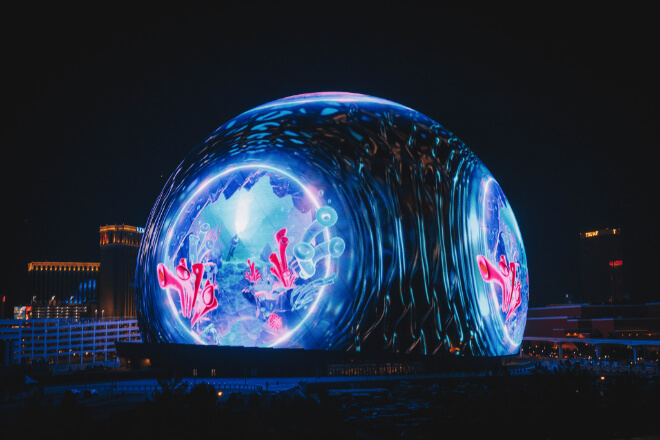
The competition among many cities at night has now become about “who looks better and who is more memorable.”
First, nighttime views have become an integral part of a city’s image. Tourists don’t just visit attractions during the day;
They also decide at night whether a city is worth exploring again. Therefore, the nighttime visual experience is increasingly important.
The advantage of يعرض الصمام lies in their ability to “move and tell stories,” rather than simply “brighten.”
For example, in a city square: traditional lighting merely illuminates the space, while LED screens can play dynamic city images, festival-themed animations.
Or even local cultural stories, transforming the night into a “nightscape with content,” not just “illumination.”
Second, the dynamic effects of LED displays are more memorable. Static lights might be glanced at and then forgotten, but constantly changing visuals.
Such as a flowing city skyline, waves, or fireworks displays, are more likely to attract attention and prompt people to stop and take photos or videos.
A typical example is areas like Times Square in New York and Shibuya in Tokyo, where large LED screens constantly switch between advertisements and visual content.
Transforming the streets themselves into a “visual experience,” even more recognizable than the attractions themselves.
This visual enhancement directly boosts the city’s nighttime economy and tourism appeal. Because people are more willing to linger rather than quickly pass by;
Longer stays naturally lead to increased consumption, such as boosting dining, shopping, and nighttime tourism.
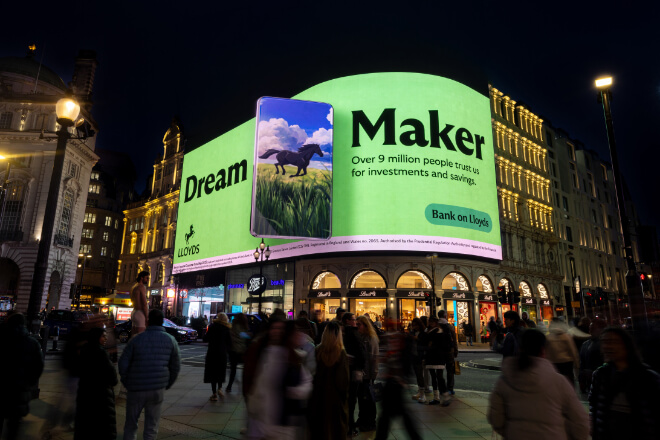
Many cities’ communication methods have shifted from “introduction-oriented” to “being seen.”
First, city landmarks are becoming windows for external display. They are no longer just buildings or attractions, but serve as “city cards”—visitors, media, and even live broadcasts all use them as representative images of the city.
The role of يعرض الصمام is to make this “window” more expressive.
For example, if a city landmark is just a sculpture or static form, the information it conveys is fixed; but if it’s equipped with an LED screen.
It can display different content at different times: city culture, festival themes, major events, and even international sporting events.
Second, it can simultaneously carry cultural promotion and commercial advertising. During the day, it can display city promotional videos;
At night, it can switch to festive light shows or brand collaboration content. One screen can handle multiple communication tasks, no longer “telling only one story.”
For example, in some international city squares, the same LED screen can display city tourism promotions during the day.
And switch to cultural and artistic videos or brand event content at night, making communication more flexible and frequent.
Meanwhile, the biggest change brought by LED displays is the increased efficiency of communication.
Dynamic images are more likely to attract attention than static signs and are also easier to film, share, and livestream, transforming “seeing it once” into “being shared many times.”
For a very intuitive example: a tourist films a video in front of a landmark, and the background on the LED screen is constantly changing; this scene itself easily becomes social media content.
Finally, this visual impact also makes the city brand easier to remember. It’s not about a slogan, but about a “moving city image.”
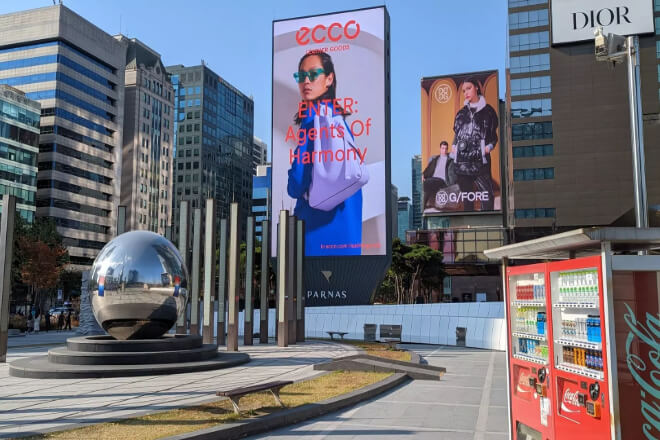
Cities are constantly “changing,” but if information remains static, it will clearly fall behind the pace.
Firstly, content such as festivals, events, and public information is updated very frequently.
For example, normal traffic information in the morning might become event guidance in the afternoon.
And then switch to nighttime safety tips in the evening. Relying on fixed formats like posters and light boxes is costly and slow to update.
The advantage of LED displays lies in their ability to change content at any time, with synchronized updates across the entire city.
For example, a large screen in a city square can display traffic guidance during the day, switch to concert entry instructions in the evening.
And then transform into festive lighting displays at night—a single screen can serve multiple purposes.
Secondly, it no longer relies on a fixed content structure.
Traditional methods display only what is needed, but LED displays automatically switch content based on time and context, ensuring information is more relevant to the current situation.
A typical example is when sudden weather events or large events end; relevant departments can issue guidance information with a single click.
And LED displays at subway entrances, shopping districts, and transportation hubs can update simultaneously, reducing on-site chaos.
This also directly improves urban management and communication efficiency.
A single backend system can manage multiple locations uniformly, eliminating the need to change materials individually and avoiding information asynchrony.
For example, during peak holiday periods: traffic screens display detour routes, scenic spot screens display queue status.
And shopping district screens display parking availability—the information is constantly updated, significantly increasing efficiency.
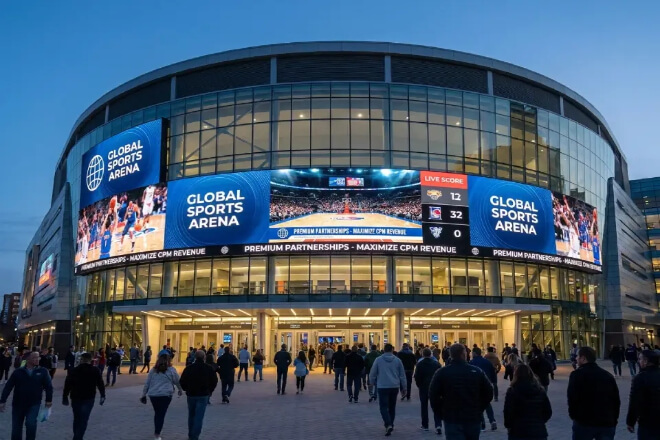
Many cities are now doing something quite simple: making cities “connected and dynamic.”
First, landmark يعرض الصمام are no longer isolated screens, but are being integrated into the city’s unified management system. Traffic, weather, events, and emergency information can all be managed through a single backend.
For example, in the event of an event or emergency, there’s no need to change the content at each location individually; instead, an update in the backend synchronizes the changes across all LED screens.
Second, content is becoming “interconnected.” It’s not about each displaying its own content, but about different locations coordinating.
For example, during rush hour: subway entrances display transfer information, shopping districts display parking information.
And main roads display detour information—the information changes simultaneously, making the city appear more organized.
Another example is festivals: when the main landmark displays themed visuals, surrounding streets and shopping districts simultaneously change to the same style of content, instantly unifying the city’s atmosphere.
Furthermore, this approach makes the city’s expression more “real-time.” Previously, much information was static;
Now, it can be adjusted in real-time based on actual conditions, such as traffic congestion, weather changes, and event schedules, all reflected promptly.
For example, if it suddenly rains: the LED screen immediately switches to alerts, showing where to take shelter and where there are indoor activities—all at a glance.


 English
  Español
  简体中文
简体中文  Français
  日本語
日本語  한국어
한국어  العربية