

The cultural tourism industry has seen a significant change in recent years: people are no longer satisfied with just “looking around,” but are more concerned with “whether there is a sense of participation.”
A scenic spot, a street, or even an معرض hall, if it’s just a static display, is easily overlooked.
It is precisely under this change that عرض الصمام screens have begun to move from being “auxiliary display tools” to gradually entering the core of cultural tourism content.
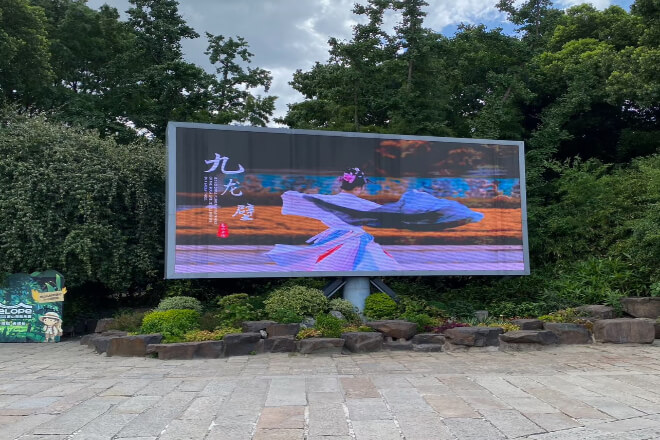
If we’re talking about places that best utilize LED display screens for “first impressions,” Las Vegas is basically a textbook example.
First, it directly creates a visual impact on “city entrances” and “city image.” Before you even start exploring, you’re already surrounded by LED displays and lights along an entire avenue—for example.
The famous Las Vegas Strip, where the facades of hotels on both sides are practically giant شاشات اعلانية LED and visual displays.
For example, as soon as you get off the bus or walk onto the street, an entire building is playing giant dynamic images;
One second it’s a desert landscape, the next it’s a dazzling show—the city itself is like a performance.
Secondly, these LED displays are not just decorations, but constantly reinforce the city’s brand—”Entertainment Capital.”
Every screen tells you: this is not an ordinary city, but a stage that changes 24 hours a day.
A typical scenario: at the entrance of a hotel, you see not just the الفندق name, but the entire building playing dynamic light shows and brand visuals, even more eye-catching than the main entrance of many tourist attractions.
At the same time, this method also provides “barrier-free navigation.” Tourists don’t need to look at a map;
They can directly perceive through visuals where things are lively, where the core areas are, and where it’s worth stopping to take photos.
Finally, it reinforces the tourist’s initial perception—not “I’ve arrived in a city,” but “I’ve entered a visual experience space.”
This is particularly evident in Las Vegas, where LED displays are no longer just information carriers but an integral part of the urban experience itself.
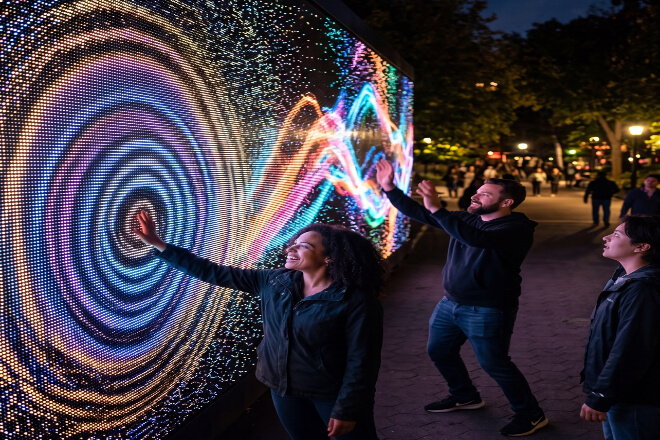
This type of space is already quite mature, exemplified by some European history المتاحف and immersive معرض halls in Dubai. The core idea is the same: not just “seeing culture,” but “stepping into culture.”
First, history and culture are being digitally “reenacted.” Much content that was previously only visible through text or artifacts is now dynamically recreated using LED displays.
Such as ancient city streets, crowds, war scenes, or festival celebrations. History is no longer a static explanation, but a “moving” spectacle.
For a very intuitive example, in some immersive exhibition halls in the UK, a Victorian street scene unfolds slowly on an LED wall, accompanied by lighting and sound effects, making visitors feel as if they have truly stepped into the streets of that era.
Second, multi-screen interaction transforms the entire space into a “narrative container.” It’s not just one screen telling a story; the surroundings and even the ceiling participate:
The main screen tells the main storyline, the sides provide the environment, and the ceiling or floor adds atmosphere, immersing visitors in the story.
For example, in some immersive cultural exhibitions in the Middle East, the walls depict historical events unfolding.
The floor represents spatial extension, and the lighting changes according to emotions, making the entire space feel like “a moving movie.”
Simultaneously, the most crucial change in this design is that the cultural space transforms from “viewing” to “entering.”
Visitors no longer stand at a safe distance looking at the panels, but rather feel as if they are stepping into a story, with each step advancing the content.
For instance, entering a maritime civilization exhibition area, the surrounding يعرض الصمام show flowing waves and nautical routes, while deep-sea light and shadow play beneath your feet. People naturally slow down because the space itself is “telling a story.”
Finally, this experience significantly enhances cultural appeal. Compared to static exhibits, dynamic spaces are easier to remember, more likely to evoke emotional resonance, and even encourage people to take photos and share them.
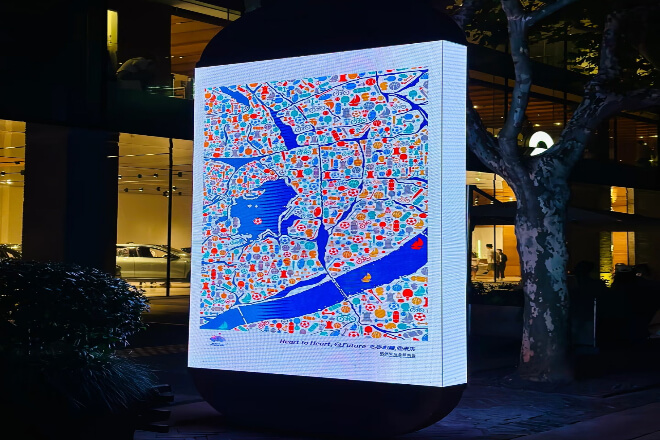
The success of a nighttime tourism project sometimes hinges on one thing: does it make people “want to stay a little longer”?
وفي هذا السياق، يعرض الصمام are essentially the “nighttime atmosphere engine.”
Firstly, they are the core carrier of nighttime visual content. By day, the scenery is paramount; by night, lighting and screens are essential.
LED displays are responsible for “telling” stories, visuals, and themes, rather than simply providing illumination.
For example, in some international waterfront nighttime tourism areas, LED displays play urban history, art animations.
Or nature-themed content, complementing the surrounding architectural lighting to make the space not just “bright,” but “content-driven.”
Secondly, they work in tandem with the lighting. The lighting creates the “atmosphere,” while the LED displays provide the “content.” Together, the nighttime space transforms into a unified visual field, rather than scattered highlights.
To illustrate this, imagine a bridge with its lights changing like flowing water, while adjacent LED displays simultaneously play “river-themed videos,” creating a sense of being enveloped as people walk through it.
Furthermore, it significantly extends visitor dwell time. What might have been a quick photo opportunity becomes engaging because of the continuously changing visual content.
Rhythmic lighting, and interactive visuals, prompting many to unconsciously walk further and explore another point.
For example, in some nighttime tourist areas, you think you’ve seen everything, but the LED display screen changes to a new theme, so “let’s take another look” becomes the norm.
Finally, it directly boosts nighttime consumption. People stay longer, and restaurants, cafes, shops, and night markets naturally benefit, transforming nighttime tourism from “sightseeing” to “strolling all night.”
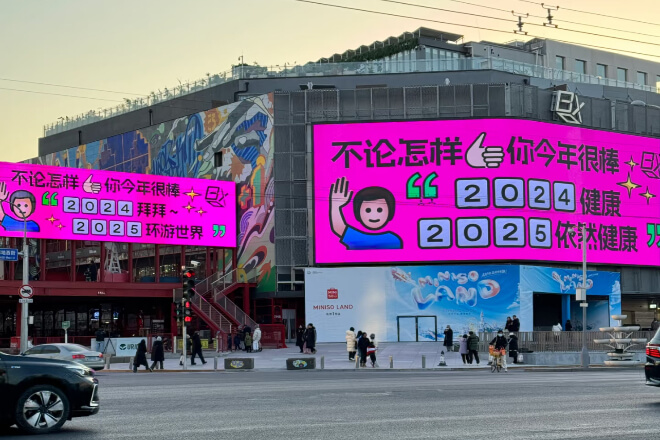
Many live-action performances are no longer just “building a stage and performing a play,” but rather the entire space telling a story.
LED displays become “plot accelerators” here.
First, the منصة background and the plot can truly blend together. Previously, the background was background, and the actors were actors;
Now, the LED display screen can follow the plot—the characters speak, and the background “responds.”
For example, in a historical performance, when characters narrate war, the LED display screen background gradually changes from a tranquil town to a battlefield; the emotion is “pushed up,” rather than being forced by the dialogue.
Second, scene transitions become extremely fast. Previously, changing scenes required rearranging sets and props.
Now, with a simple شاشة ليد transition, a shift can occur in an instant, from ancient times to the modern era, from mountains and forests to a city.
To illustrate, one scene might depict a Jiangnan water town, while the next, a lighting change transforms the LED screen into a modern cityscape at night, leaving the audience momentarily stunned.
Simultaneously, it significantly enhances visual impact. Large-scale dynamic visuals combined with actor performances create a more focused emotional experience.
For instance, a climactic moment paired with explosive visuals on a large screen can ignite the entire atmosphere.
For example, a highlight moment: an actor stands in the center of the stage, and behind them, the LED screen instantly expands into giant waves or flames, making the entire space seem ablaze.
Finally, this upgrade directly boosts commercial value. Because of the enhanced experience and more immersive visuals, audiences are more willing to buy tickets, re-watch, and even recommend the show, making it easier to create a blockbuster.
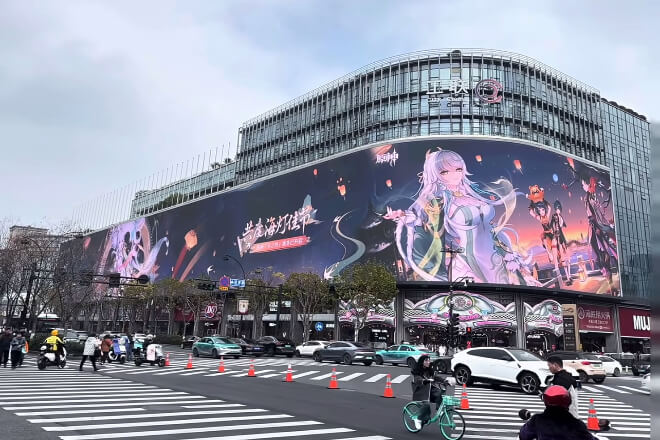
Many scenic spots are no longer just about “viewing scenery,” but are starting to offer a more participatory experience: as you enter, the scenic area “responds” to you.
Here, يعرض الصمام transform from “display tools” into “interactive entry points.”
First, visitor interaction can be displayed in real time.
For example, after taking photos, checking in, or participating in mini-games, the results can be directly displayed on the screen or shown in real time on a large screen, making visitors feel like they are part of the content.
A common scenario is that visitors scan a QR code to participate in an interactive challenge, and upon completion.
Their name and score appear directly on the LED display. Everyone smiles at this and is more willing to continue participating.
Second, content can be dynamically updated based on data. For example, during peak hours, it can push out crowd control routes; during holidays, it can push out popular attractions.
And when the weather changes, it can automatically adjust recommended content, making the screen not just “playing” but “judging.”
For example, if it suddenly rains, the LED display immediately prompts “Indoor performances have started” and “Recommended routes for rainy days,” which visitors can see without asking anyone.
Simultaneously, it can also serve as a smart guide and information system.
Information that previously required asking staff or consulting maps can now be obtained directly from LED displays, such as attraction locations, queue times, and show schedules.
For example, in some large national theme parks, entrance LED displays automatically switch to recommended routes based on different time periods, helping visitors avoid unnecessary detours and significantly improving their experience.
Finally, it improves overall operational efficiency. Unified information dissemination, real-time adjustments, and reduced human communication costs all contribute to a smoother visitor experience.


 English
  Español
  简体中文
简体中文  Français
  日本語
日本語  한국어
한국어  العربية