
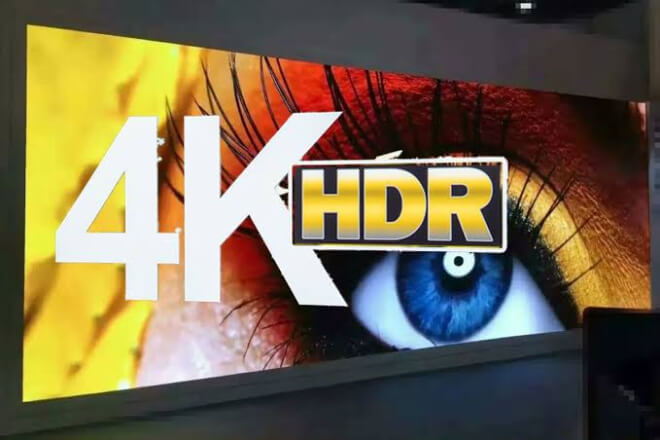
Does a high سطوع on an LED display necessarily guarantee a good picture? Not necessarily.
Truly excellent display effects go beyond simply brightening the image; they also involve richer tonal gradations, more natural colors, and clearer details.
HDR technology is designed for this purpose. So, what changes will it bring to يعرض الصمام?
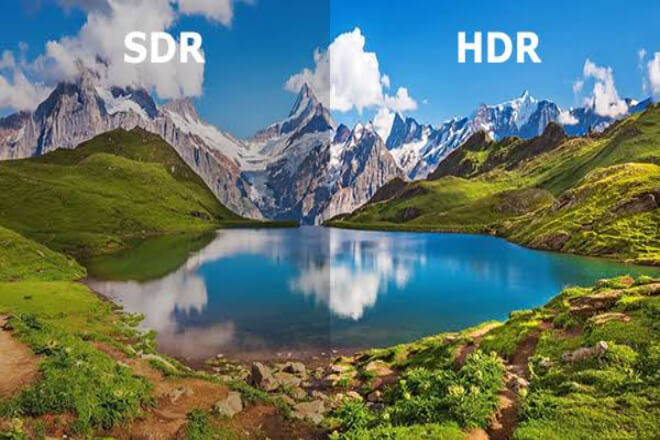
HDR, or High Dynamic Range, is primarily used to expand the range of brightness and color reproduction that an image can display.
Compared to traditional standard dynamic range displays, HDR can better present the differences between bright and dark areas, preserving more detail in the image.
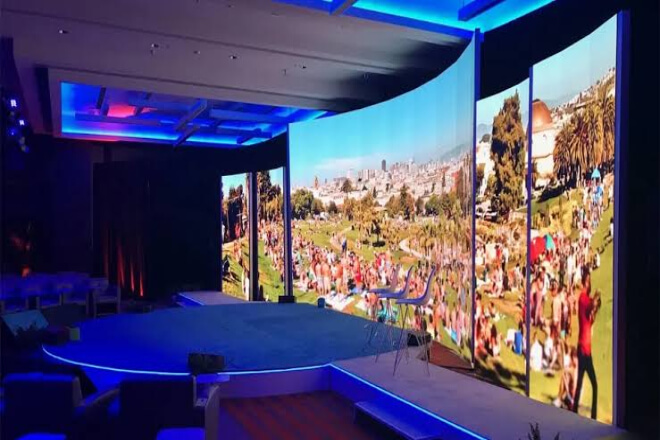
Imagine: In a video showcasing a city at night, an ordinary display might make bright neon lights appear flat, or turn building shadows into a blurry black.
However, under suitable HDR display conditions, the lights can display richer brightness gradations, and the darker areas of buildings have the opportunity to retain more texture.
The difference between the two isn’t simply “one is brighter, the other darker,” but rather that HDR can handle different brightness areas more meticulously within the same image, making the visual effect closer to the real scene.
ل عرض الصمام projects, the significance of HDR technology lies in enhancing the overall image performance.
Whether it’s commercial advertising, film, or large-scale event performances, richer details in both light and dark areas make the content more attractive.
The value of HDR technology ultimately lies in the changes in the image that viewers can see. This can be understood from three main aspects:
1). Richer tonal range
HDR can present a wider range of brightness, making highlights in the image brighter while preserving as much detail in the shadows as possible.
For example, when displaying car advertisements, reflections on the car body, highlights on the glass.
And shadows on the car body can be presented with more delicate tones, rather than all being crammed into a similar brightness range.
2). More delicate color representation
HDR is often used in conjunction with wide color gamut display capabilities to present a richer range of colors.
For example, blue skies and green vegetation in natural landscapes, as well as brand colors in commercial advertisements, can all be presented with a more vivid and natural effect.
However, it’s important to note that HDR is not simply about increasing color saturation.
Truly excellent display effects also require accurate color management to avoid overly saturated colors, color casts, or distortion.
3). Image details are easier to see
With both highlights and shadows handled appropriately, textures, contours, and details in the image will be clearer.
For example, when showcasing jewelry, car interiors, or product materials, subtle reflections and surface textures can be better presented.
For commercial display projects that rely on visual effects to attract customers, these changes are not just minor embellishments but can directly impact the viewer’s perception of the content and brand.
Not all LED display projects need to adopt HDR technology.
Whether it’s worth the investment depends on the displayed content, the viewing environment, and the desired visual effects.
This is a problem that businesses often overlook when making purchases.
Even if an LED display screen is labeled as supporting HDR, it doesn’t mean it can fully display HDR content.
HDR is a complex technology system involving content creation, signal transmission, image processing, and terminal display. Problems in any of these areas can affect the final result.
First, pay attention to peak brightness and black level performance.
HDR requires not only sufficient high brightness but also good shadow detail.
ل يعرض الصمام, peak سطوع needs to be evaluated in conjunction with the actual display area, average screen brightness, and continuous operating conditions; it cannot be based solely on local test data.
Second, pay attention to contrast ratio and grayscale performance.
If the display screen cannot effectively distinguish grayscale levels of similar brightness, even with high peak brightness, problems such as lost shadow details and insufficient image depth may occur.
Third, check the color gamut, color accuracy, and bit depth.
A wider color gamut provides a richer color space, and a higher bit depth helps reduce color banding in gradient areas.
However, these capabilities require proper calibration and image processing to be truly effective.
Finally, the compatibility of the control system and signal cannot be ignored.
Video processors, transmitting devices, receiving cards, and playback devices all need to support the corresponding HDR signal formats and processing workflows.
Otherwise, even if the content is produced using HDR, it may be incorrectly converted during transmission or processing.
Therefore, when choosing an HDR LED display, companies should not only ask suppliers “Does it support HDR?”.
But also further understand which formats it supports, what actual display performance it can achieve, and whether the entire system has undergone complete testing.
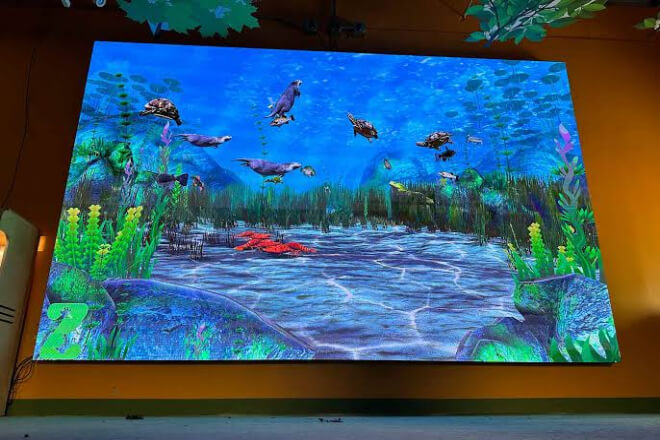
For corporate decision-makers, choosing an HDR LED display is not simply adding a technology configuration.
But rather determining whether this technology can bring real value to the project.
First, determine the display performance based on project requirements.
If it is mainly used for general information dissemination, traditional display solutions may be sufficient;
If it is required to display high-quality video, product details, or immersive content, then an HDR solution should be further evaluated.
Second, focus on the complete HDR workflow.
From content production and video playback to signal processing and the عرض الصمام terminal, corresponding compatibility is required.
It is recommended to test with actual project materials before purchasing, rather than relying solely on product parameters.
Third, pay attention to the screen installation environment.
The ambient lighting in indoor showrooms, studios, and outdoor advertising scenarios differs significantly.
Ambient light affects viewers’ perception of black levels, contrast, and color, thus requiring adjustments to brightness, display parameters, and content design based on the installation location.
Fourth, consider long-term operating costs.
HDR systems may involve higher-performance display devices, video processors, and content production workflows.
In addition to comparing initial purchase prices, companies should assess equipment power consumption, ease of maintenance, system upgrade potential, and subsequent content production costs.
Ultimately, HDR is not necessarily better the more expensive it is, nor is it always more worthwhile to buy the highest-spec models.
Only when display performance matches project requirements can technological investment truly translate into commercial value.


 English
 Español
 简体中文
 Français
 日本語
 한국어
 العربية