
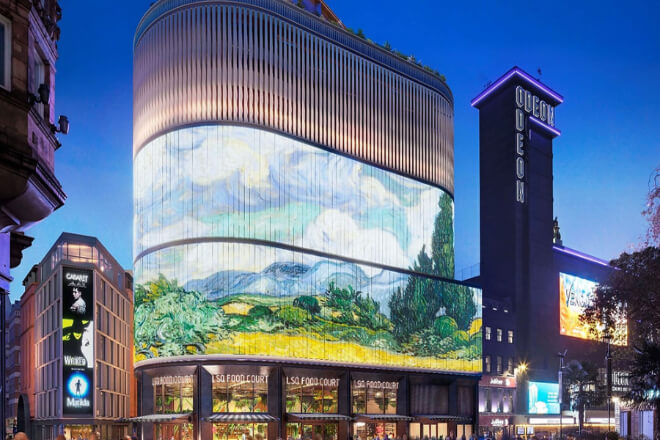
Previously, many buildings with LED curtain walls looked like they were suddenly carrying a giant TV.
From a distance, it was indeed impressive, but up close, it always made one wonder: Isn’t this building burdened?
The current trend is clearly different. Architectural LED curtain walls are developing towards “thinner and more transparent designs,” no longer simply hanging a screen on, but allowing it to grow more naturally into the building.
Firstly, lightweight structures are becoming increasingly important.
Traditional LED curtain walls are relatively heavy, placing high demands on the building’s load-bearing capacity, especially in scenarios like shopping mall facades and high-rise office buildings.
Installing a large screen is almost like “carrying a bag” on the building.
The now-lighter and thinner designs significantly reduce the structural burden, making installation and maintenance more flexible.
Simply put, buildings no longer need to “operate under heavy loads.”
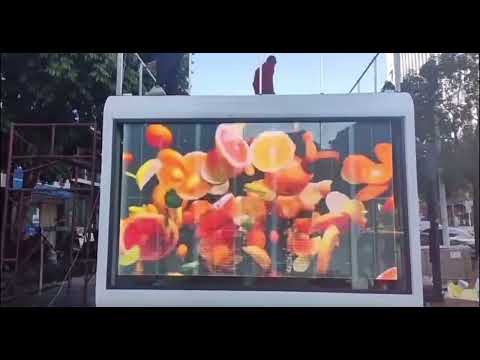
ثانيًا، transparent LED screens are becoming increasingly popular. For example, many high-end مراكز التسوق now use transparent LED screens directly on their glass curtain walls for displays.
During the day, it barely affects natural light or indoor visibility, allowing people inside the mall to see outside normally.
At night, when the screen is lit, the entire glass panel instantly transforms into a dynamic advertising space.
This effect, commonly seen near Apple stores and luxury flagship stores, is a typical example of “low-key during the day, high-profile at night.”
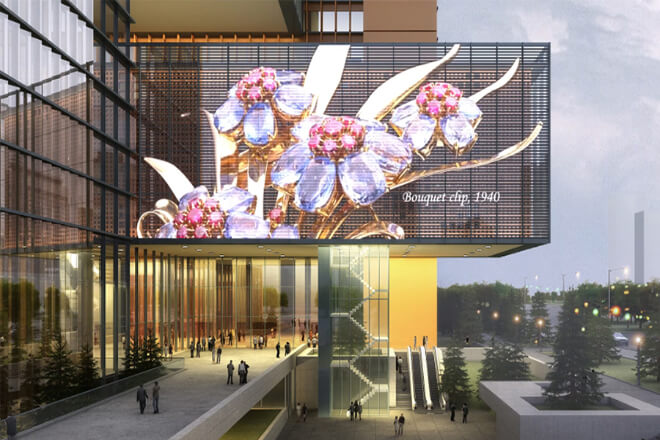
More importantly, it’s beginning to truly integrate into architectural design. Previously, it was “building completed, then figuring out how to hang a screen.”
Now, many projects incorporate LED curtain walls during the design phase.
For example, some urban landmark complexes integrate the screen with the glass facade and lighting design.
Making it look not like “adding a screen,” but rather that the building was always meant to be this cool.
Ultimately, what’s achieved is a combination of display functionality and architectural aesthetics.
It can serve as a brand showcase, commercial advertising, and urban nightscape, without compromising the building’s inherent sophistication.
Previously, managing architectural LED curtain walls often felt like being on-site – changing an advertisement required a trip, altering content necessitated manual operation.
And weather changes necessitated last-minute adjustments, making it as inefficient as “carrying a USB drive up stairs.”
Now, things are different. Architectural LED curtain walls are upgrading from simple display devices to truly intelligent media systems.
Firstly, cloud control enables remote, unified management. Whether it’s a single screen or dozens of screens across a city, everything can be managed centrally through the backend.
For example, a company headquartered in New York with screens in Beijing, Paris, and Washington can synchronize content updates with a single click.
Eliminating the need for staff to travel throughout the city. Simply put, “the advertisement arrives before the person.”
Secondly, it automatically switches content based on time, weather, and pedestrian traffic.
For instance, it displays brand advertisements during the day and switches to urban night visuals at night.
It pushes indoor commercial activity information on rainy days; and it automatically switches to holiday-themed content on holidays.
Even during peak traffic periods, the system can prioritize higher-value advertising content. Screens are no longer just “lit up”; they’re learning to “act according to the situation.”
Simultaneously, data-driven operations are improving advertising and display efficiency. In the past, many advertising campaigns relied on “feelings.”
But now they can be analyzed using metrics like foot traffic, dwell time, and exposure frequency.
Which screen is more effective, and which time slots are more valuable, can be quantified. Advertisers no longer need to rely on “mystical” placement methods.
More importantly, the role of architectural LED curtain walls is changing. It’s no longer just a glowing facade, but more like a thinking urban communication node.
It can proactively adjust its content based on environmental changes and can also collaborate with business operations, brand communication, and even urban management.
Previously, architectural LED curtain walls were often perceived as flashy, but with sky-high electricity bills.
With the entire building “glowing,” environmental protection and cost were often secondary considerations.
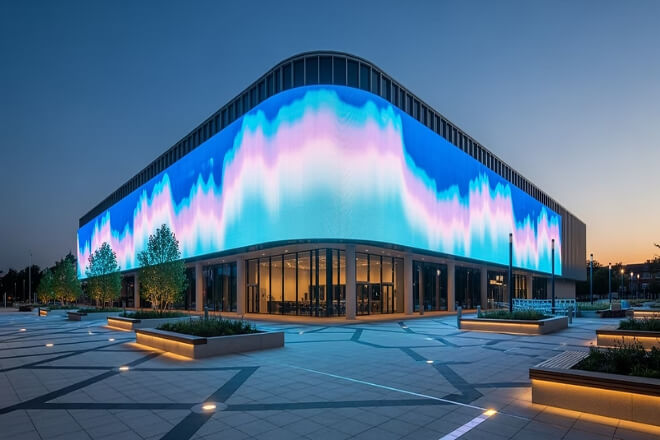
Now, this is changing. Architectural LED curtain walls are being optimized for energy conservation and sustainable development, allowing “flashy” and “green” to coexist.
First, there’s the application of low-power technology.
New-generation LED chips and module designs allow displays to maintain high سطوع and color saturation while consuming less electricity.
For urban landmarks or shopping mall facades that need to be illuminated for several hours a day, long-term operating costs can be significantly reduced—saving both money and electricity.
Second, there’s intelligent brightness adjustment. The screen no longer operates at maximum brightness all day.
Instead, it automatically adjusts brightness based on time, weather, and ambient light.
Brightness naturally increases in strong sunlight and decreases at night or on cloudy days, minimizing energy waste and making the screen more comfortable and less glaring.
Simultaneously, these optimizations improve display stability and extend lifespan. Low power consumption and intelligent adjustment mean less heat generation and stress on the screen.
Making modules less prone to damage, reducing maintenance frequency, and minimizing material waste.
Finally, these advancements align with the development needs of green buildings. LED curtain walls not only serve as a medium for brand display and urban landscape design.
But also meet building environmental standards, achieving a win-win situation of aesthetics and sustainability.
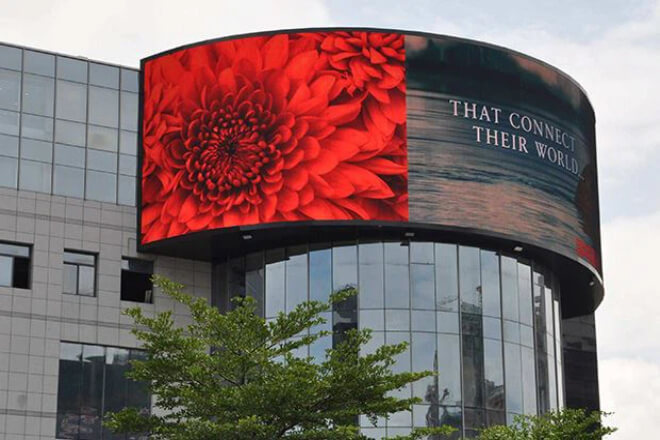
In the past, LED curtain walls might have simply been “a screen hanging on a building,” primarily used for commercial advertising or purely decorative purposes.
However, with technological advancements and design innovation, they are gradually evolving into city-level visual identifiers and communication carriers.
Firstly, the massive visual interface enhances urban recognizability. A giant LED screen can make a building stand out from the crowd of skyscrapers.
Whether it’s the interactive light and shadow during the day or the dynamic visuals at night, pedestrians and drivers can instantly recognize the landmark.
Think of the dynamic advertising curtain walls in Tokyo’s Ginza district or the giant LED screen in Times Square, New York; this visual impact itself becomes part of the city’s symbol.
Secondly, landmark buildings also become entry points for brand exposure. Brand advertisements, public welfare activities.
Or city promotional content, displayed through landmark curtain walls, are not only seen by on-site audiences.
But can also be “seen a second time” by thousands of people through aerial photography, live streaming, and social media, naturally multiplying the exposure value.
Furthermore, LED curtain walls can be linked with holiday activities or city events.
For example, they can transform into a Christmas tree style during Christmas, or display city silhouettes or fireworks effects during the Spring Festival.
During sporting events, LED facades are used to display visuals in conjunction with the event’s theme.
Buildings are no longer just “static shells,” but active mediums participating in the city’s rhythm and emotions.
Ultimately, architectural LED facades are no longer just “part of the architecture.”
But have evolved into urban communication platforms: they can carry brands, culture, events, and holiday sentiments.
This makes the city’s visual expression more three-dimensional and vivid, and makes each landmark building a part of the city’s memory.
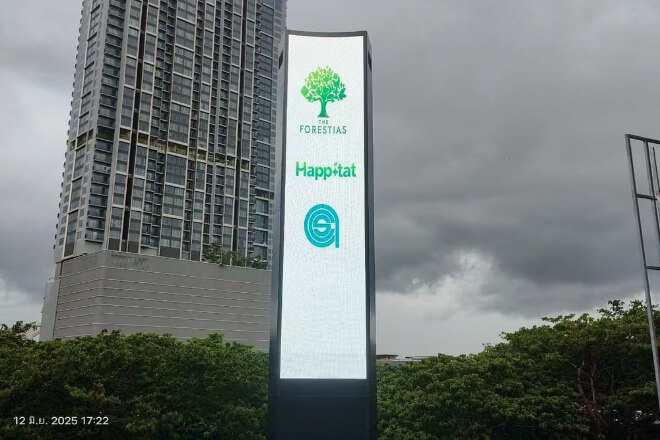
Previously, architectural LED facades were mostly just quietly “watched”—you passed by, it played, you looked, and then continued on your way to the subway.
But now it’s different. More and more LED facades are becoming “interactive urban players,” not just inviting you to look, but also encouraging you to stop, take pictures, and even participate.
First, there’s the increased sense of participation brought about by human-screen interaction.
For example, interactive screens on مركز تجاري facades allow viewers to wave their hands, and the animations on the screen change accordingly.
Or during holidays, scanning a QR code allows participation in lighting events. Previously, screens provided one-way output; now, it’s more like, “Since we’re here, let’s have some fun together.”
Secondly, there’s the deep integration of art installations and digital content.
Many city landmarks are no longer just for displaying advertisements; they’re transforming LED screens into large-scale digital art installations.
For example, naked-eye 3D visuals, dynamic light and shadow installations, and immersive art visuals make the entire building appear to “breathe.”
The famous giant wave screen at Seoul’s COEX is a prime example—many people go there specifically to take photos, not to buy anything, but to see the sea that “won’t actually get you wet.”
Meanwhile, the secondary dissemination value from user photos and sharing is increasing. If the visuals are impactful enough, people will automatically take out their phones.
Posting on WeChat Moments, shooting short videos, and uploading to social media platforms quickly transform a single on-site display into multiple rounds of online sharing.
Often, a brand’s most successful advertising isn’t what’s displayed, but what passersby actively capture in photos.
More importantly, the role of architectural LED screens is changing. They’re no longer just displays that “people glance at as they pass by.”
But rather urban content scenes that “people are willing to specifically come to take photos with.”


 English
  Español
  简体中文
简体中文  Français
  日本語
日本語  한국어
한국어  العربية