
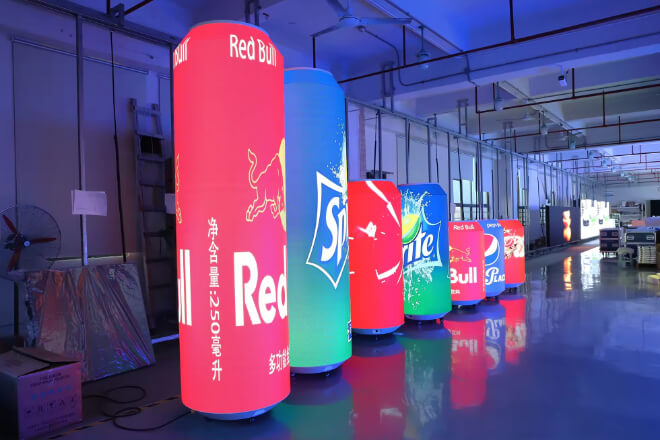
Sometimes, products don’t need to rush to “introduce themselves.” Enlarging themselves to an exaggerated scale will naturally draw consumers’ attention.
Enlarging the most recognizable elements—packaging, bottle, car silhouette, shoe details, etc.
And presenting them on a giant LED display instantly transforms a product that could only be observed up close into a visual focal point recognizable from afar.
For example, a beverage brand can enlarge a can to the height of a building, making its logo the most eye-catching “giant signboard” in a مركز تجاري;
A sports brand can enlarge the sole texture and upper design of its shoes onto the entire screen, even creating a slowly rotating 3D effect.
In car showrooms, headlights, wheels, or body lines can be magnified to allow passersby to recognize the car before they even get close.
This approach, seemingly simple, actually amplifies the most memorable aspects of the product.
After all, first impressions are crucial for keeping consumers engaged for longer.
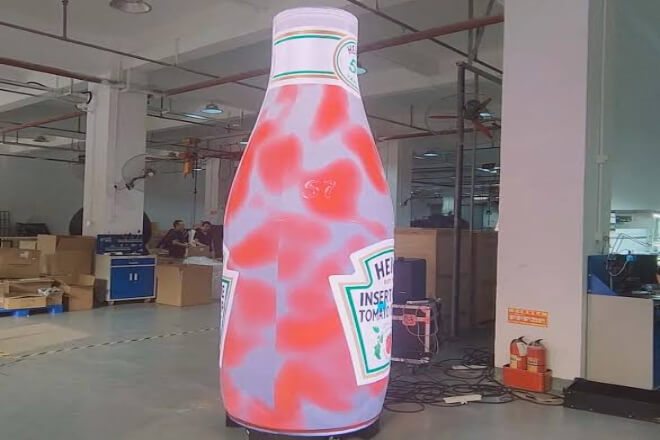
If a product remains static on the screen, consumers might only glance at it for a few seconds before moving on. But if it suddenly moves, things change.
Dynamic content can be designed directly based on the real product, allowing it to “perform” on an شاشة LED.
For example, beverages can be animated with opening, pouring, and the instant burst of bubbles;
Perfume bottles can rotate slowly, with the fragrance radiating outwards as light; cars can have their lights illuminate, their bodies rotate, or even “drive” out of the screen.
Adding 3D visuals further enhances the three-dimensionality of products that were originally only two-dimensional.
The screen remains flat, but the product can appear anything but static.
Of course, the visuals shouldn’t be identical year-round.
New product launches, holiday promotions, and brand events can all be updated with fresh content to keep the same LED display screen constantly engaging.
Making products dynamic isn’t just about showing off technology; it’s about giving consumers a reason to “take another look.”
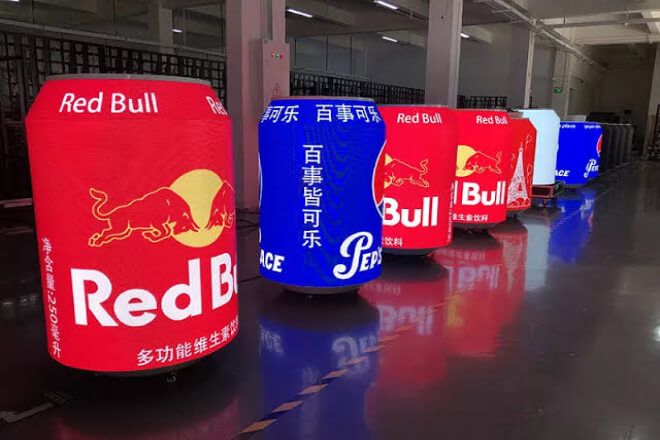
An LED display screen that only allows people to “look” doesn’t fully realize its value. If it makes people want to take out their phones, the effect changes dramatically.
When designing the screen, consider the best photo angles in advance, ensuring consumers can perfectly capture the product, dynamic visuals, and brand logo in a single shot.
For example, a beauty store could create an immersive digital garden where flowers bloom in response to the movements of customers standing in designated spots;
A car showroom could integrate vehicles with a dynamic background, creating a futuristic, cinematic photo.
Content can also be constantly refreshed. New product launches, brand collaborations, Christmas events.
Or limited-time promotions can all become temporary “photo opportunities.”
Even smarter is to let the logo appear naturally within the image, rather than forcibly inserting a large logo.
Consumers are taking great photos, while brands gain free social media exposure.
Therefore, a good LED display photo spot isn’t just “there’s a screen here,” but rather something that makes people feel, “Since we’ve come all this way, it would be a shame not to take a picture.”
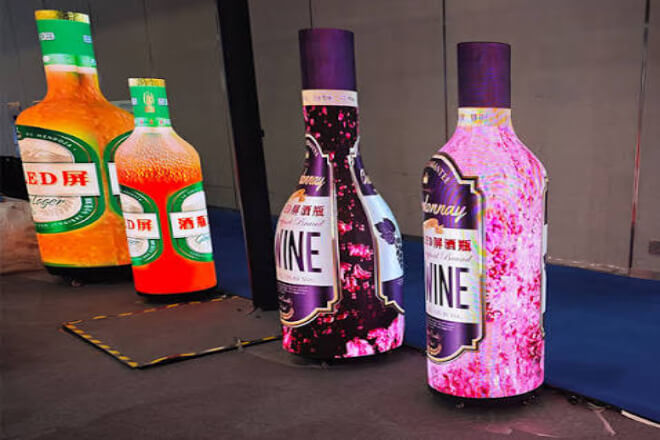
Attracting consumers to the LED display is only the first step; the real power lies in getting them to walk into the store after viewing the screen.
Place LED displays near store entrances and product experience areas, seamlessly connecting the screen content with the store’s interior.
For example, when launching new products, the عرض الصمام can first showcase the product’s striking visuals, then directly prompt for “in-store experience”;
Clothing brands can showcase new outfits while simultaneously guiding consumers into the store to try them on.
You can also add interactive elements like QR codes, raffles, coupons, and membership registration, making “viewing the screen” more than just looking.
Consumers can scan a QR code to receive a coupon; participating in a mini-game might lead them to browse the store.
The LED display attracts attention; the store capitalizes on that interest.
The ultimate goal isn’t simply “everyone sees it,” but rather to transform an LED display screen into a true gateway for customer traffic.
Facilitating the flow from viewing to interaction, entering the store, experiencing, and ultimately, making a purchase.
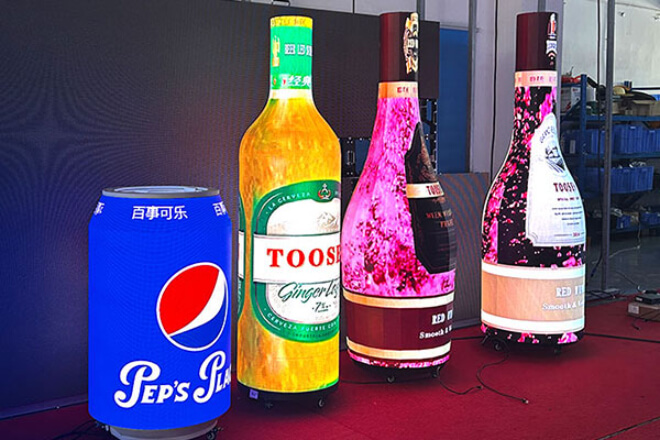
What’s the biggest dilemma with giant products? Everyone takes photos when they’re first installed, but a few months later they’re just “wallpaper.”
Therefore, the content on the LED display screen must change in sync with the marketing rhythm. New product launches can be immediately updated with new product visuals;
Holidays, promotions, and collaborations can feature different themes, constantly “changing clothes” on the same screen.
Furthermore, the شاشة عرض LED can be synchronized with offline events and social media.
For example, when a store holds a new product launch, the screen can simultaneously broadcast the event or display a countdown;
Topics can be initiated on social media platforms, and the LED display screen can showcase user content, allowing online and offline traffic to flow to each other.
Combining this with interaction data would be even more interesting. Focus on which visuals keep people lingering longer and which interactions generate the most engagement;
Don’t let content that no one pays attention to continue its self-indulgent act.
In this way, although the giant LED display screen still shows the same product, consumers may see different content each time they pass by.
With the screen remaining the same but the content constantly changing, giant products are less likely to become outdated.


 English
  Español
  简体中文
简体中文  Français
  日本語
日本語  한국어
한국어  العربية