

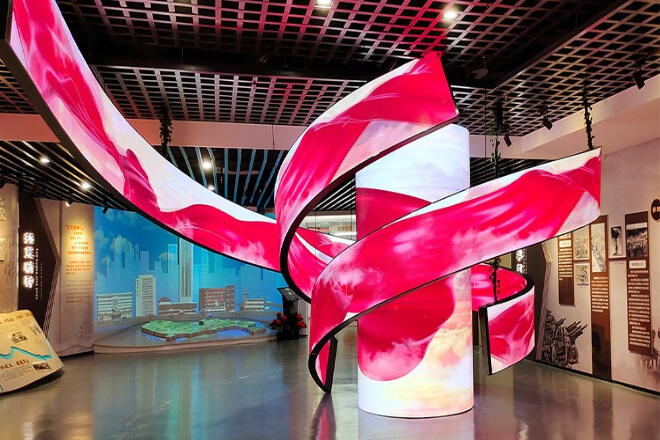
In spatial design, LED screens often act like the “protagonist on منصة“—positioned correctly, they draw attention without needing to be spoken.
A good layout can naturally make it the visual center of the space.
First, make the large screen the “first glance” focal point of the space.
For example, when entering a مركز تجاري atrium, many people’s first reaction isn’t to look at the shops, but to be attracted by the huge dynamic screen in the center.
Another example is at the entrance of an معرض hall; a bright, large screen is often more likely to make people stop than ten posters.
The reason is simple: people are naturally drawn to “bigger, brighter, and moving things” first.
Second, strengthen the visual hierarchy, making the space more “focused.” If every element in a space is vying for attention, users are more likely to feel lost.
However, when a large screen is placed in a central position, it acts like a “visual navigator,” guiding visitors to look here first before moving on to other content. The spatial hierarchy becomes clearer.
Simultaneously, it enhances the overall attractiveness of the space. For example, a brand pop-up store with only static display boards might just look like “a booth.”
But with the addition of a creative LED screen, the dynamic visuals instantly transform the space into a “photo spot,” significantly boosting its appeal.
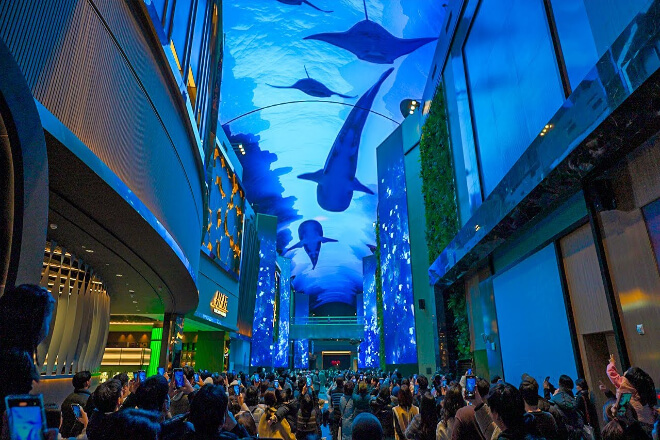
The allure of an LED screen often lies not only in its size but also in its dynamism.
The addition of dynamic content illuminates a previously quiet space, noticeably enhancing its sense of depth and atmosphere.
Firstly, it makes static spaces more dynamic. For instance, a مركز تجاري lobby might be a static scene.
But when the large screen starts playing seasonal changes, brand visuals, or dynamic art, the space is no longer static but offers a constantly evolving visual experience.
When people walk in, they feel the space come alive.
Secondly, the transitions between scenes enhance the visual rhythm. Dynamic content isn’t just about “playing videos,” but about creating a sense of “breathing” through transitions, rhythmic changes, and visual layering.
على سبيل المثال، في معرض hall, the screen might switch from a brand story to product displays, then to interactive content, like “leading the audience through a storyline,” resulting in a richer rhythm.
At the same time, it gives the space more “vitality.” A static poster might be viewed for three seconds and then forgotten, but a dynamic screen will make people want to look for a few more seconds—”What’s next?”
This small curiosity is the charm of dynamic content. It transforms the space from being “seen” to being “felt.”
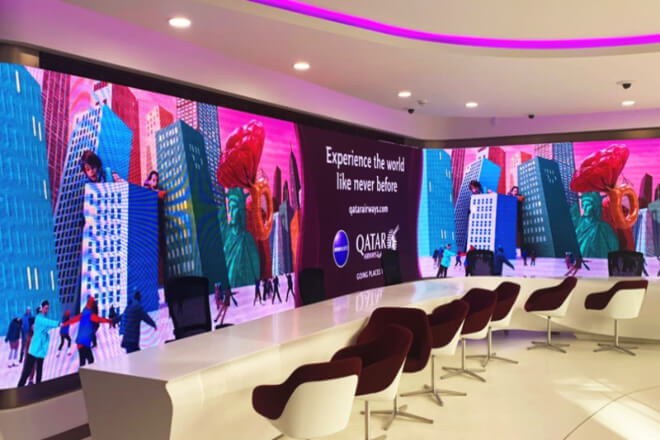
Truly high-end LED displays don’t immediately give the impression of “a screen here,” but rather make people feel: it should have always been here. This is the charm of “integration.”
First, it integrates with walls, facades, and the building structure. على سبيل المثال، في مراكز التسوق, LED screens can be embedded into entire background walls or integrated directly into the entrance facade of exhibition halls.
The screen no longer feels like an “external device” but rather an integral part of the architecture.
Just like the difference between a bespoke suit and a ready-made garment—when it fits perfectly, the overall feel is naturally enhanced.
Secondly, it reduces the jarring effect of the device. In many spaces, large screens look great, but there’s always a feeling of “a screen suddenly crammed in,” creating a visually jarring effect.
However, if the screen’s proportions, bezels, installation method, and spatial style match.
For example, a borderless design or concealed installation—it feels much more natural. Viewers focus on the content, not “where is the device?”
At the same time, it makes the screen a part of the spatial design. For example, a flagship store for a technology brand might design an LED screen as an entire digital wall, seamlessly integrating it with the lighting and wall structure.
An art gallery might use a curved screen to create a “digital sculpture,” making the screen itself an exhibit. In this case, it’s no longer a “display tool” but part of the spatial design language.
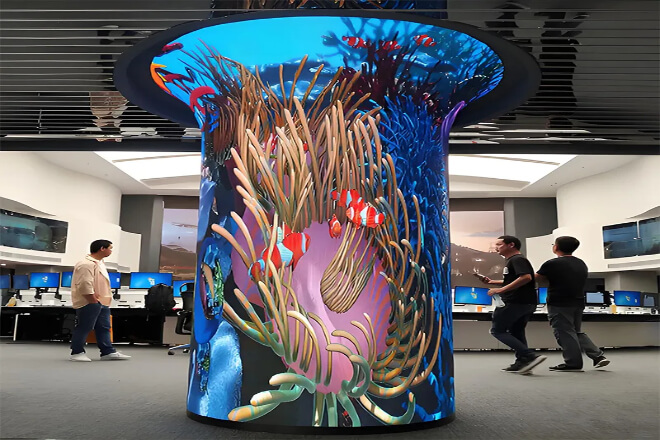
An LED display screen that simply “lights up on its own” has a limited effect; however, when it “coordinates” with the lighting and colors in the space.
The entire atmosphere is completely different. Simply put, it transforms a space from something “visible” to something “emotional.”
First, coordinate the screen with the ambient lighting. For example, at a brand launch event, when the main visual is displayed on the large screen, the overhead lights simultaneously change color.
Or in an معرض hall, when the screen image changes from a blue ocean to an orange sunset, the surrounding lights also change accordingly.
The audience will clearly feel that it’s not just the screen that’s changing, but the entire space that is “changing.”
Second, enhance the emotional expression of the space. Colors themselves have emotions—blue is calmer, red is more passionate, and green is more natural.
When LED content and ambient lighting simultaneously convey the same “emotion,” the spatial expression is more complete.
For example, at the moment of a goal in a sporting event, the entire stadium’s screens and lights change to the home team’s color, instantly igniting the atmosphere.
At the same time, it enhances the immersive experience.
For a simple example: If you walk into an immersive art exhibition, a large screen displays a forest scene, the surrounding lights turn a soft green, and even the ground shows changing light and shadow.
You’ll find it easier to “immerse” yourself in the scene, rather than just standing there looking at a screen.
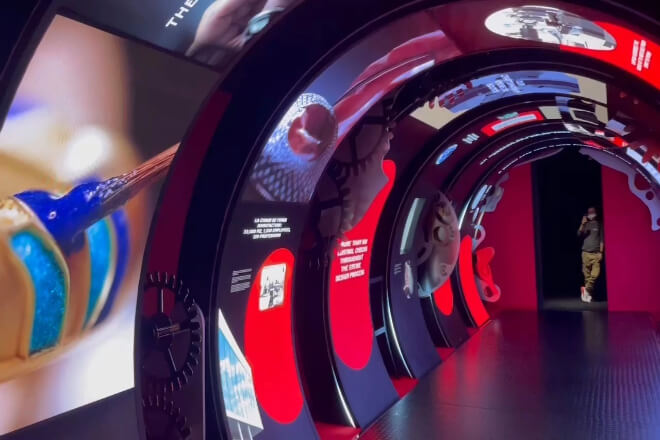
Many spaces now strive for “multi-purpose use,” and LED displays are a crucial tool for achieving this flexible switching.
In other words, the same space can be an معرض hall in the morning, an event area in the afternoon, and a press conference venue in the evening, with the screen acting as a “quick changer.”
First, it supports flexible switching between different scenarios such as commercial spaces, exhibition halls, and events. For example, a shopping mall atrium can normally play brand advertisements.
It can switch to the main visual for new product launches, and on holidays, it can become a themed space. One screen can give the same venue different “identities.”
Second, changes in content drive changes in the entire space. Often, the space itself doesn’t change, but because the screen content changes, people’s experiences also change.
For example, during the day, the exhibition hall displays company introductions, giving the space a professional feel.
At night, switching to cool visuals and synchronized lighting instantly creates an event atmosphere—”changing the screen feels like changing the venue.”
Simultaneously, it enhances the overall usability of the space. Previously, a space might only serve one function.
Now, through LED content switching, the same space can fulfill more uses, improving space utilization, making operations more flexible, and naturally increasing commercial value.


 English
  Español
  简体中文
简体中文  Français
  日本語
日本語  한국어
한국어  العربية