

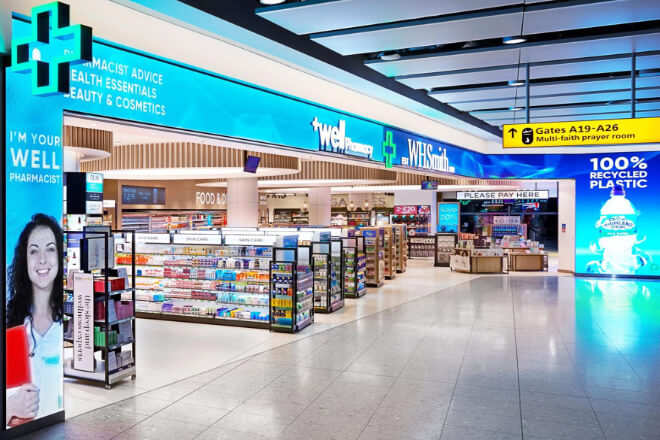
Whether a store can attract passersby to enter often depends on those few seconds at the entrance.
The biggest limitation of traditional signs is their “unchanging nature.” What you see today may remain the same six months later, easily overlooked by the surrounding environment.
LED displays, however, can create more variety at the store entrance through dynamic visuals.
For example, a dessert shop’s ordinary sign only tells customers “We sell desserts here,” but the شاشة ليد at the entrance can directly display the moment a cake is cut, the process of making drinks, or even show the day’s limited-edition new products.
Passersby seeing these images may already be interested even before entering the store.
The same applies to clothing brands. When launching new products, instead of just displaying a poster, using LED screens to showcase model outfits, product details, and seasonal themes allows passersby to quickly understand the brand’s style.
Besides attracting attention, LED displays can help stores adjust their content according to different times of day.
For example, a breakfast shop can highlight set meal recommendations in the morning, showcase new drinks in the afternoon, and offer special deals in the evening, allowing the same screen to serve customers at different times.
For stores located in commercial streets, مراكز التسوق, or busy street corners, competition is often fierce.
A dynamic LED storefront can help a brand stand out from the crowd, making it easier for consumers to remember.
Of course, an entrance LED screen isn’t simply about displaying everything. From a distance, the brand logo and core visual elements should be highlighted first, letting customers know “what kind of store this is.”
As they approach, product, promotional, or event information can be displayed to guide them to learn more.
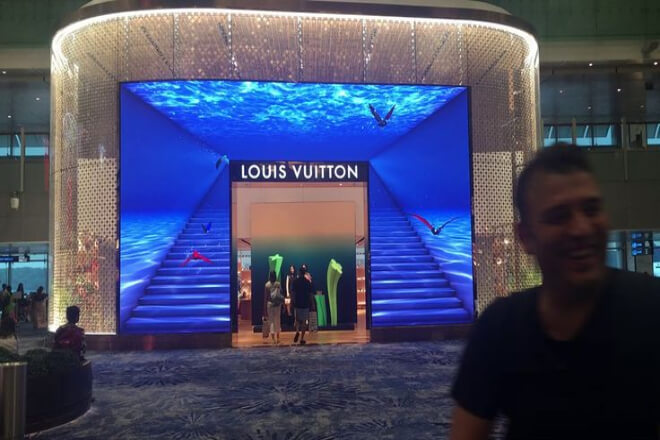
For example, some international brand stores use window LED screens to play new product trailers, attracting passersby with the visuals before they enter the store to experience the product.
Essentially, an LED display at a store entrance is vying for a few seconds of attention from passersby. Making the most of those few seconds could be the key to a customer’s visit to the store.
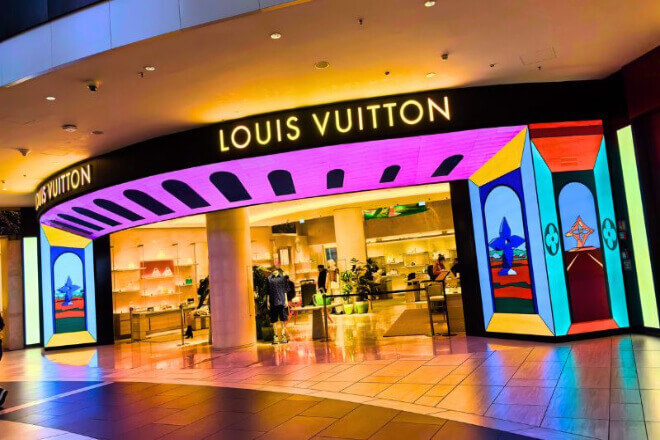
What’s the biggest fear when launching a new product? It’s not the lack of advertising, but rather that consumers simply don’t notice it.
Especially in high-traffic areas like commercial streets and مراكز التسوق, surrounding shops are vying for customers’ attention.
A static poster might be glanced at and then forgotten, but a dynamic LED storefront screen can use changing visuals to make the new product much easier to spot.
For example, when a mobile phone brand launches a new product, the LED screen at the store entrance can display the phone’s appearance, camera capabilities, and core features.
Passersby can quickly learn “what’s special about this new product” without even entering the store.
The same applies to restaurants. When launching a new beverage, compared to a menu image, an شاشة ليد showing the beverage preparation process and ice cubes falling into the glass is often more likely to pique consumer interest.
Many times, customers aren’t attracted by the text, but by the instant impression that it “looks delicious.”
Besides showcasing new products, LED storefront screens can also help stores quickly adjust their marketing strategies.
For example, weekend limited-time discounts, holiday events, and member benefits can all be updated promptly without needing to recreate or replace traditional promotional materials.
For instance, clothing stores can showcase new collections during the day and switch to discount promotions in the evening;
Coffee shops can promote hot or cold drinks based on weather changes, making the content more relevant to consumers’ current needs.
For stores, the value of LED storefront screens goes beyond simply telling people “what I sell”; more importantly, it creates a reason for passersby to stop and learn more.
With increasingly fierce competition for new products, whoever can grab a passerby’s attention for a few seconds has a greater chance of converting them into customers.
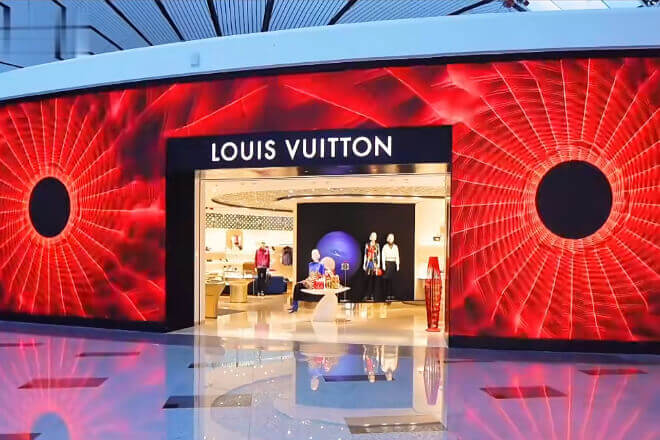
At night, street competition is actually more intense than during the day.
A store’s attractiveness often depends on whether it can be seen at first glance by a crowd.
Compared to ordinary light boxes and fixed signs, LED storefront screens can make stores more easily spotted in the nighttime environment through brighter images and richer dynamic effects.
For example, in commercial streets, dozens of restaurants often operate simultaneously in the evening.
If a hot pot restaurant has only a plain sign, it might easily be lost in the surrounding lights.
However, if an شاشة ليد displays images of steaming hot pot broth, close-ups of ingredients, or customers dining, its visual appeal is significantly enhanced, making it easier for passersby to enter.
For convenience stores, coffee shops, and brand stores, nighttime is also a crucial period for LED screens to shine.
By adjusting the سطوع, logos, brand colors, and featured products can be seen from a distance, helping consumers quickly locate the store.
Some overseas shopping streets and city centers also utilize LED storefronts to create a unique nighttime atmosphere.
For example, in some bustling areas of Tokyo, many shops use dynamic screens to display new products, brand content, and event information, enhancing the street’s visual ambiance.
Of course, nighttime displays aren’t simply about being “brighter.” If the image is too glaring or the content changes too rapidly, it can negatively impact the viewing experience.
Properly controlling brightness and combining it with a simple visual design are essential for an LED screen to truly become an integral part of the brand.
For stores operating at night, LED storefront screens are not just about “emitting light,” but about helping the brand leave an impression in the blink of an eye as people pass by.
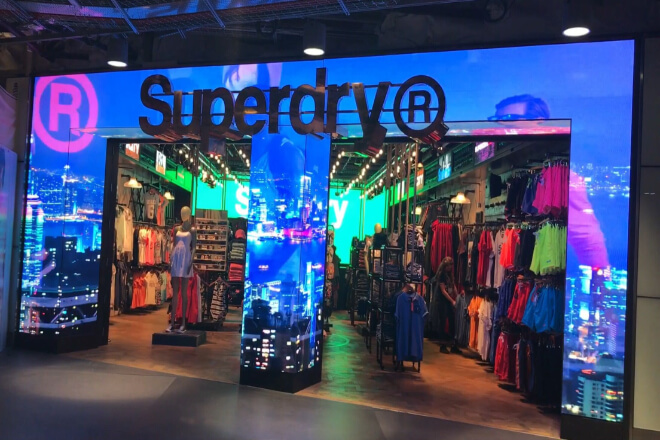
Holidays are crucial opportunities for many stores to attract customers. However, many businesses find that despite putting up promotional posters and preparing discounts, passing customers may not notice them.
The reason is simple: there’s too much information on the street.
The advantage of LED storefront screens is that they allow stores to quickly change their “external image” for different events.
There’s no need to remake light boxes or posters; simply updating the content allows stores to present different atmospheres for different holidays.
For example, during Chinese New Year, restaurants can play New Year-themed animations and recommend reunion set meals;
On Valentine’s Day, florists or jewelry stores can display romantic scenes and limited-edition products;
And during holidays like Halloween and Christmas, clothing stores and cafes can use LED displays to create a stronger festive atmosphere.
During promotional activities, LED storefront screens can also serve as “reminders” to customers.
For example, a sports brand store holding an anniversary celebration can display discount information, new product recommendations.
And a countdown timer on the screen, letting passing consumers know that “there may be discounts if you come in now.”
Brand stores in large shopping districts often change their LED displays during peak shopping seasons like Black Friday and Christmas, combining promotional information with festive visuals.
When consumers pass by, they see more than just an advertisement; they feel a sense of “something’s happening here.”
For stores, the greatest value of LED storefront screens isn’t simply repeating content daily, but rather adjusting them according to sales rhythms.
New product launches, holiday marketing, and limited-time events can all be quickly switched, keeping the store constantly fresh.
Compared to a fixed poster, an LED storefront screen is more like a dynamic shop window. It not only informs customers about events but also helps the store create a reason to “go in and take a look.”
Many stores encounter a problem after installing LED displays: they have the screen, but they don’t know what content to display.
في الحقيقة، LED storefront screens are not simply about “showing advertisements.” Different types of stores need to design content based on what customers focus on to truly attract them.
For example, for restaurants, customers are most concerned about “how good the food is.”
Compared to simply displaying the store name, LED screens can showcase the preparation process of signature dishes, ingredient displays, and dining scenes.
For example, a barbecue restaurant displaying footage of charcoal cooking, or a dessert shop showing the cake-making process, is more likely to stimulate passersby’s desire to buy.
Digital product stores are better suited to highlighting product features and a sense of technology.
For instance, when launching a new mobile phone, the screen can showcase its camera capabilities, AI functions, and product details, allowing passersby to understand the product’s highlights before entering the store.
For computer and smart device stores, dynamic demonstrations are often more attractive to consumers than static parameters.
Brand specialty stores, however, prioritize their overall image. For example, luxury and sports brand stores don’t necessarily need to frequently display promotional information on their LED screens.
Instead, they can strengthen consumers’ brand impression through concise visuals, brand stories, and new product displays.
Of course, the store’s location also influences content design. Stores on commercial streets need to quickly grab the attention of passersby, while stores in shopping malls are better suited to integrating with mall events and brand promotions.
What an LED storefront screen can display depends on what the store wants customers to remember. Choosing the right content is more important than simply pursuing a large screen.


 English
  Español
  简体中文
简体中文  Français
  日本語
日本語  한국어
한국어  العربية