
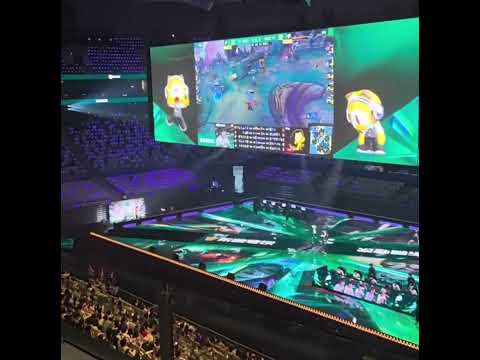
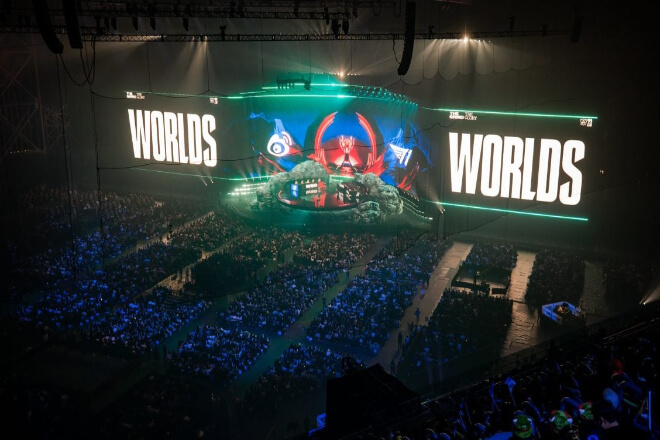
In today’s increasingly frequent global esports and sports events, منصة construction is no longer just about “building a usable platform.”
But about creating a high-standard, replicable, and mobile professional tournament system in a short period. LED displays have become one of the core infrastructures to meet this demand.
Firstly, they meet the temporary modification needs of different venues, enabling rapid adaptation. Touring events often require switching between different cities and venues, each with different structures, sizes, and conditions.
Through modular design, شاشة ليد systems can be quickly assembled into different forms such as main screens, side screens, and floor screens, allowing the stage to be quickly “reconstructed” in different spaces.
For example, the same event stage design might be an ultra-wide main screen in city A, but can be quickly adjusted to a vertical screen + surround screen structure in city B, achieving visual consistency while adapting to different spaces.
Secondly, it shortens setup and dismantling time, improving event execution efficiency.
Traditional stage construction is often lengthy and structurally complex, while LED screens, with their quick-locking, modular splicing, and standardized control systems, can significantly reduce setup time. This is especially important for fast-paced event tours.
Simply put, setting up a stage used to be like “on-site decoration”; now it’s more like “quickly assembling a standardized equipment system.”
At the same time, it adapts to the pace of global touring events, allowing for standardized replication of content and stage design.
Modern esports and sports events are often held globally, requiring stages that are not only “aesthetically pleasing” but also “replicable.”
LED display systems, through unified interfaces, unified control, and standardized content output, allow the same visual system to be quickly deployed in different countries.
To put it more interestingly, just like a race car changing tracks but the car itself remains the same, the LED event stage is the visual engine that can “travel the world with you.”
In modern event systems, the same visual system often needs to adapt to different scenarios, from small invitational tournaments to world-class large-scale events.
The modular nature of LED displays allows them to scale freely across different scales without sacrificing the overall visual experience.
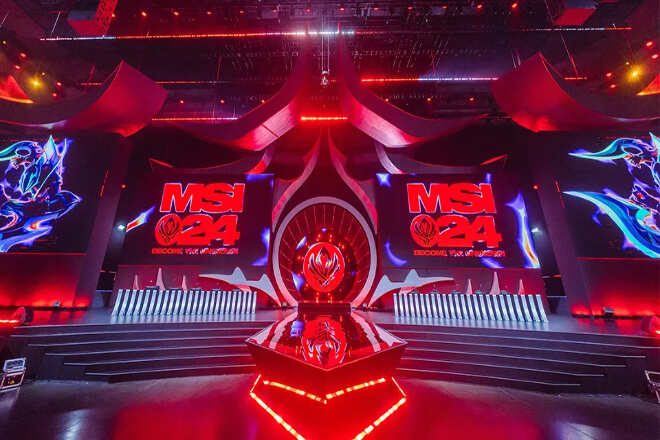
Firstly, the screen combination can be flexibly adjusted according to the venue size. شاشات ال اي دي use a modular splicing structure, which can be combined into different forms based on منصة width, height, and venue structure.
For example, a basic structure of a main screen plus side screens, or expanded into a combination of surround screens, floor screens, or even a canopy screen.
For instance, in small events, a single main screen is sufficient for information display;
While in large-scale world championships, it can be expanded to an ultra-wide main screen + multi-angle side screens + a surround visual system to achieve a fully immersive experience.
Secondly, the system can be flexibly expanded from small events to world championships, ensuring its scalability. The same LED system can be upgraded by increasing the number of modules without completely replacing the equipment.
This allows event organizers to use the same visual solution for upgrades and expansions regardless of budget.
In short: it’s not about “changing the system,” but rather “the same system continuously evolving.”
Simultaneously, ensuring visual consistency guarantees a uniform experience across events of different scales.
Regardless of screen size, aspect ratios, color schemes, and content logic remain consistent. This ensures viewers receive the same visual recognition experience across different levels of competition.
To put it more interestingly: smaller competitions are “simplified stages,” while world-class events are “fully equipped, upgraded stages,” but the brand visual language viewers see is an extension of the same system.
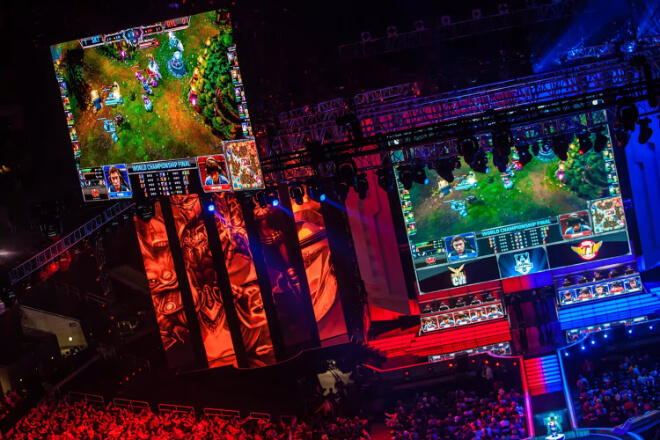
In the event industry, while LED display systems offer powerful effects, a significant drawback is their high initial investment and unstable lifespan.
Therefore, reducing the pressure of one-time investment and improving equipment utilization efficiency becomes crucial.
First, avoiding high one-time procurement costs reduces financial pressure.
Purchasing a complete عرض الصمام system for every event is not only extremely costly but also ties up excessive capital. For event organizers, this model is risky and inflexible.
For example, a world-class event might require a massive LED screen system, but purchasing it directly would be a waste of resources if it’s only used occasionally.
Secondly, flexible leasing based on the event cycle allows for “on-demand use.” Through leasing or project-based partnerships, LED systems can be configured flexibly according to the scale and duration of the event.
They are used when needed and returned when not, turning equipment investment into a “controllable cost.”
Simply put: it’s not about “buying a set and leaving it idle for a long time,” but rather “paying for what you use.”
This also reduces equipment idleness and maintenance pressure, improving resource utilization efficiency.
Long-term idle LED equipment not only depreciates quickly but also incurs additional maintenance costs.
Through leasing or mobile usage models, equipment can be recycled between different events, improving overall utilization.
To put it more interestingly: previously, LED equipment was like a “luxury race car bought home,” spending most of its time in the garage; now it’s more like a “shared race car,” deployed as needed for each event.
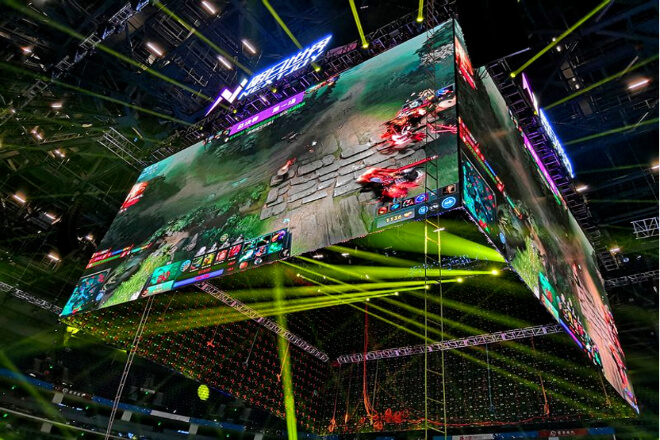
In a globalized event system, a crucial requirement is that the visual experience for spectators must be consistent regardless of the country where the event is held.
The standardization capabilities of LED display systems perfectly solve this problem of cross-regional visual consistency.
First, events across different countries maintain the same visual presentation, achieving visual consistency.
Through standardized شاشة ليد specifications, playback systems, and content templates, events can replicate the same visual effects in different countries.
Whether in Europe, Asia, or the Americas, the opening animation, data interface, and replay style seen by viewers remain consistent.
For example, for the same international event, the main screen UI design, score display style, and team entrance animations are completely identical in Tokyo and New York, despite the different venues.
Second, standardized event packaging and brand visuals strengthen IP unity. Global events often have a unified brand system, including logos, main visual colors, transition animations, and information templates.
LED display systems ensure that this content is fully reproduced in different venues, without changes due to equipment or environmental differences.
Simply put: it’s not about each country “creating its own visual identity,” but rather a globally shared visual language.
At the same time, it enhances the professionalism and international image of the event, making the brand more globally influential.
When audiences see a completely consistent visual presentation across different countries.
They naturally develop a perception of the event’s professionalism and standardization. This uniformity is itself a key source of the “prestige” of international events.
To put it more interestingly, like the Olympic Games’ visual system, no matter which city it’s held in, you can immediately recognize it as a world-class event.
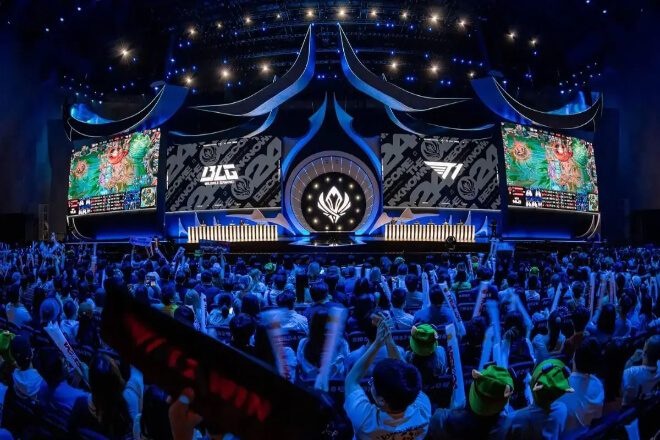
With the rapid development of esports, visual presentation has entered a phase of “technology-driven content.”
Audiences are no longer satisfied with simply being able to see clearly; they demand high refresh rates, low latency, and realistic reproduction of game details.
LED display systems must have continuous upgrade capabilities to keep up with these changes.
First, they must quickly upgrade to higher معدل التحديث و دقة devices to adapt to the evolving demands of visual quality.
Esports games themselves are constantly evolving, from 1080P to 2K, 4K, and then to higher frame rate outputs, resulting in increasingly larger amounts of visual information.
لو شاشات ال اي دي cannot upgrade in sync, ghosting, latency, or image quality loss will occur. Therefore, high-end events typically choose upgradeable LED systems to adapt to different generations of visual standards.
For example, when a game’s refresh rate upgrades from 60Hz to 144Hz or even higher, the LED screen also needs to simultaneously improve its refresh rate to ensure smooth gameplay.
Secondly, it must adapt to real-time rendering and game screen output to guarantee visual synchronization.
Modern esports events extensively utilize real-time rendering engines, data visualization systems, and multi-camera switching.
The LED screen needs to be able to stably receive high-bandwidth signals and achieve low-latency output to ensure that the visuals are synchronized with the game’s actions.
Simply put: the game is “moving,” and the screen must “keep up” with it.
At the same time, it must meet the extreme image quality requirements of esports events to enhance the viewing immersion.
High-definition details, skill effects, and combat animations demand extremely high display precision.
High-performance LED systems can better reproduce color gradations, dynamic lighting and shadows, and rapidly changing visual information, giving viewers a visual experience close to the “game perspective.”
To put it more interestingly: before, watching a game was about “seeing the result”; now, it’s about “not missing a single detail.”


 English
  Español
  简体中文
简体中文  Français
  日本語
日本語  한국어
한국어  العربية