
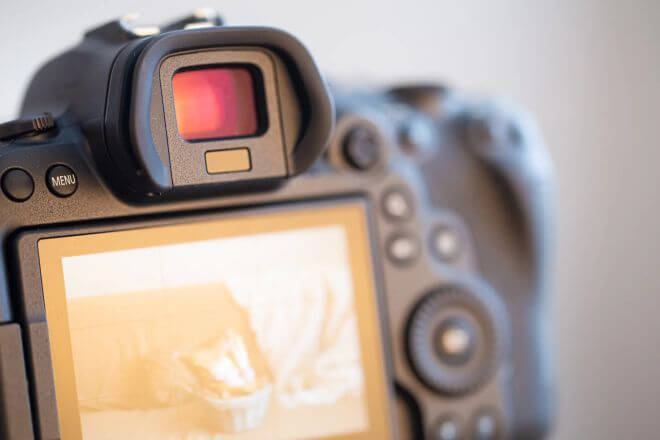
Have you ever noticed flickering or stripes appearing on an LED屏幕 while filming events, 阶段 performances, or live streams, as if the screen is “shaking”?
Why does the image appear normal to the human eye, but cause problems when filmed by a camera? This is a common frustration for many novice photographers and event planners.
In fact, the root cause isn’t just the camera or screen quality, but involves multiple factors, including the LED screen’s working principle, power frequency, 刷新率, and environmental conditions.
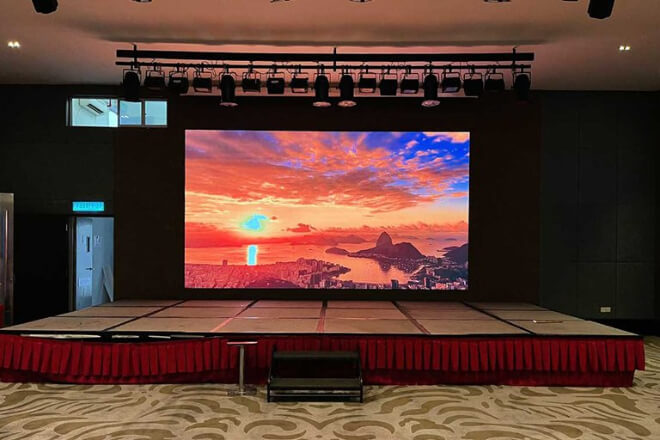
Have you ever seen “flickering stripes” or choppy images on an LED screen while watching live streams or recording videos? This is related to the working principle of the LED screen itself.
Each pixel on an LED display screen controls 亮度 and color through a current switch—you can think of it as the screen constantly blinking, only much faster.
To the human eye, the image appears continuous, but a camera may not be able to keep up with this “blinking rhythm.”
If the shutter speed and screen 刷新率 are not synchronized, flickering or stripes may appear in the video, making the screen look like it’s “dancing.”
Refresh rate is also a key factor. LED screens typically have refresh rates of 60Hz, 120Hz, or even higher, but if your camera speed can’t keep up, the image may show frame drops or stripes, looking somewhat comical.
However, don’t worry, many events now use high refresh rate LED screens, and with synchronized shooting technology, flickering issues are largely resolved.
In other words, you can confidently let the LED screen shine brilliantly on stage without “ghosting” or stripes appearing in the shot, perfectly capturing the live effect.
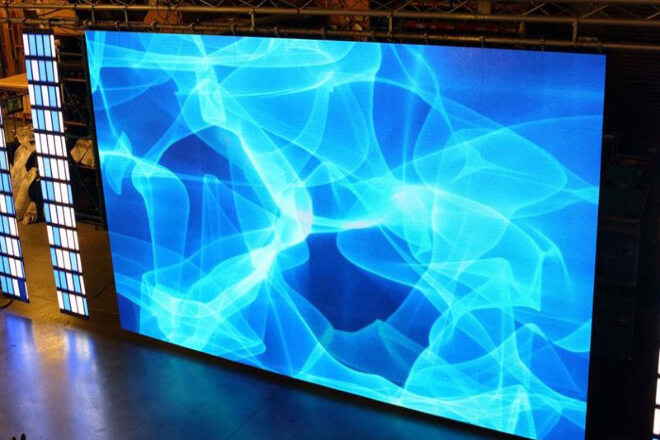
Have you ever encountered flickering, striped, or “shaky” images when shooting videos of LED displays? Besides the screen refresh rate, the power supply frequency is also a culprit.
LED displays require a power source, and the commonly used power supplies are 50Hz or 60Hz AC.
屏幕 亮度 fluctuates slightly with the current cycle, which is generally not noticeable to the human eye, but the camera’s shutter speed is a different story.
If the shutter speed and power supply frequency are inconsistent, a momentary discontinuity in brightness may be captured, resulting in flickering or stripes.
For example, it’s like jumping rope and missing your foot or tripping over the rope due to a mismatch in rhythm.
The LED screen is constantly “blinking,” and the camera misses the optimal moment, causing flickering in the video.
Especially at large events, where cameras often shoot slow-motion or high-speed footage, this flickering is more easily magnified.
Fortunately, many high-end LED displays now minimize flickering through high refresh rate designs, stable power supplies, and synchronized adjustments to the shooting equipment.
In other words, LED screens at events can not only be stunningly bright but also maintain a smooth image on camera, satisfying both the audience and the camera.
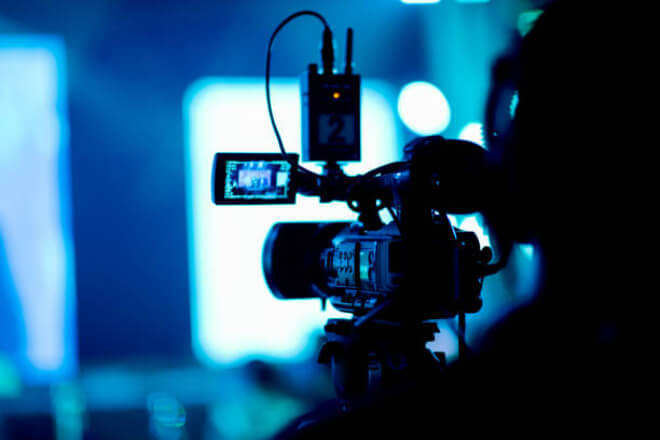
When shooting videos of LED displays, have you noticed that the image sometimes flickers, as if the screen is “shaking”? Besides refresh rate and power supply frequency, the camera’s shutter speed is also a major culprit.
Shutter speed determines the exposure time of each frame by the camera. If the shutter speed is set too slow, the camera will capture the rapidly changing 亮度 information of the LED screen, causing the image to appear flickering or striped.
Conversely, if the shutter speed is too fast, each frame captured by the camera is too short and may not be synchronized with the screen’s brightness changes, resulting in incomplete footage and flickering.
To illustrate, imagine you’re dancing; the LED screen’s brightness is rapidly “swaying,” and the camera’s shutter is like your eyes.
If your eyes blink too slowly, the image will be blurry; if you blink too quickly, you might only capture part of the movement, missing the complete dance.
The result is that the screen appears to be “blinking” in the video, making it look shaky.
This phenomenon is particularly noticeable at large events, especially during slow-motion shooting or high frame rate recording.
However, many cameras and LED screens now have synchronization technology that matches the shutter speed with the screen refresh rate, significantly reducing flicker.
This results in a stable, high-definition, and smooth image for both the audience and the camera crew.
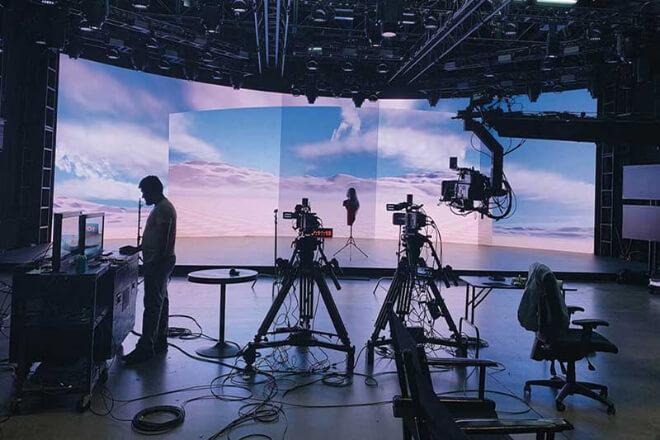
除了 刷新率, 电源 frequency, and shutter speed, the environment also subtly affects the performance of LED displays.
Strong sunlight, reflections from indoor lighting, and even changes in temperature and humidity can cause the screen to occasionally “blink” or flicker.
For example, in outdoor plazas or stadiums, direct sunlight or large spotlights can interfere with the screen’s brightness.
The human eye may hardly perceive it, but cameras can easily capture minute 亮度 fluctuations, resulting in stripes or flickering in the image.
It’s like filming a stage performance; the flickering lights make the image appear to “dance.”
Temperature and humidity are also important factors. High or low temperatures can cause current fluctuations in the LED modules, while humid environments can slightly affect the circuitry.
These factors can make the screen brightness less stable, increasing the likelihood of flickering.
Fortunately, most LED displays now have intelligent adaptive designs. For example, they can automatically adjust brightness according to ambient light.
Maintain stable output under high or low temperatures, and have moisture-proof and dust-proof functions.
This means that even under scorching sun, in rainy weather, or in outdoor environments with large temperature differences.
The screen remains stable, ensuring clear and smooth footage for both the audience and cameras.
In general, environmental factors can indeed cause LED screens to occasionally “play tricks,” but modern screen design and technology have minimized these interferences, ensuring the event is both visually appealing and photogenic.
 English
  Español
  简体中文
简体中文  Français
  日本語
日本語  한국어
한국어  العربية