
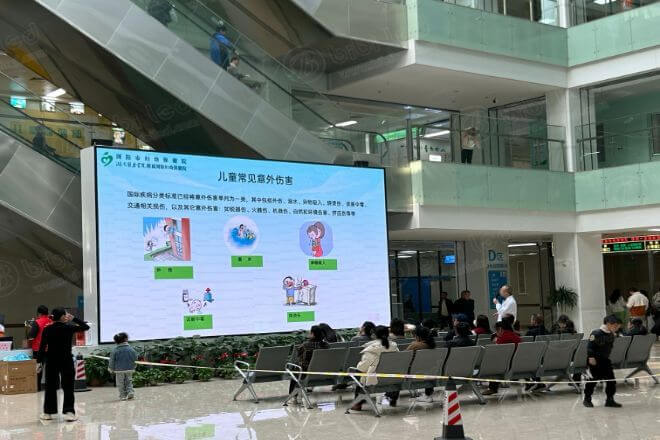
在 医院, much information is constantly changing. The number of people in queues might change every minute, and doctor schedules might be adjusted temporarily.
Relying on manual notices or verbal reminders is not only slow but also prone to errors.
After LED displays are connected to a digital system, they can directly synchronize with backend data.
As soon as information is updated, the screen content changes immediately, eliminating the need to constantly replace paper notices.
For example, in the waiting area, the screen can display the current call progress, how many people are ahead of you, and even the estimated wait time.
Patients can get a general idea of the situation with just a glance, without having to repeatedly go to the window to ask questions.
For front desk staff, this also reduces the number of questions that need to be answered repeatedly, naturally improving efficiency.
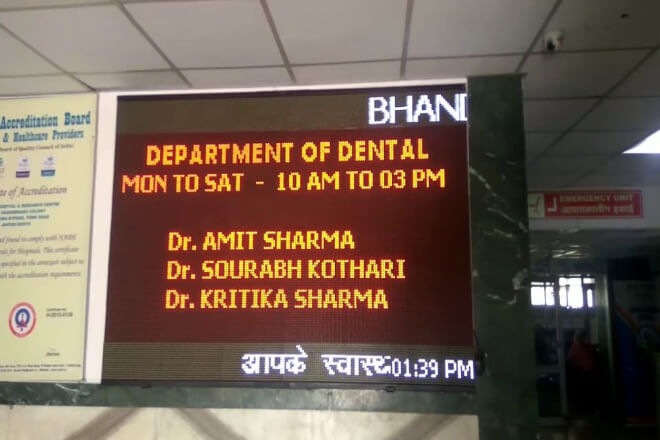
For example, if a doctor temporarily adjusts their consultation hours or a department moves to another clinic, the latest arrangements will be displayed on the screen as soon as the system is updated.
This saves manual processing time and avoids confusion caused by untimely information transmission.
Simply put, LED displays bring hospital information to life. Updates are faster, errors are fewer, patients are more informed.
And staff are more relaxed. In the fast-paced medical environment, this immediacy brings tangible changes.
When going to the hospital, many people’s first feeling is often tension and uncertainty—where is the registration?
How do I get to the department? How long will I have to wait? Unclear directions can easily increase anxiety.
LED显示屏 play a significant role in this situation. Through clear navigation information and departmental directions, the screen can tell patients which direction to go, which floor to go to, and which window to use.
Even first-time visitors can follow the prompts step by step to find their target department, avoiding detours and feeling more at ease.
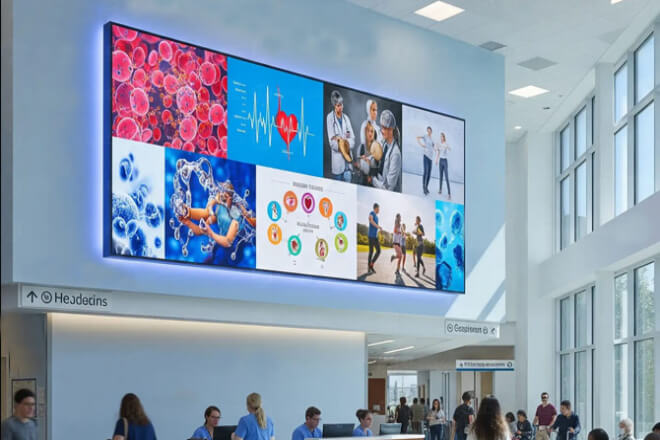
In the waiting area, the role of LED screens goes beyond just calling numbers. It can also display health tips, easy-to-understand science information, or explanations of the medical process.
For example, it can introduce prevention methods for common diseases, daily dietary suggestions, and even vaccination reminders, making the waiting time more than just “waiting idly.”
When patients can see useful information while waiting, the time seems shorter, and the overall experience is more relaxed.
In addition, displaying hospital announcements, service upgrade notices, or information about public welfare activities on the screen makes patients feel that hospital management is more transparent and organized.
Compared to paper notices posted on the wall, dynamic and clear images are easier to notice and understand.
From the details, these seemingly simple displays are actually gradually improving the medical experience.
Clearer guidance, more timely information, and more considerate content make patients less anxious and more at ease, thus subtly improving the overall service quality of the hospital.
In the hospital, you are likely to see patients from different countries and cultural backgrounds.
Some people don’t understand the local language, and some family members need help with translation.
If all information is displayed in only one language, it can easily cause anxiety—especially when one is already feeling unwell.
In this situation, LED displays act as a “thoughtful translator.” The same consultation message can be played in multiple languages in rotation.
Department directions and call number information can also be displayed in different languages simultaneously.
Even if it’s their first time at the hospital and they’re not fluent in the language, simply looking up at the screen can give them a general idea of what to do next. Less guesswork, more reassurance.
In a more international healthcare environment, this multilingual support is even more important.
For example, if emergency room notices, vaccination instructions, and payment procedures can be displayed in multiple languages in real time, there’s no need to find someone to explain them.
When family members accompany patients, they can also understand the process more easily and avoid feeling overwhelmed due to language barriers.
What may seem like just a screen switching between more languages actually reflects a more inclusive and humane service attitude.
LED displays are not only “speaking,” but they are also building a bridge of communication between hospitals and patients from different backgrounds, making the entire medical process less stressful and more understanding.
In hospitals, information is constantly changing: appointment bookings, test results, surgery schedules, emergency notices…
Relying on paper notices or manual broadcasts is not only slow but also prone to errors.
LED displays, through dynamic content presentation, deliver this information to patients and medical staff “quickly, clearly, and directly,” making hospital operations smoother.
For example, in the lobby, waiting area, or corridors, screens can scroll through daily appointment reminders, queue progress, department information, and even health tips.
Outpatient area LED screens can also simultaneously display the call status of each department and doctor’s appointment information.
Ensuring patients are always aware of the latest arrangements and don’t have to wait anxiously at the window.
For medical staff, they can also see the operating room status, emergency situation, or internal notices immediately, reducing the time spent on repeated communication.
Simply put, LED screens are like an “information express lane” in the hospital. They broaden the reach of messages, accelerate transmission, and avoid delays and errors that can occur with manual operations.
Whether patients are waiting, medical staff are working, or family members are accompanying them, everyone can obtain the information they need immediately.
Making the hospital’s overall operation more efficient and the medical experience smoother and more reassuring.
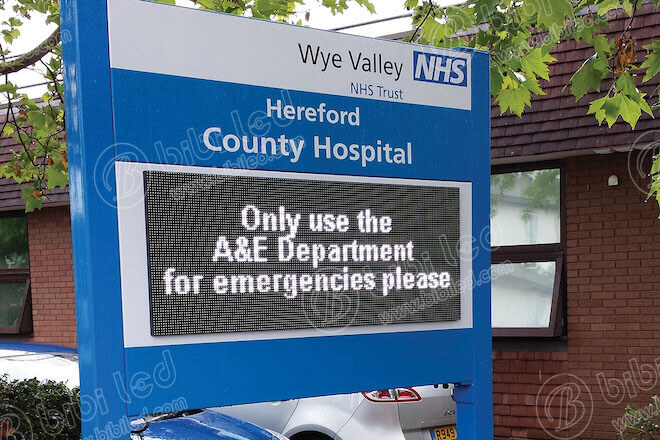
In many hospitals, traditional information dissemination methods still rely on paper notices, posters, or handwritten notices.
Consider this: every content update requires printing and posting, and someone might forget to post it or post it in the wrong place, wasting paper and consuming a lot of manpower.
In the long run, this method is both inefficient and costly.
LED displays can greatly improve this situation. Through automated content updates and remote management, hospital staff can update information in the background all at once, and the content on the screen will be displayed immediately.
Whether it’s changes in registration, queue reminders, or health promotions, there’s no need to reprint or manually change notices.
This not only saves paper and printing costs but also reduces the workload of the front desk and publicity staff.
An even more direct benefit is that information dissemination is more flexible and timely.
Hospitals can adjust content at any time to deal with emergencies, such as temporary closures or urgent notices, without waiting for manual posting.
In the long run, LED screens not only save money and labor but also make information transmission more efficient and environmentally friendly, while simultaneously making hospital operations more intelligent.
Simply put, it transforms the traditionally cumbersome and material-intensive methods into easy and efficient digital management, allowing hospitals to save costs and improve efficiency.
 English
  Español
  简体中文
简体中文  Français
  日本語
日本語  한국어
한국어  العربية