
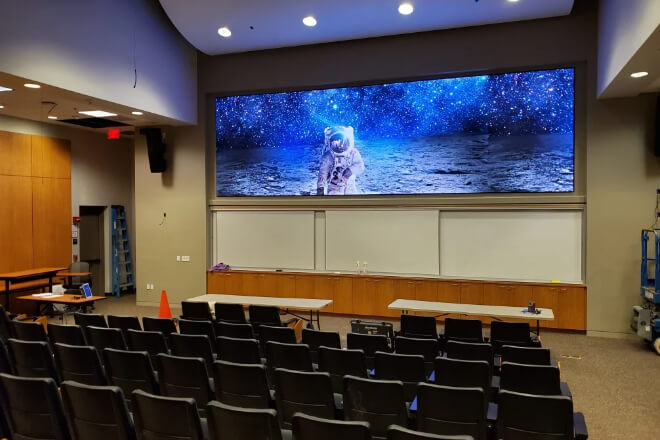
In the classroom, display devices are not just for being flashy or having high-end configurations.
Their value lies in their ability to stably and clearly support teachers’ teaching, allowing students to truly understand the content. Below, we analyse several common needs.
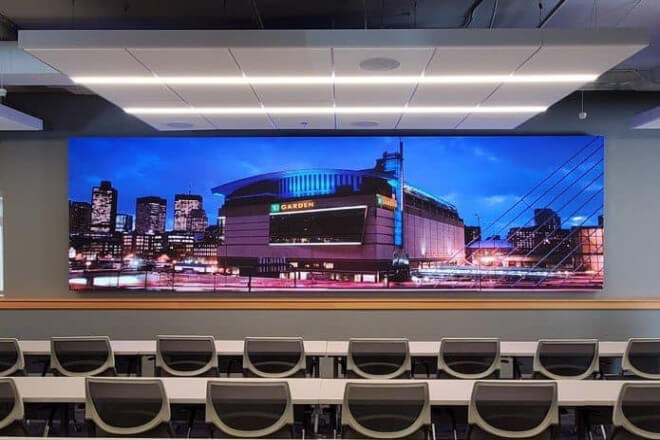
1) Stable image, resistant to prolonged use
LED displays offer high 亮度 and uniform colour display, making them less susceptible to interference from natural or artificial classroom lighting.
Whether it’s the first class in the morning, or a supplementary class in the evening or on a rainy day, the text, charts, and images on the screen remain clear and sharp.
Compared to some display methods that are easily affected by light, LED screens allow students sitting in the back row to easily see the teaching content.
More importantly, LED displays remain stable even after prolonged use, without issues such as flickering, colour drift, or brightness decay.
This is especially crucial for classrooms with several consecutive classes, ensuring uninterrupted information transmission during instruction while reducing visual fatigue for both teachers and students.
2) High Durability, Reduced Long-Term Maintenance Costs
LED displays have an exceptionally long lifespan, capable of withstanding frequent power-on/off cycles and extended continuous operation, making them ideal for high-frequency environments like schools.
Compared to traditional projectors or other display methods that require frequent bulb replacements or maintenance, LED screens require almost no maintenance, significantly reducing operating costs and maintenance burdens for schools.
Furthermore, LED displays boast a stable structure and high durability, maintaining stable performance even after years of teaching use.
In the long run, while the initial investment may be higher, the total cost of ownership (TCO) is more manageable.
For scenarios like schools, where equipment needs long-term use, LED displays truly offer a “buy once, use for years” experience, saving schools on subsequent investment and maintenance resources.
3) Easy for Teachers to Use, No Burden
LED displays are highly intuitive to operate, directly connecting to teaching systems, computers, or central control platforms, and are ready to use immediately upon power-on.
Teachers do not need complex debugging or setup; simple operation is sufficient to display the desired content.
The operation process is concise, with a low error rate, and even if a mistake is made, it can be quickly corrected, preventing classroom interruptions due to equipment problems.
This ease of use is particularly important for teachers. Teaching itself requires significant effort and attention.
If display devices are complex to operate, teachers may spend a lot of time adjusting the screen, impacting classroom efficiency.
The ease of operation of LED displays allows teachers to focus on the teaching content rather than equipment management, thus improving the overall teaching experience.
4) Flexible Display Options and Versatile Applications
LED displays not only meet the needs of traditional classrooms but also support various teaching formats such as split-screen, multimedia interaction, and video playback.
For example, in math or physics classes, blackboard writing, animated demonstrations, and experimental videos can be displayed simultaneously.
In language arts or history classes, text materials and images can be displayed in parallel.
Furthermore, LED screens can also meet the needs of various scenarios such as school meetings, event displays, and campus promotions.
A single LED screen can cover multiple uses, eliminating the need to purchase different equipment for different scenarios.
This flexibility not only enhances investment value but also helps schools integrate and diversify their teaching resources.
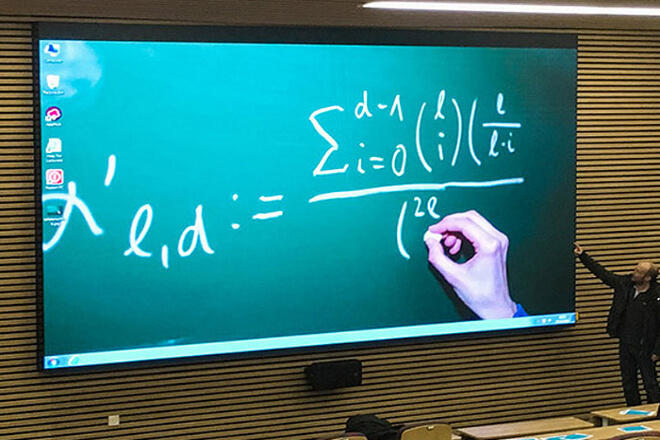
1) Primary and Secondary School Classrooms: Eye Protection and Stability are Paramount
Primary and secondary school students are young and sensitive to light and screen stimulation.
Therefore, when choosing an LED display screen, eye protection design, display stability, and ease of maintenance should be the primary focus.
Small-pitch LED all-in-one machines or classroom-specific solutions are generally more suitable: Small pitch ensures clear readability even at close range, uniform brightness and contrast, and reduces student eye strain.
All-in-one machine design facilitates installation and maintenance, and teachers can easily operate it without additional adjustments.
In this scenario, the core objective of the display device is to ensure clear and stable information transmission without burdening students’ eyesight.
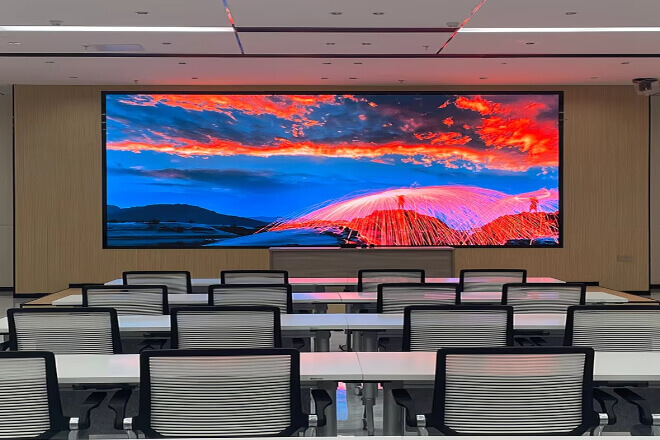
2) University Auditoriums or Multifunctional Classrooms: Large Screen and Long-Distance Visibility are Prioritised
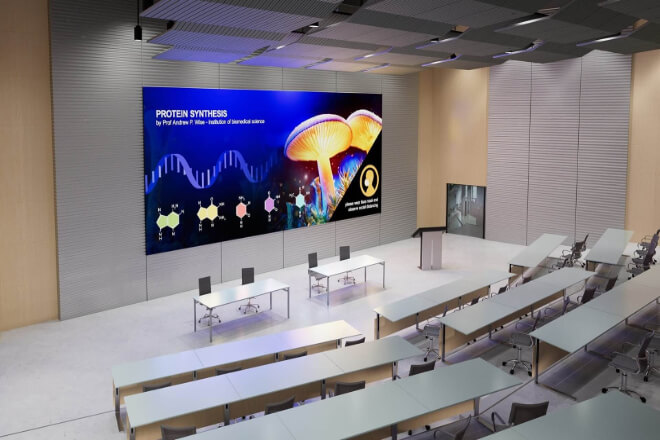
In university auditoriums or multifunctional classrooms, the large classroom area and the distance between audience members necessitate higher requirements for screen size and display accuracy.
When choosing an LED display screen, large size, high 解决, and long-distance visibility should be the primary considerations.
High-resolution small-pitch LED screens ensure that students and audience members sitting in the back rows can clearly see text and images while maintaining a uniform and stable image.
Furthermore, multi-functional classrooms typically require screens to support various content formats, such as courseware presentations, video playback, and split-screen demonstrations.
Therefore, choosing a flexible and scalable LED screen is more suitable for these needs.
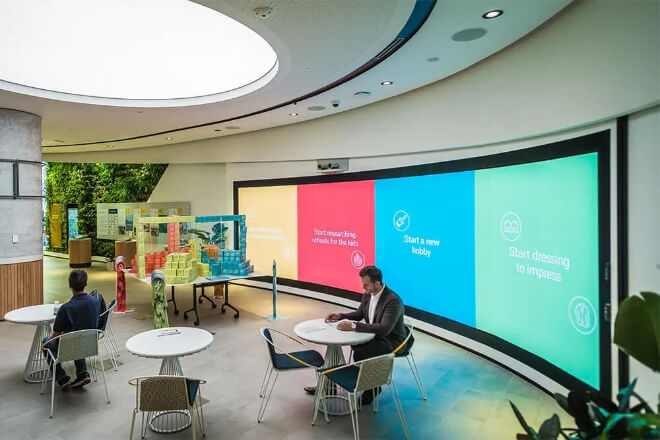
3) Training Institutions or Education Centres: Brand Image and Learning Experience Are Equally Important
For training institutions or education centres, displays are not only teaching tools but also crucial windows for showcasing their brand image and attracting students.
LED displays can provide high 亮度, rich colours, and large screen sizes for enrollment displays, open classes, or events, enhancing visual impact and professionalism.
In this scenario, screen selection not only focuses on clarity and stability but also needs to consider visual effects and interactive experiences.
Allowing students to form a good first impression in a short time, thereby enhancing the institution’s competitiveness and attractiveness.
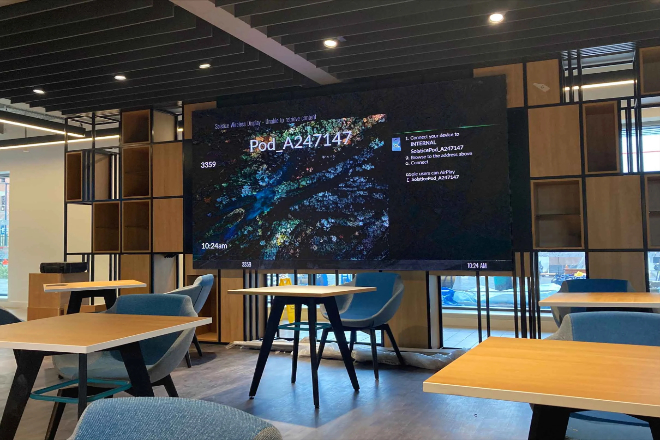
When choosing an LED display, in addition to focusing on display effects and technical parameters, there are some key points that are easily overlooked but directly affect long-term user experience and costs.
These “pitfalls” often only become apparent during the procurement decision-making process.
1) Focusing solely on price, neglecting long-term maintenance and lifespan
Many institutions are easily attracted by low prices when purchasing LED screens, but low prices often mean short lifespan, poor stability, or high maintenance costs.
In the long run, the cost of frequent repairs, parts replacements, and even the entire screen can far exceed the initial savings on purchase price.
Educational institutions need to focus on the Total Cost of Ownership (TCO): including lifespan, maintenance frequency, and failure risk, not just the initial purchase price.
2) Ignoring installation environment and actual viewing distance
When choosing an LED display, if classroom space, viewing distance, and seating layout are not adequately considered.
The screen may be too small or have an unsuitable pixel pitch, leading to poor visibility or viewing fatigue for students in the back rows.
Lighting conditions, wall load-bearing capacity, and heat dissipation space in the installation environment also affect the screen’s performance and lifespan.
An on-site assessment should be conducted before purchase to ensure that the screen size, resolution, and brightness match the actual classroom conditions.
3) Failing to assess the supplier’s delivery and after-sales capabilities
LED displays are long-term devices; the supplier’s delivery speed, installation capabilities, and after-sales service capabilities directly impact the daily user experience.
Even with high-quality products, if suppliers cannot provide timely technical support, troubleshooting, or spare parts supply, it can lead to classroom disruptions or long-term maintenance problems.
Therefore, delivery capability and after-sales service level are crucial indicators that must be included in the supplier selection decision.
Investing in LED displays is not just a one-time equipment purchase, but a long-term educational investment.
Its value is reflected not only in classroom use but also in its continuous impact on the school’s overall image and teaching management.
1) Enhancing the Classroom Experience and Indirectly Improving Teaching Quality
LED displays provide high 亮度, uniformity, and stability, allowing students to easily see the teaching content regardless of whether they are sitting in the front or back rows.
Text, charts, and experimental demonstrations are clearly presented, reducing student fatigue and distraction caused by difficulty seeing blackboards or projectors.
This superior visual experience also allows teachers to focus more on teaching, eliminating the need for repeated adjustments to display content or projection equipment, thus enabling more efficient knowledge delivery.
As the smoothness of classroom information delivery improves, student learning efficiency increases, naturally enhancing the teaching effect.
2) Optimise School Image and Enhance External Attractiveness
LED displays not only serve the classroom but also act as a crucial window for schools to showcase themselves to the outside world.
Whether in open classes, student recruitment, or campus activities, large-sized, high-brightness, and richly colored LED screens can create a modern and professional teaching environment.
This enhanced image helps parents, students, and external visitors develop a greater sense of identification and trust in the school.
Especially for training institutions or educational centres, LED screens can quickly attract attention, improve course presentation and promotional effectiveness, thereby enhancing student recruitment and brand influence.
3) One-Time Investment, Service Covering Multiple Teaching Stages
Although the initial investment in LED displays is relatively high, their long lifespan, high stability.
And low maintenance frequency allow them to cover the needs of multiple teaching stages.
Whether used continuously for several years in primary and secondary schools or combined with short-term courses and open classes in training institutions, LED screens can continuously provide reliable service.
This long-term value not only reduces the cost of frequent replacements and repairs but also gives schools more control over equipment investment, maximising the benefits of “buy once, use for many years.”
For schools’ overall budgets and long-term planning, LED displays represent a high-return, low-risk long-term asset.
 English
  Español
  简体中文
简体中文  Français
  日本語
日本語  한국어
한국어  العربية