
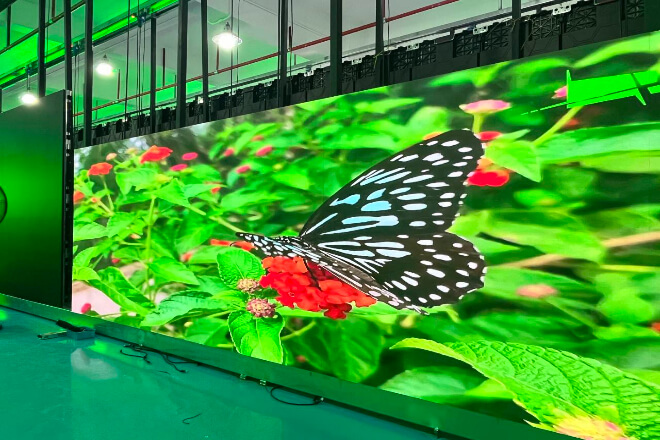
Many people think that simply installing an LED screen in a high-traffic area is enough. However, the reality is: high traffic ≠ , effective exposure.
The truly commercially valuable location often depends on “whether people will look at it and for how long.”
First, consider dwell time. Some places have high foot traffic, but people move quickly, such as passageways and exits.
While these locations are “busy,” the content that is actually seen attentively is limited.
Conversely, waiting areas, rest areas, or places where eyes naturally linger, even with lower traffic, are more likely to generate effective exposure.
Second, consider eye movement. In simple terms, it’s about where people come from, where they look, and from what angle they see the screen.
If the screen is conveniently located in people’s line of sight, the probability of it being seen is much higher.
However, if people have to deliberately turn their heads to see it, the actual effect is often diminished.
Another easily overlooked point is the density of surrounding screens. If many screens in an area are already vying for attention, information is scattered, and viewers are more likely to overlook some of them.
This kind of “information overload” environment may not be suitable for adding more advertising space.
Finally, you can categorize locations from a business perspective. For example, divide locations into core and secondary core locations.
And price them based on exposure quality, rather than simply judging them by area or foot traffic.
This is not only more reasonable but also makes it easier to use resources on truly valuable locations.
Simply put, choosing a location is the foundation for everything that follows. A good location gives content a chance to be seen, and only then can its commercial value be amplified.
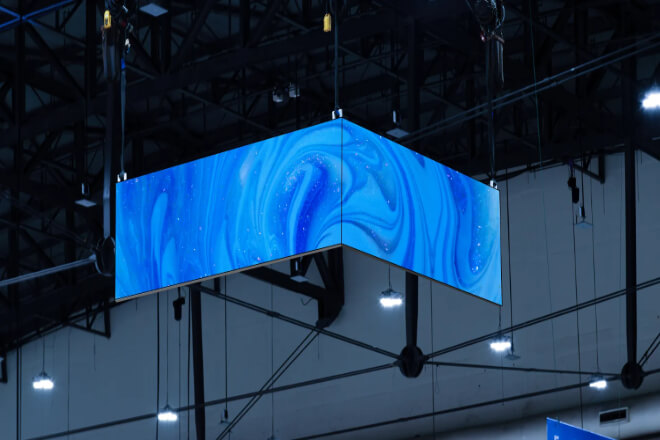
Even if the location is right, if the content isn’t attractive enough, the effect will still be diminished.
Many people underestimate the importance of content, but the reality is that whether a viewer stops to take a second look often depends on the first few seconds.
Let’s start with a crucial point—the first 3-second rule. Most people have very short attention spans when passing an LED screen.
If you don’t grab their attention in the first few seconds, the rest of the content will likely go unnoticed.
Therefore, content must “have something special” from the start, whether it’s visual impact or direct information delivery.
In terms of form, dynamic content usually has an advantage. Video > Image > Text—this order holds true in most scenarios.
Moving images are more easily noticed and break the “visual inertia” of the environment.
Another key element is the design of contrast. Visual differences can be created through color, 亮度, and even the rhythm of motion effects, making the image “jump out” of its environment.
For example, using bright images in a dark environment, or creating pauses through rhythmic changes—these details can significantly influence whether the viewer notices the content.
The content itself can also be somewhat “emotionally driven.” For example, creating curiosity (what exactly is it?), a sense of conflict (strong contrast), or directly offering benefits.
Or time-limited reminders can all stimulate a response from the audience in a short period of time.
The last important but often overlooked point is—don’t cram too much content onto one screen.
If a screen conveys too much information at once, it will make it difficult for viewers to grasp the main point.
In contrast, “one main point per screen” is often easier to understand and remember.
Simply put, good LED content isn’t about having more information, but about being more “captivating.”
Content that can be seen, understood, and remembered in a short time is truly valuable.
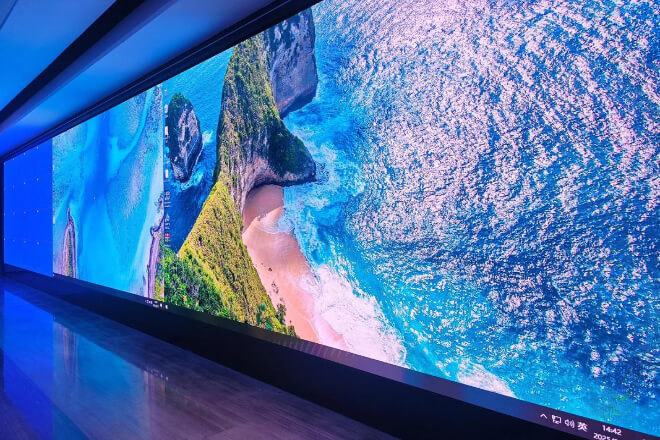
Many LED screens initially perform well, but their effectiveness declines significantly over time.
It’s not that the location has changed or that there are fewer people, but rather, viewers have “gotten tired of it.” This is a typical problem of visual fatigue.
First, you can set a fixed content update frequency, such as adjusting it weekly or monthly. Even small changes, such as changing the visuals or adjusting the pacing, can keep the content “fresh.”
For people who frequently pass through the same location, this change is easily noticeable.
Secondly, it’s about staying relevant to trending topics. Holidays, events, and even unexpected incidents are excellent entry points for content.
Quickly updating relevant content makes the screen appear “responsive” and “keeping up with the times,” rather than static. This timeliness is itself part of the appeal.
Additionally, simple content rotation strategies can be implemented.
For example, playing different content at different times: more informational during the day, more visually impactful at night, or differentiating between weekday and weekend content.
This ensures the same screen always has something new.
If possible, A/B testing can be tried. For instance, prepare two sets of content with different styles and run them at different times to observe which one attracts more attention or generates better conversions.
Through this approach, you can gradually find the content direction best suited to this location.
In short, LED screen content isn’t something you “do once and be done with,” but rather a process that requires continuous optimization.
Maintaining updates and appropriate changes is crucial to keeping the screen attractive, rather than just becoming “part of the background.”
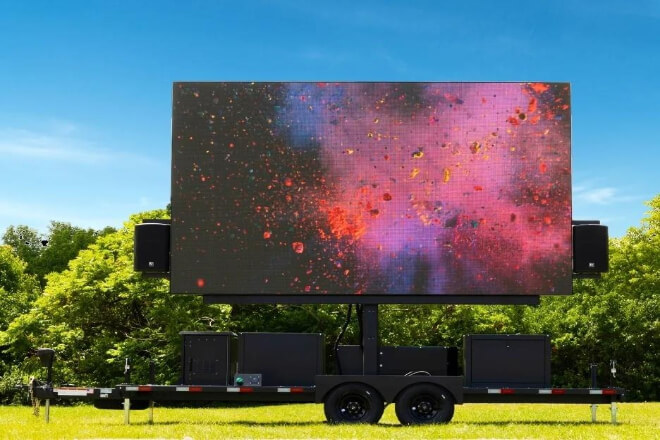
许多 LED屏幕 projects get stuck at one point: they have the screens and decent traffic, but the revenue isn’t being maximized. The problem often lies not in the resources but in the pricing and sales methods.
First, differentiate based on time. The quality of foot traffic and dwell time varies significantly across different time periods.
For example, peak hours are more suitable for high-frequency exposure, while other times can be filled with more flexible pricing strategies.
This “time-based pricing” essentially allows for more efficient resource utilization.
Second, let the data speak for itself. Pricing based on exposure or foot traffic is more convincing than simply based on screen size or location.
Especially when clients start focusing on conversion rates, data-driven pricing is more readily accepted and facilitates long-term partnerships.
Another approach is bundled sales. For example, linking multiple screens or combining them across different areas not only improves overall exposure but also naturally increases the average order value. For clients, it means “wider coverage”; for operators, it means “higher resource utilization.”
In terms of cooperation models, long-term and short-term strategies can also be differentiated.
Short-term deployments can be more flexible, but long-term partnerships can leverage price discounts or resource allocation to secure a more stable revenue stream.
This combination leads to a healthier overall revenue structure.
The final crucial point is “price premium.” Essentially, it’s not about selling the screen itself, but selling value.
Demonstrating “what this screen can bring” through case studies, data, and even past deployment results is far more persuasive than simply discussing price.
Simply put, the commercial value of LED screens isn’t just about “how much resource,” but “how to sell that resource.”
With the right strategy, the same screen can generate vastly different returns.
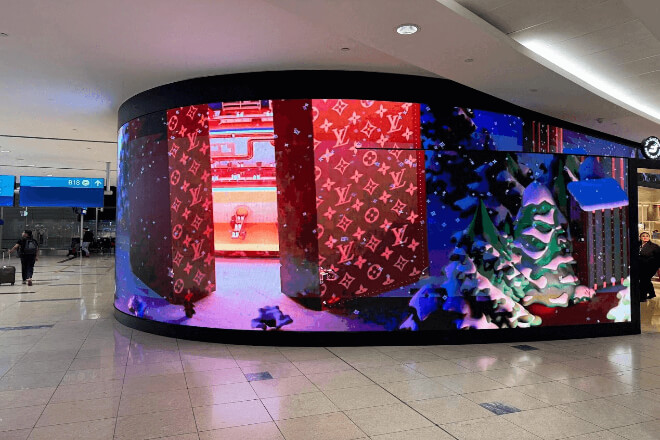
Once LED screens reach a certain operational stage, further revenue growth often hinges not on “selling more,” but on selling more convincingly. Data is the best tool for clearly articulating value.
First, there’s basic foot traffic data, such as visitor volume and dwell time.
This information helps determine the “real value” of a location and allows clients to intuitively understand the quality of ad exposure, rather than just a vague “lots of people.”
Going a step further, audience profiling can be conducted, such as approximate age groups, gender distribution, and even behavioral habits.
This type of information is extremely useful for advertisers because they are more concerned with “whether this is my target audience” than simply the number of impressions.
In performance evaluation, we can gradually move in more granular directions, such as from impressions to interactions (scanning QR codes/clicks), and then to conversions.
Once this chain is established, LED advertising is no longer just a “display,” but a marketing tool that can be quantified and evaluated.
With this data, a very direct change is that the way we communicate will be different.
You no longer just introduce resources, but can use data to illustrate the effects, such as “the dwell time at this location is longer” or “this type of content has a higher conversion rate.”
For clients, this information is more specific and easier to build trust with.
In addition, creating visual reports from this data is also a significant advantage. Clear charts and concise conclusions not only enhance professionalism.
But also allow clients to understand the value more quickly, thereby increasing the likelihood of renewals.
Simply put, the core of data-driven operations is not just “collecting data,” but turning data into persuasive power.
When value is recognized and quantified, the premium pricing power of LED screens naturally increases.
 English
  Español
  简体中文
简体中文  Français
  日本語
日本語  한국어
한국어  العربية