
介绍

LED显示屏 advertising is eye-catching and attention-grabbing, but is it truly suitable for your advertising plan?
While large screens are visually appealing, how do you determine if they can truly deliver value?
This article will guide you through the advantages of LED advertising, suitability assessment, common misconceptions, and success stories to help you understand the investment prospects and make each campaign more confident.
目录
1. Core Advantages of LED Display Screen Advertising

1) Strong Visual Impact
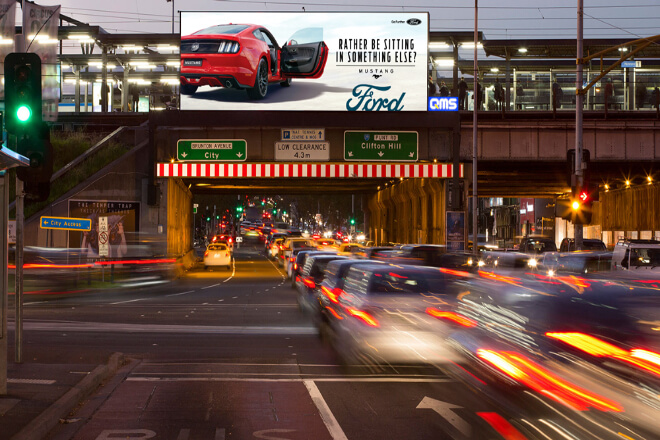
LED displays, with their huge screens, high 亮度, and high-definition image quality, deliver a strong visual impact.
Whether it’s dazzling colors or vivid image details, they can grab the attention of passersby immediately.
Even in direct sunlight or heavy traffic, advertisements remain clearly visible, allowing the brand image to instantly resonate and leave a lasting impression.
2) Flexible and Efficient Content Updates
Advertising content is no longer constrained by the replacement cycles of print or traditional media.
Through a backend system, LED displays can be updated remotely and in real-time, allowing for adjustments at any time, whether for new product launches, promotional activities, or holiday themes.
Flexible and efficient content management enables more precise and market-responsive advertising, keeping brands vibrant and fresh.
3) Precise Targeting and Interactive Potential
LED displays are not only platforms for display but also interactive media.
Combining big data analytics, positioning technology, and interactive features, advertisements can precisely reach the target audience.
Simultaneously, through interactive formats such as QR codes, touchscreens, and AR, viewers can participate.
Brands are no longer just “seen,” but rather actively experienced by the audience, improving advertising conversion and user favorability.
4) Long-Term Usability and Continuous Brand Exposure
LED displays are durable and operate around the clock, providing brands with long-term, high-frequency exposure.
Whether day or night, advertisements are consistently displayed, continuously reinforcing the brand image.
Compared to short-term traditional advertising, LED displays ensure the brand’s voice remains constantly in the audience’s view, helping businesses build long-term market awareness and brand influence.
2. Key Dimensions for Determining the Suitability of LED Display Advertising

Before launching LED display advertising, businesses need to carefully assess its suitability to ensure that every investment delivers ideal exposure and brand value. This process can be considered from several key dimensions.
The primary considerations are identifying the target audience and ensuring they see the advertisement.
For example, placing LED ads in a busy commercial street might result in high daytime foot traffic.
But if the screen angle is poor or the 观看距离 is too far, viewers may not be able to clearly see the content, significantly reducing the effectiveness.
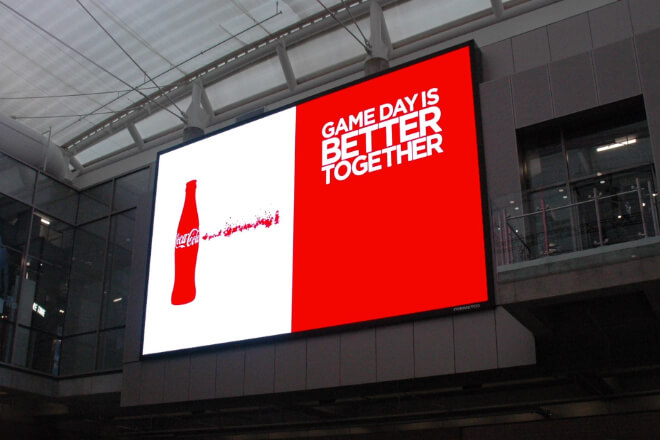
However, in densely populated areas like subway stations and 飞机场 waiting halls, where people spend more time.
The dynamic visuals and interactive features of LED screens can fully realize their value, leaving a deeper impression of the brand message on the audience.
Therefore, when choosing a location, it’s crucial to comprehensively consider foot traffic, 可视角度, and viewing distance to ensure the advertisement is truly “visible and memorable.”
The investment in LED display advertising includes not only the purchase and installation costs of the screen itself but also the costs of operation, content updates, and maintenance.
Businesses need to assess whether the overall budget matches the expected results.
For example, placing large LED screens on city landmarks may have higher initial costs, but due to high-frequency, all-day exposure, brand awareness is significantly increased, and the return on investment period may be relatively reasonable.
While advertising in small commercial areas or communities has a low unit price, its reach is limited, requiring evaluation to determine its worth.
Reasonable budget planning and expected returns are key to ensuring the effectiveness of advertising investment.
The biggest advantage of LED displays lies in their dynamic presentation and interactive experience. Simply displaying static images or text may not fully realize the screen’s potential.
For example, restaurant brands can use LED screens to play short videos of food preparation or offer interactive discounts via QR code scanning. This not only attracts attention but also directly guides consumption.
When assessing suitability, consider whether the content matches the brand’s tone, while fully utilizing the dynamic and interactive characteristics of LED screens to make the advertisement more vivid and attractive.
The effectiveness of advertising depends heavily on the screen’s technical parameters, such as 亮度, 解决, 和 refresh rate.
Insufficient screen brightness or a low refresh rate, even with excellent content design, can negatively impact the viewing experience due to flickering or blurring.
The availability of a Content Management System (CMS) is also crucial, especially when deploying across multiple screens or scenarios.
A good CMS enables remote real-time updates and scheduled switching of advertising content, making management more efficient.
For example, when a chain retail brand deploys LED advertising across multiple locations nationwide, managing screen content uniformly through a CMS ensures synchronized updates of advertising information across all stores, improving dissemination efficiency.
Finally, consider the long-term value of LED advertising. Is the screen easily expandable, and can it be upgraded with new technology in the future?
Does the advertising strategy align with the company’s overall marketing plan and digital strategy?
For instance, if a new retail company plans to add LED advertising locations in more cities in the future, and the existing screen design is scalable and supports interactive upgrades, it can easily keep pace with the brand’s development without frequent equipment replacements.
A forward-looking deployment plan not only meets current needs but also provides continuous value for the company’s future marketing activities.
3. Avoiding Common Pitfalls in LED Display Advertising

Many companies easily fall into some common pitfalls when deploying LED display advertising, which can not only waste investment but also affect advertising effectiveness. Understanding these pitfalls helps in making more informed decisions.
1) Focusing solely on screen size while neglecting audience 观看距离 and scene adaptation
Many companies focus only on screen size when choosing LED screens, believing that bigger is better, but ignoring the audience’s viewing distance and viewing angle.
For example, installing a giant LED screen on a street corner might not be effective if the screen angle is too high or the audience is too far away.
Passersby might have difficulty seeing the advertising content, rendering the screen’s size ineffective.
Therefore, when selecting a screen, it’s crucial to consider the actual scene, the audience’s viewing range, and dwell time to ensure the advertisement is truly “visible and understandable.”
2) Ignoring content production costs and update frequency
The advantage of LED screens lies in their dynamic visuals and interactive features, but producing high-quality videos, animations, or interactive content often requires additional costs.
If companies only focus on hardware investment and neglect content production and regular updates, the screen may end up displaying monotonous or low-quality content for extended periods, negatively impacting brand image.
For example, a retail brand that only uploads static images without updating with promotional or interactive content, even with a high-end screen, will struggle to attract viewers.
Therefore, before launching an advertising campaign, a content production budget should be estimated.
And a content update plan should be developed to ensure the advertisement remains vibrant and attractive.
3) Simply pursuing low prices while neglecting screen 亮度, 解决, and stability
To reduce costs, some companies choose low-priced LED screens, but these screens often have shortcomings in brightness, resolution, and stability.
For example, when playing advertisements outdoors in sunlight, insufficient screen brightness will result in a dim or even illegible image; low resolution will lead to blurry text, affecting information delivery.
Unstable equipment may experience frequent malfunctions, increasing maintenance costs.
When choosing a screen, technical parameters and long-term value should be considered comprehensively, not just price.
4. Lessons from Successful Cases
1) Nike Interactive Wall Advertising
Nike launched an interactive brand experience called “Just Do It” in Shinjuku, Tokyo, Japan, and other countries, utilizing large LED screens for display.
Using motion-sensing technology, the LED screens trigger personalized dynamic images based on pedestrians’ gait, attracting passersby to stop and watch.
According to reports, this campaign generated over 2.3 million social media impressions within a week of its launch, boosted surrounding foot traffic by nearly 47%, and increased sales at related stores by approximately 23%.
This interactive approach using LED screens allows the brand image to resonate with the audience, rather than simply displaying advertising content.
2) Coca-Cola’s Mechanical LED Display in Times Square, New York.
Coca-Cola’s mechanical LED advertising screen in Times Square, New York, consists of over 1,700 independently moving LED modules.
Through extension and retraction, it creates realistic 3D dynamic images, making the advertisements seem to “jump out of the screen.”
This 3D screen is not only visually stunning and attracts numerous passersby, but also achieves widespread secondary dissemination through social media, becoming the world’s first 3D mechanical billboard and setting a Guinness World Record.
This case demonstrates that combining technological innovation with creative content and choosing high-traffic.
Core locations for placement can significantly enhance brand exposure and audience engagement, providing important insights for corporate LED advertising.
5. 结论
Want to know if investing in an LED display is worthwhile? The key is not the size of the screen or the price, but whether it is truly useful to your target audience, content creation, and marketing plan.
By mastering core strengths, key judgment criteria, and tips for avoiding pitfalls, and by drawing inspiration from successful case studies.
Your LED advertising campaigns can be more precise and efficient, truly helping brands attract attention and increase exposure.
Finally, if you would like to learn more about LED displays, 请与我们联系。