
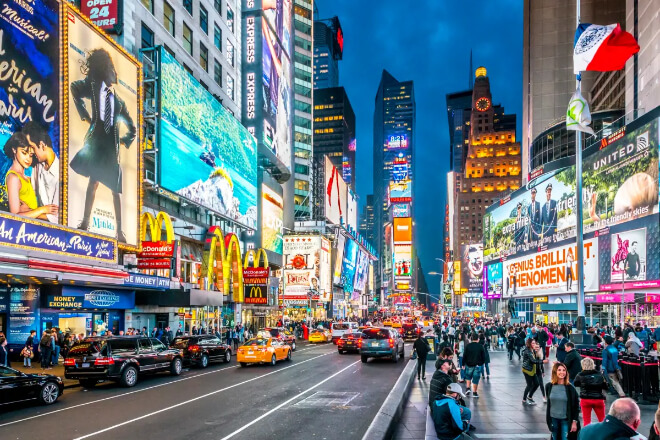
In bustling city streets and transportation hubs, massive numbers of people pass through daily.
For businesses and organisations, this presents both exposure opportunities and challenges: fast-moving crowds, complex lighting, and intense competition—how can information be “truly seen” and remembered?
LED displays, with their high 亮度, stability, and flexible interactivity, perfectly address these issues.
This article will introduce the advantages, application strategies, and procurement considerations of LED屏幕 in high-traffic scenarios, helping decision-makers achieve a more efficient and sustainable return on investment.

In core urban areas, commercial value is often directly linked to foot traffic. City centres, bustling commercial streets, subway entrances, and bus hubs see a massive influx of people every day.
This foot traffic is not only large in number but also diverse in composition, including commuters, students, tourists.
And shoppers, providing advertising and brand information with more potential exposure opportunities.
For brands, this means that each display could potentially reach tens of thousands of target audience members.
However, the advantages of high-traffic areas also come with challenges.
Competition for advertising space in commercial streets and transportation hubs is fierce, surrounded by visual distractions—other brand ads, street signs, LED screens, and pedestrian attention all vying for attention.
Simply existing advertising doesn’t guarantee message retention, let alone brand recognition.
The core question businesses and organisations need to consider is: how to ensure their messages are truly noticed and leave an impression during brief interactions?
Data-driven analysis is crucial in the decision-making process. By analysing pedestrian traffic, observing peak hours, and assessing pedestrian dwell time and visual coverage, the potential value of advertising campaigns can be measured more accurately.
This not only helps decision-makers evaluate exposure effectiveness but also guides creative design, display location selection, and message presentation.
In other words, high-traffic areas offer tremendous business opportunities, but without strategic design and scientific evaluation, investments may fail to achieve the expected return.
Therefore, understanding the commercial value of high-traffic areas involves more than just looking at numbers and locations.
It’s about understanding the mechanisms of information delivery: pedestrian traffic determines the potential audience size, and display strategy determines whether the message is truly seen and remembered.
Only by combining both can businesses maximise the effectiveness of their advertising and generate lasting brand impact.
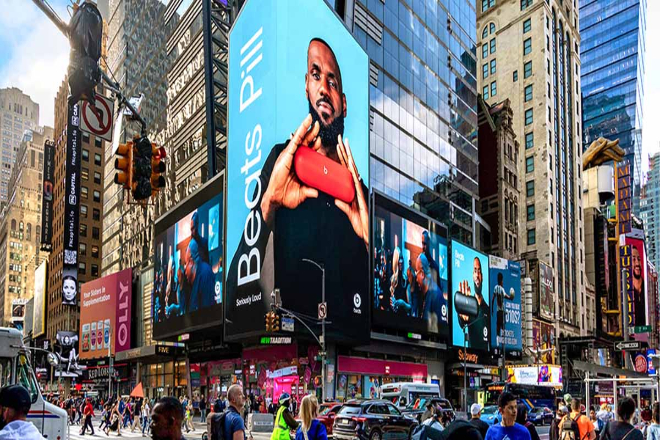
Deploying display equipment in high-traffic urban areas is not simply a matter of “putting a screen on.” Dense crowds, complex lighting, and variable environments place higher demands on the equipment.
To ensure information is truly seen and leaves an impression, display equipment must meet the following key requirements:
1) 亮度 and Visibility
Urban centres, commercial streets, subway entrances, and transportation hubs experience extremely complex ambient lighting.
Direct sunlight during the day, light interference from neon lights and other billboards at night, and even reflected light from rain or cloudy days can affect visual quality.
Display equipment must possess sufficiently high brightness, excellent contrast, and colour saturation to ensure that text, graphics, and dynamic content are clearly visible under various lighting conditions.
Furthermore, high brightness and visibility mean that even if viewers pass by quickly, they can capture the information within seconds, ensuring that advertisements or notices are truly conveyed to the target audience.
2) Stability and Durability
Display equipment in high-traffic areas typically needs to operate around the clock, facing harsh environments such as high temperatures, humidity, dust, and even rain and wind.
The stability and durability of equipment directly determine the reliability of information transmission.
If equipment is prone to screen flickering, crashes, or colour drift, it not only increases maintenance costs but also affects advertising exposure and brand image.
In high-intensity usage scenarios, durable and reliable display equipment can ensure continuous operation, reduce the risk of interruption, and ensure a return on investment.
3) Attractiveness
In high-traffic urban areas, people are often in a hurry, with very short dwell times. Display equipment needs to capture the audience’s attention within a very short contact time.
This requires not only clear images but also visual impact, vibrant colours, dynamic visuals, or creative content displays, allowing information to be quickly recognised and remembered within seconds.
Attractiveness is key to successful information transmission in high-traffic areas; otherwise, even with frequent exposure, it may be ignored by fast-moving viewers.
4) Maintainability
Display equipment in high-traffic areas is used extremely frequently. Excessive maintenance costs will significantly increase operational pressure. In addition to durability, the equipment should be easy to maintain daily and allow for quick replacement of parts.
Simplifying maintenance processes and reducing downtime ensures continuous information display while reducing operating costs and manpower investment. This is especially important for long-term and continuous advertising.
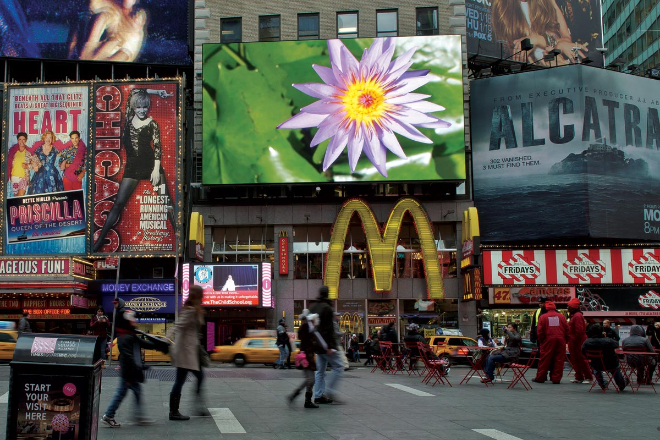
In high-traffic urban areas, the performance of the equipment itself determines whether the information is truly seen and remembered.
LED displays, with their numerous advantages, meet the needs of complex environments and help brands or messages reach their target audience more effectively.
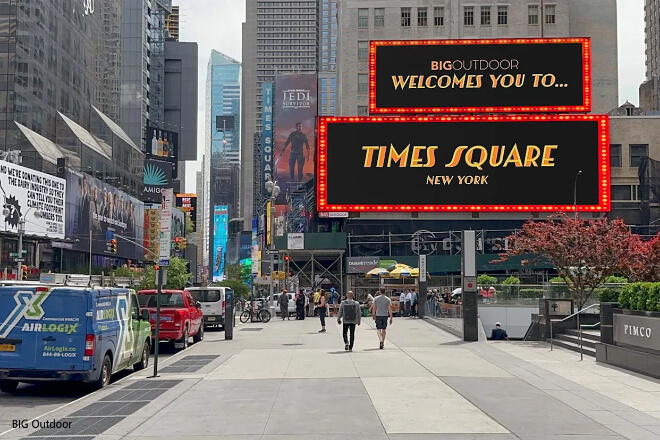
When deploying LED displays in high-traffic urban areas, besides focusing on screen size and price, some key factors are easily overlooked, yet directly impact long-term performance and return on investment.
Understanding these pitfalls can help decision-makers make more informed choices.
1) Focusing Only on Size and Price, Ignoring Ambient 亮度 Matching
Many procurement decisions focus too much on screen size and initial cost, neglecting the impact of ambient light on display performance.
High-traffic areas experience direct sunlight during the day and flashing neon lights at night.
If the screen brightness is insufficient or the contrast is mismatched, information may be lost in the light.
When selecting a screen, the actual brightness requirements should be calculated based on the installation scenario to ensure clear visibility of information under different lighting conditions.
Simply pursuing a large screen or low price may lead to poor actual results and fail to maximise investment.
2) Ignoring the impact of heat dissipation, waterproofing, and dustproofing design on long-term stability
LED displays in high-traffic urban areas often need to operate around the clock, and the environment is complex: high temperature, humidity, dust, and even rain can all affect screen stability.
Screens lacking effective heat dissipation, waterproofing, and dustproofing designs are prone to flickering, colour drift, or malfunctions, increasing maintenance frequency and costs.
When purchasing, it is essential to confirm that the screen meets outdoor or semi-outdoor usage standards, possesses good weather resistance and heat dissipation design, and ensures long-term stable operation from the outset.
3) Ignoring the supplier’s after-sales, installation, and debugging capabilities
Even if the screen itself has excellent performance, insufficient delivery, installation, and after-sales capabilities from the supplier will affect the project’s effectiveness.
Screen installation in high-traffic areas is complex and requires a professional team to debug brightness, colour, and displayed content.
When selecting a supplier, their installation experience, technical support, and fault response speed should be evaluated to ensure rapid maintenance of the screen during long-term operation.
And avoid advertising interruptions or information transmission obstruction due to equipment problems.
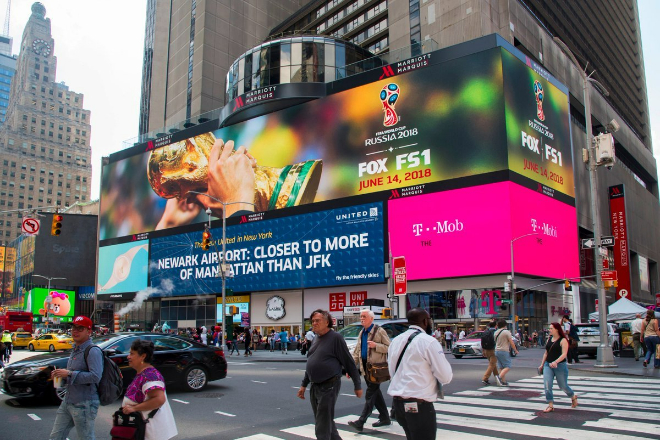
Deploying LED displays in high-traffic urban areas is not merely an investment in advertising or information display, but a highly valuable long-term asset.
Its benefits extend beyond the screen’s brightness and image quality, encompassing information transmission efficiency, brand influence, marketing flexibility, and long-term cost control.
1) Enhancing Advertising and Information Delivery Efficiency
In high-traffic areas such as commercial streets, subway entrances, and airports, viewers tend to move quickly and stay for short periods.
LED displays, with their high 亮度, high-definition image quality, and long-distance visibility, allow information to be quickly captured even in brief encounters.
Dynamic images and smooth video further enhance information delivery efficiency, enabling advertisements and announcements to reach the target audience in the shortest possible time.
Compared to traditional light boxes, inkjet printing, or low-brightness screens, LED displays offer higher visibility and reach in high-traffic environments, ensuring value for money in every display.
2) Enhancing Brand Influence and Customer Awareness
High-quality LED screens are not only tools for information delivery but also windows for brand display.
Whether in city landmarks, commercial streets, or transportation hubs, high-definition, vibrant images quickly capture the attention of passersby, leaving a lasting impression on the brand during brief encounters.
Over time, long-term exposure significantly enhances brand awareness and public trust.
Dynamic content, interactive designs, or carousel advertisements further increase audience engagement, making the brand image more vivid and modern, and helping businesses stand out in a highly competitive market.
3) Supporting Flexible Marketing Strategies and Rapid Response to Market Changes
LED displays offer flexible content updates, allowing for rapid adjustments to the displayed content based on time periods, events, holidays, or audience characteristics.
For example, displaying commuting information and flash ads during morning rush hour, showcasing mall promotions at noon, and playing event previews or interactive content in the evening.
Businesses and organisations can respond to market changes or trending events in real time, achieving precise targeting and dynamic marketing.
Compared to traditional advertising media, LED displays are not merely static displays, but also interactive marketing platforms that can be adjusted in real-time, helping brands better connect with their audience’s needs.
4) Lower Total Cost of Ownership than Other Short-Lifespan Display Solutions
Although the initial investment in LED displays is higher, their long lifespan, stable operation around the clock, and low maintenance frequency result in a significantly lower total cost of ownership compared to short-lifespan display solutions.
The durability and low maintenance costs of the equipment mean that frequent replacements or repairs are unnecessary over the long term, greatly reducing operational pressure and budget consumption.
In other words, a single investment can cover advertising or information display needs for many years, allowing businesses and institutions to obtain continuous value returns while reducing long-term operational risks.
 English
  Español
  简体中文
简体中文  Français
  日本語
日本語  한국어
한국어  العربية