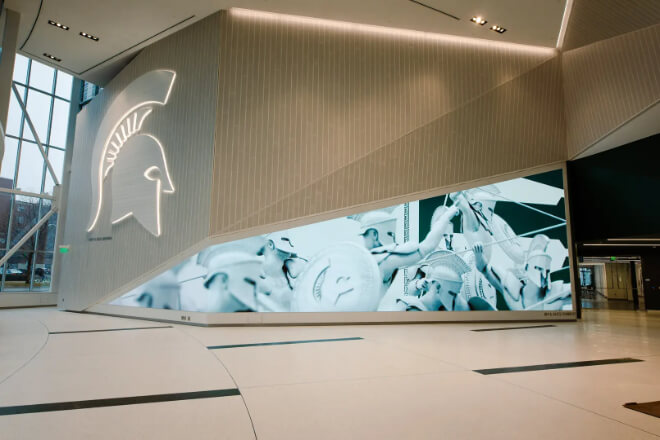
Have you ever encountered this situation: the school sends out notices, but it’s always a step behind, forcing students to run around to confirm? Actually, this is closely related to the way information is delivered.
LED显示屏 act like “information couriers” on campus. Using LED screens effectively, campus information dissemination is both fast and intuitive, allowing teachers, students, and visitors to easily access the latest news.
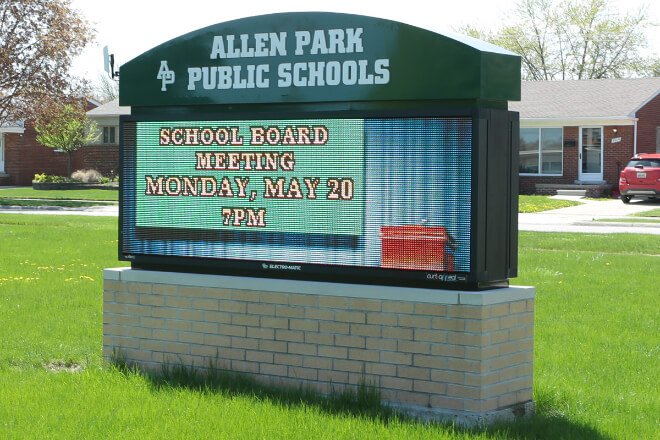
On campus, the speed of information delivery is often more important than the knowledge in textbooks.
LED显示屏 act like “message couriers” on campus, delivering important information to teachers and students within seconds.
Whether it’s temporary class suspensions, course adjustments, exam reminders, or announcements of unexpected events, everyone can get the latest updates immediately, without having to ask around or check emails.
Compared to traditional paper notices or bulletin boards, LED screens eliminate the hassle of printing, posting, and distribution, and also avoid information delays or omissions.
Imagine walking onto campus in the morning and suddenly encountering heavy rain or a last-minute cancellation of an event.
If relying solely on paper notices, many students might still be confused in their dorms or classrooms.
However, a prominent announcement on a screen can immediately alert everyone, providing instant reassurance.
Even better, LED screens save paper, reduce waste, and cover every corner of the campus—teaching buildings, dormitories, canteens.
And even the campus square—ensuring that teachers and students can see the information promptly.
Simply put, it’s not only the “eyes” of the campus but also the “nerve center” of campus information, ensuring important announcements are fast, accurate.
And comprehensive, preventing teachers and students from missing any messages, and making campus management easy and efficient.
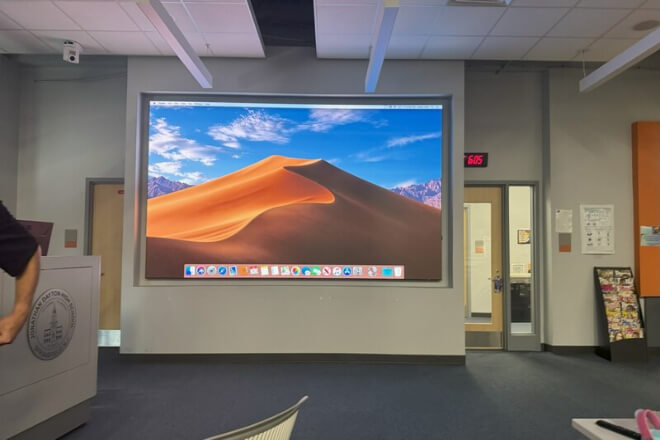
With numerous courses and activities on campus, students often get confused or even miss important classes or lectures, relying solely on verbal announcements or paper notices.
LED displays act like a “super calendar” on campus, presenting daily course schedules, exam times, lectures, training sessions.
And various campus activities at a glance, allowing students to quickly know where they are and what they should be doing without having to ask around or flip through notebooks.
Even more flexible, LED屏幕 can be customized to display information for different floors or majors.
For example, the first floor of a teaching building can display undergraduate courses, while the second floor can display graduate courses.
Screens in dormitories can display information about activities, lectures, or temporary notices.
This ensures that different groups can see relevant information, avoiding the embarrassment of missing classes or lectures.
Interestingly, LED screens can also dynamically update their content based on time.
The morning displays the day’s course schedule, while the afternoon or evening switches to activity reminders or lecture information, acting like a “running calendar” on campus, delivering the latest news at any time.
This allows students to easily manage their schedules, making campus life more organized and efficient, and preventing them from missing any important events.
LED screens not only deliver information quickly but also make campus life intuitive, fun, and convenient.
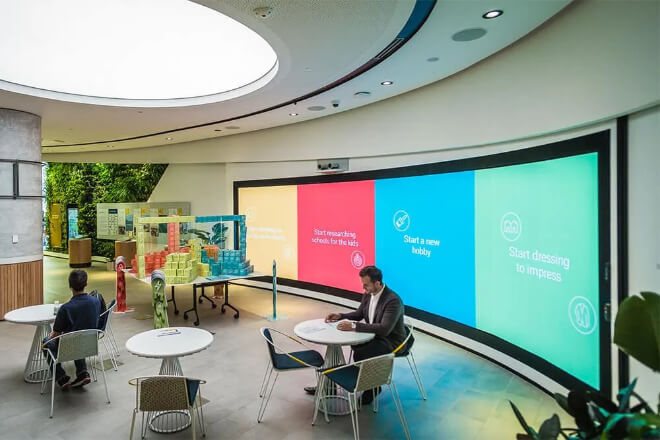
In large campuses, there are often multiple LED 显示屏。 Managing each screen individually would be chaotic and disorganized.
Through a central control system, administrators can update all screen content at once, saving effort and increasing efficiency.
They can also customize displays according to the needs of different areas, ensuring information is tailored to specific requirements.
For example, screens in teaching buildings primarily display timetables, exam reminders, and lecture information.
Screens in dormitories can broadcast campus activity announcements, evening lectures, or temporary notices.
The system can also automatically schedule content, displaying different information at different times: mornings for class schedules, afternoons for event previews.
And evenings for campus news or helpful reminders, ensuring each screen presents the most relevant information at the most appropriate time.
This way, everyone on campus can see the information they care about most, preventing information misalignment or overwhelm.
This centralized management approach not only reduces repetitive operations but also makes information updates faster and more accurate.
Administrators no longer need to manually modify every screen across the campus.
The entire campus’s information delivery system functions like an “intelligent brain,” both flexible and efficient.
Simply put, centralized management and flexible display allow LED screens to deliver information to every corner while ensuring accurate and timely content.
It makes campus information dissemination smarter and more effortless, and makes it easier for teachers and students to access information.
It’s like a “magic screen” on campus, delivering the latest news at any time, making it clear and convenient.
 English
  Español
  简体中文
简体中文  Français
  日本語
日本語  한국어
한국어  العربية