
介绍
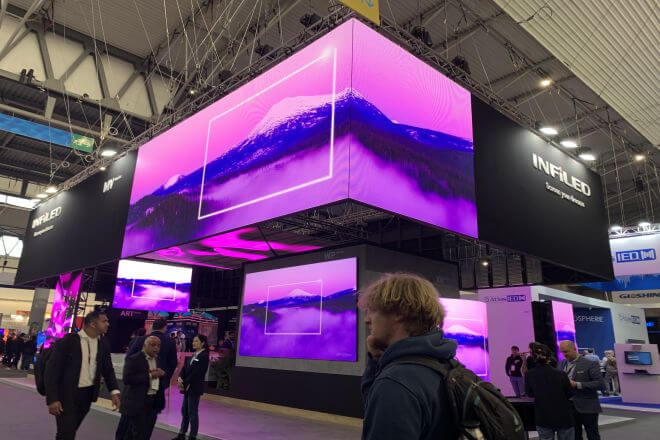
When visiting 展览, have you noticed that some booths are particularly “lively”? Many people linger, some even queue to participate.
Meanwhile, some booths, even those in good locations, are easily overlooked. What’s the difference?
A large part of the reason lies in whether or not the visual appeal and user experience are well-executed.
和 LED屏幕 are often the key to quickly creating this difference. So, how exactly do they make booths more attractive and vibrant?
目录
Application Scenario 1: LED Large Screen Welcome Design
At an 展览, the most difficult step isn’t introducing the products, but attracting people in. Visitors generally browse as they walk through, and if a booth’s entrance lacks a highlight, it’s easily ignored.
Placing a huge LED screen at the entrance is like creating a “glowing, moving facade” for the booth, grabbing attention at first glance.
The biggest advantage of this large screen is its strong visual impact. Displaying brand logos, dynamic videos, or visually engaging images is more effective at attracting attention than static posters.
Especially in information-dense environments like exhibition halls, dynamic content stands out from the crowd of booths, drawing passersby’s attention and even prompting them to stop.
If the content is designed to be more interesting, such as using creative animations, brand story clips, or visually striking images, it’s even easier to generate interest. Often, visitors enter a booth simply because it looks interesting.
Taking it a step further, adding interactivity enhances the effect. For example, guiding users to scan QR codes to participate in activities or receive materials, or providing simple interactive feedback.
Such small details, like a welcome animation or name display after scanning a QR code, create a sense of participation, rather than simply viewing an advertisement.
Overall, LED屏幕 at entrances act as a “starting point for attracting traffic.” They not only make the booth more eye-catching but also turn passersby into lingering visitors and even participants.
Grabbing attention in the first step makes subsequent communication much easier.
Scenario 2: Using LED Displays for Brand Storytelling
At a booth, simply attracting people isn’t enough; the next step is to keep them engaged. Here, LED displays go beyond mere eye-catching tools; they become a medium for storytelling.
By piecing together LED屏幕, a relatively complete visual space can be created to showcase brand history, product development, or core concepts.
Compared to individual display panels, this continuous, dynamic visual experience makes it easier for people to follow the content, like watching a short film rather than “reading documents.”
For example, a timeline can be used to present the brand’s development step-by-step, or dynamic visuals can showcase the product’s design and production process. This sense of “process” makes the content more attractive and easier to understand.
Combining this with videos, animations, and even special effects creates a more immersive experience.
Viewers aren’t just standing there watching; they’re guided by the visuals, their attention is more focused, and they’re more likely to remember key information.
Furthermore, touch interaction can be added, allowing visitors to select different content sections and explore the brand story themselves.
This approach makes the experience more engaging, rather than a one-way output. Especially in environments like exhibitions, interactive content tends to keep viewers engaged longer.
Simply put, in this scenario, an LED display screen acts more like a “storytelling display wall.” It presents potentially dry information in a more vivid and rhythmic way, making it more engaging and memorable for viewers.
Applicable Scenario 3: Interactive Experiences with LED Screens
在 展览, the ability to engage viewers is crucial. Content that’s only glanced at is easily swept away, but content that allows for interactive participation significantly increases dwell time.
In this case, the LED screen can transform from a display tool into a true interactive experience entry point.
For example, by combining it with touchscreens or motion-sensing technology, simple and intuitive interactive games can be designed.
Viewers can trigger changes in the screen by clicking, swiping, or even waving or moving. This “I move, the screen reacts” experience is quite appealing. Even a small interaction is more memorable than simply playing a video.
For example, using it for AR product demonstrations is even more engaging.
Viewers can see the product’s internal structure, usage, and even its effects in different scenarios on the screen, which is more intuitive and easier to understand than static displays.
Especially for large equipment or complex products that are inconvenient to move to the exhibition site, this method saves space and provides a more comprehensive display.
Adding a touch of “gamification” further enhances the effect. For example, displaying real-time participation numbers and interaction data, or setting up a simple leaderboard to see who scores higher.
This small competitive mechanism easily creates an atmosphere—one person playing will attract others to watch, and as they watch, they’ll want to join in too.
Overall, interactive LED屏幕 are like creating an “interactive experience zone” within the exhibition booth.
Viewers are no longer just looking; they’re playing, trying, and participating. In this process, brand information is naturally received, and the impression is deeper.
Applicable Scenario 4: LED Screens for Product Demonstrations
At exhibitions, many products, if simply “placed there,” are not easily understood quickly.
Especially for products with complex functions or those requiring hands-on demonstration to see their effects, explanations or static displays are often insufficient for intuitive understanding.
This is where LED screens become an excellent “demonstration tool.”
Through dynamic visuals, the core functions of a product can be shown step-by-step, such as operating procedures, usage scenarios, and even subtle changes.
Compared to text descriptions, videos or animations are easier to understand and remember. Viewers don’t need to spend too much time thinking to grasp the product’s purpose and usage.
Using 3D models further enhances the experience. The product can be “disassembled,” rotated.
And magnified, allowing viewers to see internal structures or key components not normally visible. This detailed demonstration makes the content more persuasive.
This is particularly useful for some technical products.
Combining this with AR effects further enhances the immersive experience. Viewers can see the product’s application in different scenarios on the screen.
Such as its effect in a real-world environment or a simulated usage process. This sense of immersion makes it easier to generate interest.
Additionally, looping video playback is also a very practical method. Even if visitors walk in midway through, they can quickly follow the content without needing to listen to the explanation from the beginning.
This “easily understandable” characteristic is crucial in the constantly moving environment of an exhibition.
Simply put, an LED screen in a product demonstration is like a “moving instruction manual.” It presents information that might otherwise be somewhat complex in a more intuitive.
And vivid way, making it easier for visitors to understand and encouraging them to stop and learn more.
6. 结论
Ultimately, an LED screen is not just for “playing content”; it’s more like an amplifier within the booth—amplifying visual impact, interactive experiences, and brand presence.
From attracting people in to getting them to stop and participate, it plays a role at every stage.
When used effectively, a booth not only becomes more eye-catching but also more memorable, naturally making it easier to stand out from the crowd.
Finally, if you would like to learn more about LED displays, 请与我们联系。
 English
  Español
  简体中文
简体中文  Français
  日本語
日本語  한국어
한국어  العربية