
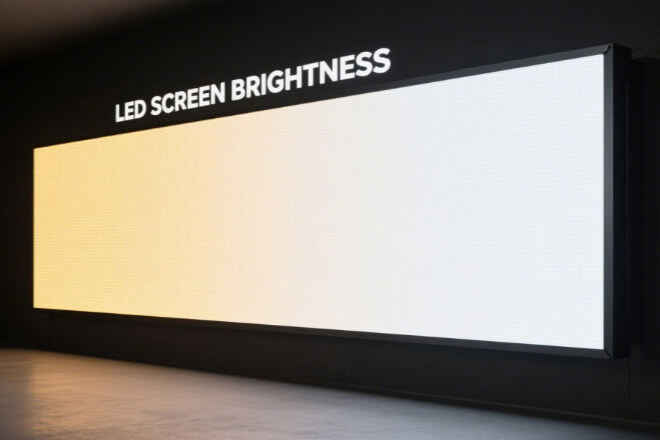
A major advantage of LED displays is their high brightness and clear image. Whether in bright sunlight outdoors or in dim lighting at night, the data on the screen remains clearly visible.
This is especially important for real-time data visualization—numbers are only meaningful when they are seen quickly and accurately.
For example, in a city traffic control center, a large LED screen displays traffic flow, congestion status, and accident information for various roads around the clock.
Even under the intense midday sun, the numbers, colors, and charts on the screen remain clearly legible.
Allowing staff to immediately identify problem areas and adjust traffic lights or dispatch police forces in a timely manner.
For example, in a financial trading hall, LED screens display real-time stock quotes, trading volumes, and futures prices.
Even if traders are several meters away from the screen, they can instantly grasp market changes and make quick decisions.
Furthermore, this high سطوع and clarity reduce eye strain. Imagine working in an industrial production workshop, energy dispatch center.
Or weather monitoring station, where staff need to stare at screens for extended periods to monitor data.
LED screens allow them to see clearly and experience eye strain even after prolonged viewing, thus improving work efficiency.
In short, LED displays, with their advantages in brightness and clarity, bring data to life.
Information can be captured instantly regardless of lighting conditions, which is one reason why they are suitable for real-time data visualization.
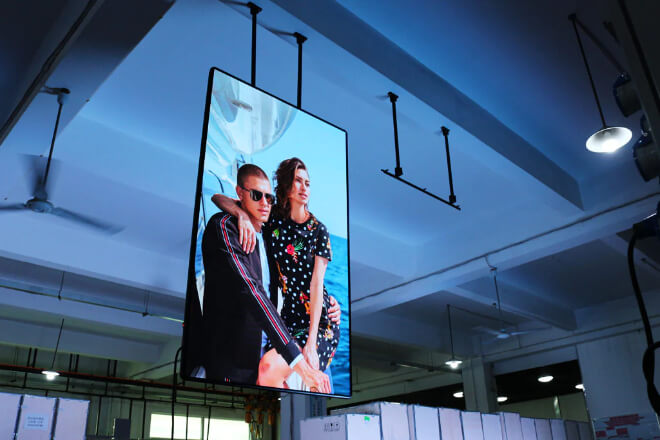
A major advantage of LED displays is their flexibility and ability to “grow.” Many are modularly designed, like Lego bricks; they can be made as large as you want and bent into any shape you desire.
This feature allows them not only to meet immediate needs but also to be flexibly adjusted as the environment changes.
For example, at large المعارض or concerts, the stage might require a curved screen or an irregularly shaped backdrop.
LED screens can be directly pieced together to create the desired shape, eliminating concerns about incomplete display.
Another example is in smart factories, where data from each workshop needs to be centrally displayed on a large screen in the control room.
The modular design of LEDs allows multiple screens to be easily combined.
Which screen needs an increased display area, or which needs a different shape, can be adjusted at any time without reinstalling the entire screen.
Moreover, this flexibility makes large-scale screens effortless. For city command centers or transportation hubs, sometimes screens of tens or even hundreds of square meters are needed.
LED modules can be assembled like building blocks, maintaining a continuous and clear image without any “piecey” appearance.
In short, LED displays can not only be customized in size and shape according to needs but also expand as business changes occur.
This flexibility and scalability make them particularly advantageous in real-time data visualization.

Another very real advantage of LED displays is their energy efficiency and durability.
It’s more energy-efficient than traditional display devices. Even when lit 24/7, it doesn’t consume as much power as older screens.
And its long lifespan means less frequent replacement or repair, saving considerable trouble and money.
For example, in large traffic control centers, LED screens need to display real-time traffic information for various roads 24/7.
With older displays, daily electricity and maintenance costs would be substantial.
Switching to LED screens offers higher brightness and clarity while consuming significantly less power, resulting in substantial operating cost savings over the long term.
Another example is large-screen advertising in مراكز التسوق أو المطارات. LED screens can operate continuously for several years.
Eliminating concerns about frequent replacement of LED chips or screen modules—a huge benefit for companies with limited budgets.
Furthermore, the durability of LED screens simplifies management. Imagine an industrial production workshop.
Or energy dispatch center where screens need to continuously display critical data for extended periods.
Long-lasting LED screens ensure stable operation, reducing failure rates and maintenance costs, allowing staff to focus more on data analysis and decision-making rather than patching up the screens.
Therefore, LED displays, with their low energy consumption and long lifespan, are not only environmentally friendly but also save businesses considerable expenses, making them a key tool for real-time data visualization.

The most powerful feature of LED displays is their ability to keep up with the speed of data changes.
In many scenarios, data updates incredibly quickly; if the screen can’t keep up, even the most important information may be missed.
LED screens can refresh in seconds, allowing you to see the latest situation at any time and grasp the overall picture at a glance.
For example, in urban traffic control centers, large LED screens can display real-time traffic flow, congestion, and accident information for each road.
A refresh of the red, yellow, and green icons immediately indicates which road requires police intervention.
In financial trading halls, stock quotes and futures prices scroll in real time, allowing traders to grasp market trends with a glance and make immediate decisions.
In industrial production workshops, machine operating status, production data, and alarm information can all be displayed in real-time on large LED screens.
Allowing managers to understand the production situation at any time and not miss any critical steps.
Furthermore, LED screens can also display multiple data types together.
Charts, images, and videos can all be displayed simultaneously, providing rich and intuitive information, moving beyond just dry numbers.
على سبيل المثال، في المدينة الذكية dispatch center, the screen displays traffic flow graphs, real-time monitoring footage.
Weather and event alerts, allowing managers to grasp the overall picture of city operations at a glance.
Even more impressively, modern LED screens, in conjunction with backend systems, can process and display massive amounts of data, supporting real-time analysis and decision-making.
Whether monitoring traffic, financial markets, or production workshops, data changes rapidly.
And LED screens can help you capture key information instantly, turning data into actionable “weapons.”
Therefore, LED displays not only update data quickly but also present different types of information simultaneously, allowing you to stay on top of the overall picture.
This is one of the reasons why they are particularly popular in real-time data visualization.

The most outstanding feature of LED displays in real-time data visualization is their ability to “keep pace.”
عالي معدلات التحديث and fast response times ensure that the content on the screen is updated in real time, with virtually no delay.
This means that whether the stock market is constantly changing or urban traffic flow is fluctuating, LED screens can present the latest data to you instantly.
For example, in a financial trading hall, large LED screens can refresh stock, futures, and foreign exchange quotes in seconds.
Traders can see the latest trends with just a glance and make immediate trading decisions.
In urban traffic monitoring centers, LED screens display real-time traffic flow information, accident alerts, and traffic light status for each road, allowing commanders to monitor the city’s traffic situation at any time.
Furthermore, a high-resolution display is a major advantage of LED screens. Whether it’s complex graphs, detailed images.
Or text and data tables requiring precise reading, LED screens can present them clearly without becoming blurry or cluttered due to the large amount of information.
For example, in industrial production workshops, equipment operating status, production data, and alarm information can be clearly displayed, providing managers with a clear overview.
In addition, with support for multiple input interfaces, LED screens can connect to various data sources, including databases, monitoring systems, and third-party APIs, capturing and displaying the latest content in real time.
This ensures that data is displayed instantly on the screen, regardless of its source system, guaranteeing that information remains up-to-date.
In summary, high refresh rates, high-definition displays, and support for multiple data sources allow LED displays to excel in real-time data presentation, achieving truly second-level information updates and clear presentation.
This allows decision-makers to grasp the overall picture at all times and not miss any critical moments.
 English
  Español
  简体中文
简体中文  Français
  日本語
日本語  한국어
한국어  العربية