
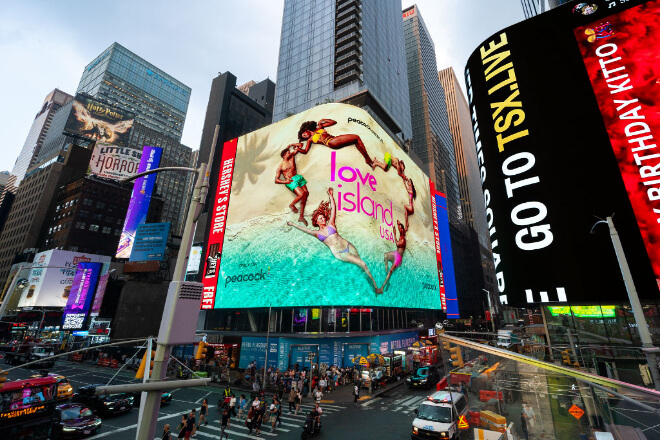
The reason LED displays are so ubiquitous in cities is primarily due to their inherent capabilities.
For example, they are extremely bright, allowing for clear visibility even under bright sunlight.
At night or in low-light conditions, the colors are vibrant, ensuring that text and images remain sharp and easy to understand.
Furthermore, the high-definition display ensures that traffic information, weather forecasts, and city event announcements are all clearly displayed, providing a comfortable and easy-to-understand viewing experience.
Not only are they aesthetically pleasing, but LED screens are also durable. High-quality screens can operate continuously for extended periods without easily breaking down, and their low energy consumption prevents electricity bills from skyrocketing.
Imagine screens in commercial districts, subway stations, and public squares displaying content stably day and night, requiring minimal maintenance and saving manpower and time.
Even more interestingly, these screens can broadcast real-time information around the clock.
For example, traffic congestion, public safety notices, or city event information can be easily accessed by citizens simply by looking up.
For administrators, it’s like a reliable assistant, delivering important information to everyone at any time.
Simply put, high سطوع, vibrant colors, clear image quality, durability, and energy efficiency—these advantages make LED displays highly effective for both advertising and information dissemination in cities, making cities look more modern and vibrant.
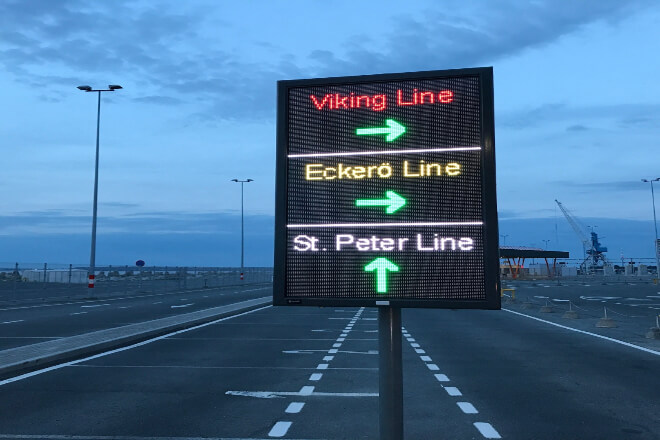
In modern urban life, citizens’ demand for immediate information is increasing: traffic congestion, weather conditions, event schedules, or breaking news—everyone wants to see these things as soon as possible.
LED displays excel in this regard. They can be installed in street squares, subway entrances, commercial areas.
and even on the exterior walls of public buildings, displaying various information in real time, allowing everyone to access the information they need at any time.
المرتفع سطوع and long-distance visibility of LED screens are a major advantage. Whether under the blazing sun or in the dim light of night, the screen content remains clearly visible.
whether you’re across the street or exiting a subway station, the information is instantly identifiable.
This “visible from near and far” characteristic allows for faster and more accurate dissemination of urban information, reducing the information lag issues associated with traditional billboards. Even more interestingly, many LED screens can interact with citizens.
Some screens with touchscreens or sensors allow users to actively access personalized content: check bus routes, view attraction information, learn about nearby events, and even participate in polls or surveys.
In this way, the screen is no longer just a one-way information display, but a “city service assistant,” making public spaces more vibrant and user-friendly.
Simply put, LED displays make urban information both fast and accurate, while increasing interactivity.
Citizens can easily access the latest information and independently select and operate content, making urban life more convenient and public spaces more modern and participatory.
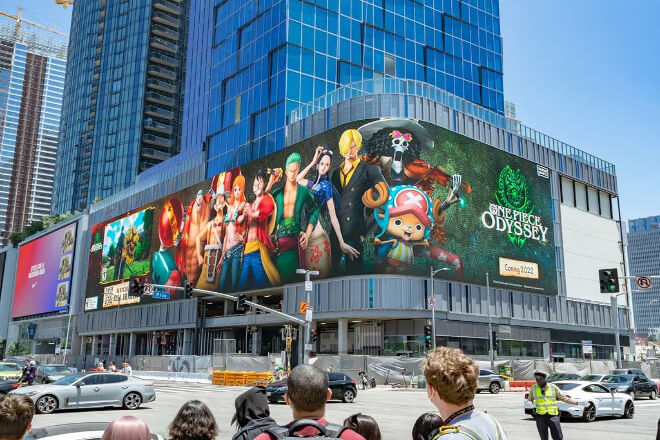
In today’s المدن الذكية, advertising and commercial communication are no longer simply about posters and flyers.
LED displays offer a brand-new way to showcase urban advertising. They not only support large-scale, high-frequency advertising playback but also quickly attract attention through a combination of dynamic visuals, videos, and images.
It can be said that LED screens have become the “protagonists” of urban advertising, making ads more vivid and engaging.
Unlike traditional static advertising, LED displays can update content at any time, without the limitations of time and space.
على سبيل المثال، مركز تجاري LED screens can display different promotions at different times, showing discount information during the day and potentially switching to limited-time flash sales at night.
This flexibility ensures that advertising content is always in sync with audience needs, making it more attention-grabbing.
Furthermore, LED screens can adjust advertising content according to weather changes—for example, promoting cold drinks in the hot summer and warm coats in the cold winter, precisely targeting ads based on the day’s environmental changes.
Even more impressively, LED displays have been integrated with big data and artificial intelligence technologies, making commercial advertising more precise and personalized.
For example, through data analysis, screens can automatically adjust advertising content based on pedestrian traffic, age, interests, and even personalize ads based on the gender or mood of passersby.
Imagine you’ve just left a movie theater, and an LED screen next to you suddenly pops up an ad for movie-related merchandise—isn’t that clever and interesting?
In short, LED displays are more than just a “display platform.” With the support of smart technology, they are propelling urban advertising into a new era of digitalization, personalization, and intelligence.
This makes advertising more relevant and precise, while also making commercial communication more engaging and efficient.
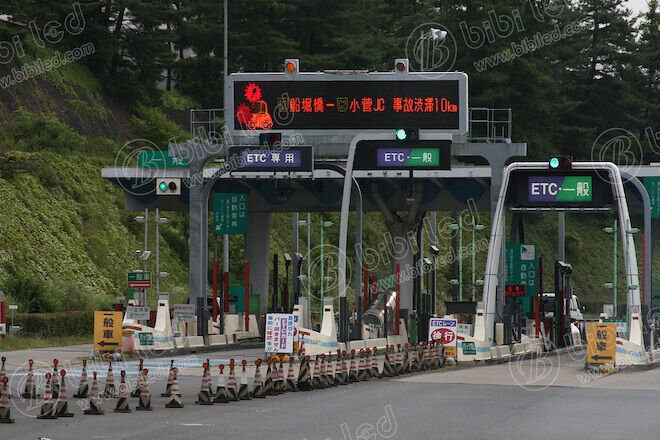
في المدن الذكية, the timely transmission of public safety information is crucial. LED displays play a significant role in this.
Imagine a fire, traffic accident, or sudden natural disaster in a neighborhood; traditional billboards or manual broadcasts might not be able to reach everyone in time.
However, LED screens installed in key locations can instantly deliver warning information and safety guidelines to citizens, allowing them to understand the situation immediately.
Furthermore, LED screens can provide real-time evacuation guidance in emergencies.
For example, in subway stations, مراكز التسوق, or plazas, screens can display the nearest emergency exits, evacuation routes.
Or temporary traffic adjustments, helping citizens quickly find safe routes and reducing panic and chaos.
عالي سطوع and long-distance visibility ensure information remains clearly visible even in crowded or poorly lit environments.
For a real-life example: Suppose a serious traffic accident occurs on a main road in the city.
LED screens can not only display traffic closure information in real time but also recommend detour routes.
Allowing drivers and pedestrians to quickly obtain the latest information and prevent the accident from escalating.
This real-time, dynamic information transmission greatly enhances the city’s emergency response capabilities, making public safety management more proactive and intelligent.
Simply put, LED displays not only make cities more “beautiful” but also make them safer and more reliable in critical moments.
They act like a “safety assistant” for the city, always ready to deliver important information to everyone who needs it.
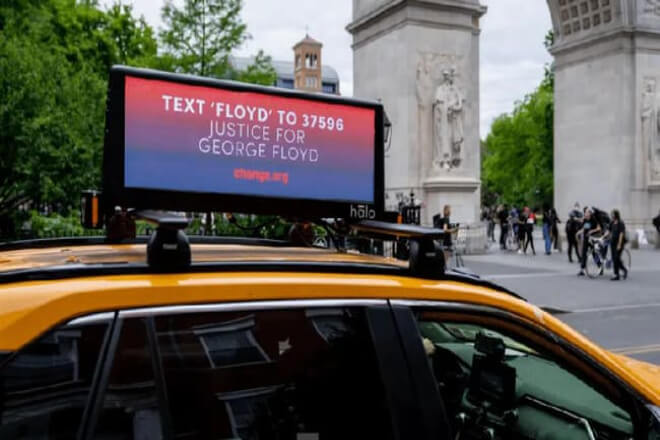
In the construction of smart cities, environmental protection and sustainable development are receiving increasing attention.
LED displays also play a significant role in this regard. It can directly connect to environmental monitoring systems.
Displaying real-time information such as air quality, temperature, and humidity, allowing citizens to stay informed about their surroundings.
For example, when air quality declines, the screen will display a reminder, allowing citizens to choose to wear masks or reduce outdoor activities.
It can also provide timely alerts when temperature or humidity changes, helping people better plan their travel or outdoor activities.
Beyond information display, LED displays are also very environmentally friendly. They are more energy-efficient and consume less power than traditional lighting.
Or display equipment, while also having a longer lifespan and lower maintenance costs, reducing electronic waste.
In short, LED screens not only help people stay informed about environmental information but also practice green and energy-saving principles in their own operation.
For instance, an LED screen in a city center square displays the PM2.5 index, real-time temperature, and humidity daily.
When citizens pass by, they can simply look up to see if the air quality is suitable for a morning run or whether they need to bring rain gear.
This “visible environmental reminder” not only makes life more convenient but also gradually enhances people’s environmental awareness.
 English
  Español
  简体中文
简体中文  Français
  日本語
日本語  한국어
한국어  العربية