
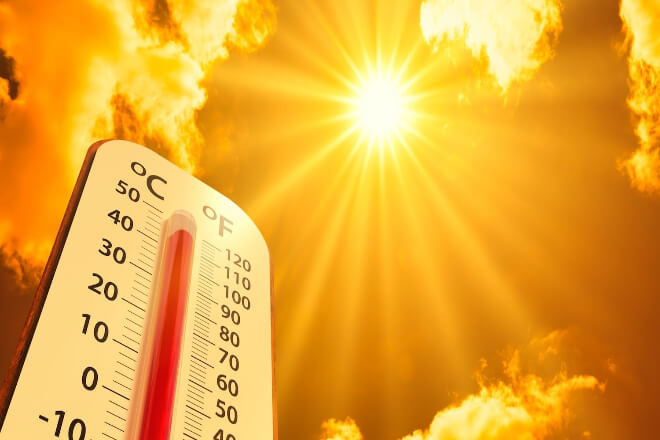
Have you ever wondered if outdoor large-screen advertisements under the scorching sun can withstand the high temperatures? In industrial workshops, will يعرض الصمام malfunction due to excessive heat?
In fact, high temperatures do affect the brightness, color, and lifespan of screens.
However, through certain designs and technologies, they can completely “stay cool” and continue to emit stable light.
This article will show you how LED screens cope with the challenges of high temperatures.
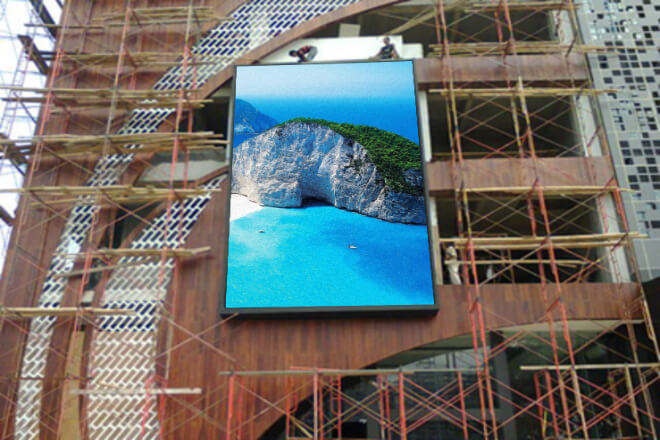

LED displays may seem very robust, but they do have an optimal temperature range. Within this range, the screen performs best, with brightness, color, and stability all reaching ideal levels.
Above or below this temperature, the screen may begin to “complain,” and its performance will suffer.
1) How high a temperature can a standard LED screen handle?
Generally, the design operating temperature for conventional LED displays is approximately between -20°C and 50°C (about -4°F to 122°F).
Within this range, the screen can display stably, with uniform brightness and minimal color deviation.
However, when the ambient temperature approaches its upper limit, the screen will gradually “work harder”: brightness may decrease slightly, color deviations may appear, and the circuit load increases.
If you use it outdoors under the scorching sun in summer, the screen may require stronger heat dissipation measures to maintain optimal performance.
Simply put, a standard LED screen is like a person: it works easily in a comfortable temperature, but a high-temperature environment is like running under the blazing sun, causing it to sweat and get tired.
2) Exceeding Standards
Once the temperature exceeds the design limit, such as above 50°C, the LED screen may encounter some “problems”:
- Significant decrease in سطوع:
The overall screen image may become dim and not as bright as usual.
- Aggravated color deviation:
The originally standard white may appear yellowish, the blue may not be pure enough, and the displayed images or videos will no longer be accurate.
- Circuit protection activation:
Increased current and power consumption may cause the screen to flicker or temporarily shut down in some areas, or even trigger the automatic protection mechanism.
- Accelerated chip aging:
Long-term operation under extremely high temperatures will shorten the lifespan of the LED chip compared to normal environments, resulting in dark spots or brightness decay.
In other words, LEDs under extreme high temperatures are like “cakes in a hot oven”: they can still function, but their quality begins to decline.
Prolonged use not only degrades display quality but also accelerates wear and tear.
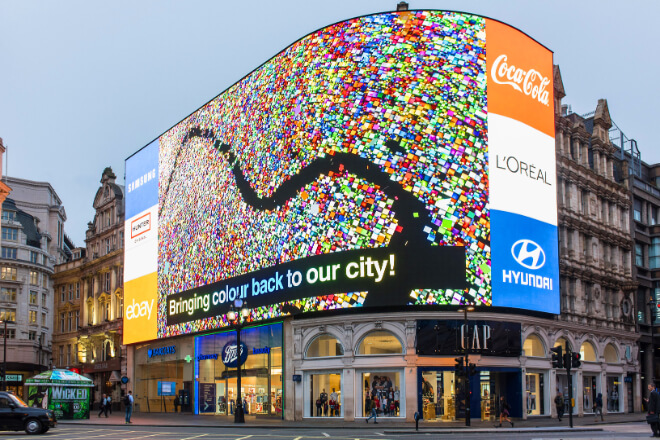
1) Outdoor Billboards
Imagine a street billboard scorching hot under the midday sun. Can the LED display still light up normally?
The answer is yes, but it faces several challenges. High temperatures reduce screen brightness, cause color deviation, increase circuit load, and even accelerate chip aging.
For example, some لوحات إعلانية LED خارجية in Middle Eastern cities maintain clear images and stable colors even at temperatures exceeding 50°C.
This is achieved through efficient heat dissipation systems, high-temperature resistant chips, and reasonable brightness adjustment strategies.
These measures allow the screen to withstand the scorching sun, ensuring the advertising information is readable around the clock and maintaining brand exposure.
2) Industrial Sector
Industrial environments are even more extreme: manufacturing plants, mines, and steel mills not only experience high temperatures but also dust, vibration, and even humidity fluctuations.
In such situations, the task of LED displays is not only to display information but also to operate stably and reliably.
In a steel plant, LED screens near high-temperature furnaces are used to display production data, operational warnings, and safety instructions.
Equipped with an internal air-cooling system and high-temperature resistant circuitry, the screens maintain uniform brightness and stable image quality even in ambient temperatures exceeding 50°C.
Simultaneously, their dust-resistant design prevents dust and smoke from affecting the display, providing workers with reliable visual information.
In high-temperature industrial environments, LED screens do more than just “light up”; they truly become “guardians” of safety and efficiency in the factory.
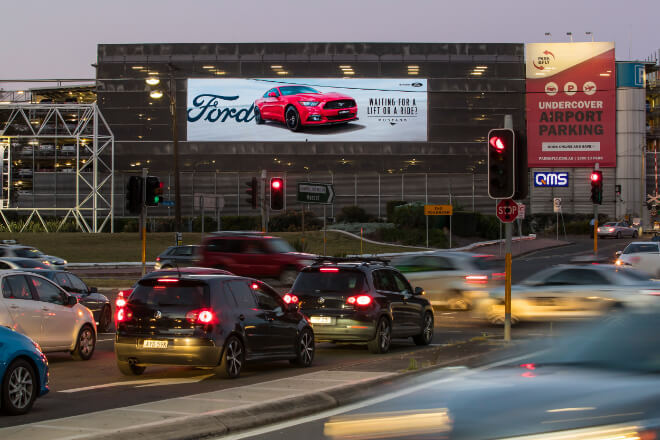
LED displays cannot operate under direct sunlight or in high-temperature factories. Without cooling, their brightness will decrease, colors will distort, and they may even flicker.
Fortunately, there are several simple and effective methods to keep them cool and continue emitting stable light.
Method 1: Built-in Fan
Installing a fan inside the screen allows hot air to be quickly dissipated, acting like a small air conditioner.
This prevents the LED chips from “acting up” due to high temperatures, maintaining stable brightness and color.
Especially suitable for outdoor billboards or large exhibition screens, where fans can help cool the screen when it needs to be on for extended periods, preventing overheating, flickering, and extending its lifespan.
Method 2: Install Air Conditioning
If the screen is indoors or in a semi-enclosed space, installing air conditioning is also a good solution.
Cooling the surrounding environment naturally cools the screen, preventing it from overheating and experiencing brightness drops or flickering.
For example, LED screens in shopping malls, exhibition halls, or high-temperature workshops appear brighter and more stable after being cooled by air conditioning, and the chips are less prone to aging.
Method 3: Optimize Heat Dissipation
Sometimes, screens cannot use fans or air conditioning. In these cases, “structural design” helps with cooling. For example:
Adding heat sinks or ventilation holes to allow heat to dissipate naturally.
Using thermally conductive materials to quickly transfer heat from the chip to the casing and then dissipate it into the air.
Modular design, dividing the screen into small sections, each with its own heat dissipation, also facilitates maintenance.
Through these methods, the screen “breathes naturally” even in high temperatures, maintaining uniform brightness and normal color even in very hot environments, and is less prone to malfunctions.
 English
  Español
  简体中文
简体中文  Français
  日本語
日本語  한국어
한국어  العربية