
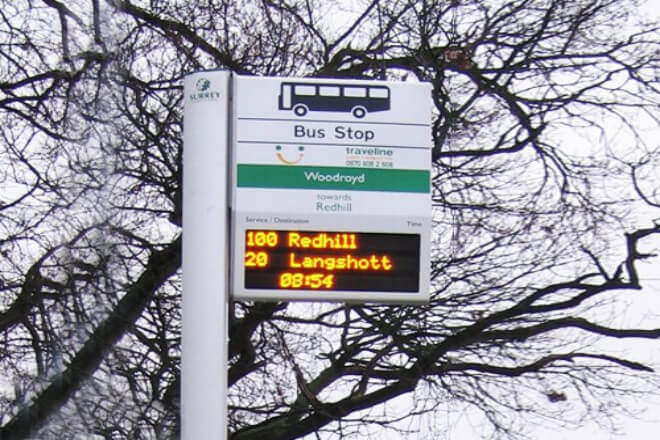
In modern cities, bus stops are no longer just places to wait for the bus—they have also become “mini cinemas,” especially when the يعرض الصمام light up.
In cities like London and New York (such as Transport for London and the Metropolitan Transportation Authority), more and more bus stops are equipped with LED screens, allowing waiting passengers to “watch something to pass the time.”
The greatest magic of LED screens lies in dynamic visuals: videos, animations, and scrolling text, making advertisements more than just static posters.
For example, during the morning rush hour, it might play an advertisement for a hot coffee before you take a nap.
During rush hour, it might remind you of dinner deals. Compared to static ads, this “moving” screen is more likely to grab your attention and make you remember the brand.
Moreover, LED screens can be remotely updated, with ad content switching at any time, and multi-brand rotation is never crowded.
This means that at the same bus stop on your daily commute, you might see coffee in the morning, takeout deals for lunch, and movie trailers in the evening—the bus stop transforms into a “dynamic information center” in the city.
In short, LED displays make bus stop advertising not only more eye-catching and flexible, but also make passengers’ waiting time “fun and practical,” while providing brands with opportunities for close interaction with commuters.
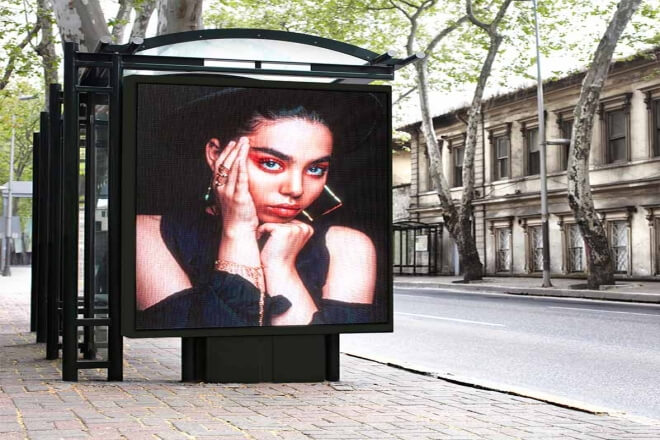
Installing an LED advertising screen at a bus stop isn’t simply a matter of hanging it up haphazardly; it needs to withstand the test.
First, bus stops are entirely outdoor environments, where weather and lighting pose the biggest challenges.
Intense sunlight, heavy rain, snow, and even smog can all affect screen display. Without proper protection, the image may become blurry or damaged.
While noise doesn’t directly affect the screen, a noisy environment makes it harder for advertising information to attract attention.
Therefore, the design must consider clear images and vibrant colors to ensure the screen is easily visible.
To overcome these issues, modern LED advertising screens are specially designed.
For example, waterproof, dustproof, and windproof casings can withstand rain, snow, and dust; high-سطوع screens can display clearly even in strong sunlight.
Reinforced installation structures ensure the screen remains stable in strong winds or during vibrations.
In addition, remote control and regular maintenance are also crucial for ensuring stable screen operation.
In the long run, LED screens can operate stably in outdoor environments for many years, but maintenance is still necessary.
Regularly checking screen interfaces, cleaning dust, and ensuring proper heat dissipation can extend their lifespan.
With proper design and maintenance, LED advertising screens at bus stops can continue to illuminate despite wind and sun, ensuring that advertisements reach every passenger and passerby reliably and efficiently.
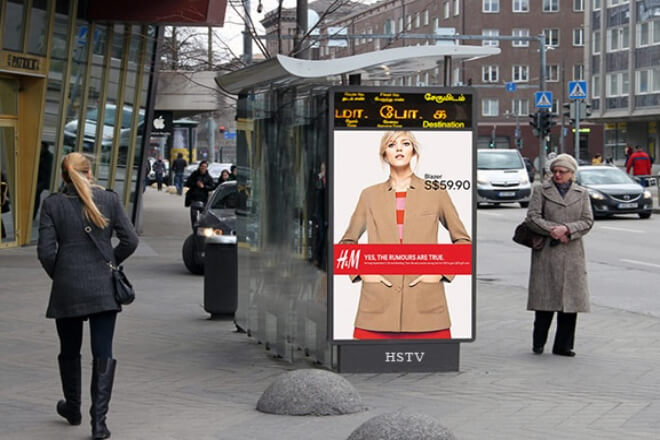
Installing LED advertising screens at bus stops not only makes advertisements more eye-catching but also brings significant economic benefits.
Firstly, LED screens can play dynamic videos, animations, and multi-brand carousels, making advertising more attractive and drawing more advertisers, thereby increasing advertising revenue.
Compared to traditional paper posters or lightbox advertisements, LED screens can display multiple advertisements simultaneously at the same stop and can flexibly update content according to time, holidays.
Or events, increasing advertising exposure and maximizing the value of each screen.
From a cost-benefit perspective, although the initial investment for LED advertising screens is slightly higher than that for paper advertisements, the long-term returns are more substantial.
Traditional paper advertisements require frequent replacement, printing, and manual maintenance, while LED screens can be updated remotely, reducing labor and material costs.
Dynamic content also more easily captures passenger attention, increasing ad conversion rates.
For advertisers, information dissemination is more precise; for station management, operating costs decrease while advertising revenue increases, creating a win-win situation.
Furthermore, the durability and intelligent management system of LED screens reduce daily maintenance burdens.
Waterproof, dustproof, and windproof designs ensure stable long-term operation in outdoor environments, reducing failure rates and maintenance costs.
In summary, LED advertising screens not only make bus stops more modern and eye-catching.
But also bring long-term economic benefits to management by increasing advertising revenue and reducing operating costs.
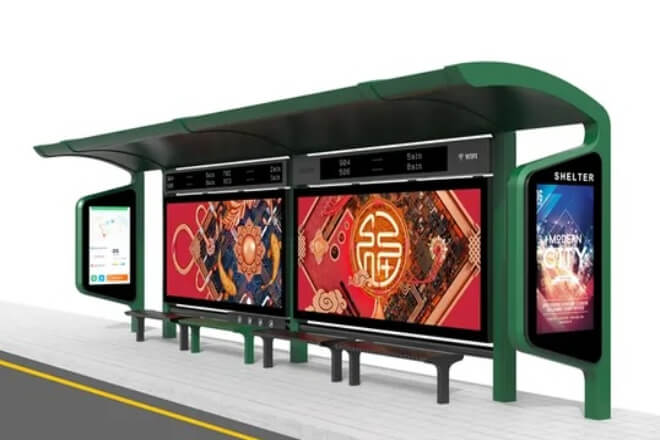
At bus stops, LED advertising screens are not just “moving billboards”; they also subtly change the passenger waiting experience.
Firstly, eye-catching dynamic images and vibrant animations are more likely to attract attention than traditional posters, making waiting time less monotonous.
Even if passengers only stand for a few minutes, the content on the screens can attract their attention, passing the time and making the waiting experience more relaxed.
More importantly, LED screens not only display advertisements but also provide practical information.
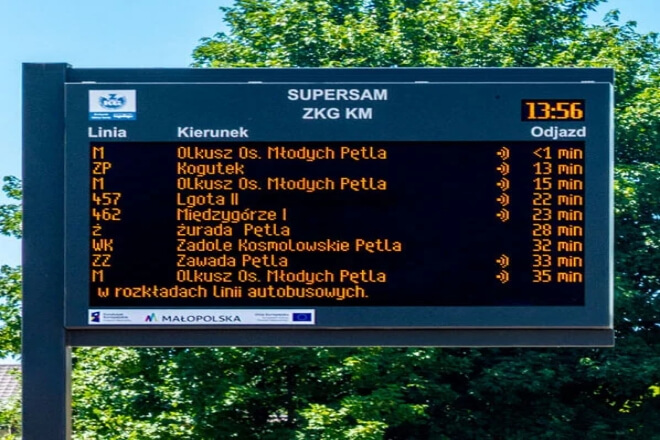
Many city bus stop LED screens display real-time bus arrival information, route guidance, and even weather forecasts and emergency announcements.
In this way, passengers are not just passively receiving advertisements while waiting, but simultaneously acquiring useful information, making their journey more convenient and their mood more pleasant.
This combination of advertising and information makes LED screens a “thoughtful assistant.”
For example, while a coffee shop promotional advertisement scrolls across the screen, it also displays the arrival time of the next bus, allowing passengers to not only remember the brand but also plan their trip accordingly.
Similarly, when the screen displays entertainment information, it also provides route or weather tips, seamlessly integrating advertising and service.
This design makes passengers feel that the LED screen is not a nuisance but an aid, making the waiting experience more comfortable and the advertising effect more natural and easily accepted.
 English
  Español
  简体中文
简体中文  Français
  日本語
日本語  한국어
한국어  العربية